



Does My Horse Have an Allergy?
One day your horse is perfectly comfortable. The next, they're rubbing their mane out on every available fence post, developing unexplained lumps, or coughing every time you pass their stable.
Sound familiar?
Allergies in horses are surprisingly common and can range from mildly irritating to genuinely serious. The tricky part is that allergy symptoms often look very similar to other conditions. Itching, hair loss, coughing and skin irritation can all have several possible causes, which is why getting to the bottom of the problem can sometimes feel like detective work.
As many horse owners discover, successful allergy management is rarely about finding a quick fix. It's usually a case of identifying triggers and adjusting your horse's daily routine to keep them comfortable.
What Causes Allergies in Horses?
An allergy occurs when the horse's immune system overreacts to something that would normally be harmless. This substance is known as an allergen. Horses can develop allergies at any stage in life, even if they've previously been exposed to the trigger without any problems.
The most common causes of equine allergies include:
- Insect bites
- Food and feed ingredients
- Contact with certain materials or products
- Airborne allergens such as pollen, mould and dust
- Medications or vaccinations
Let's look at each in more detail.
Insect Bite Allergies
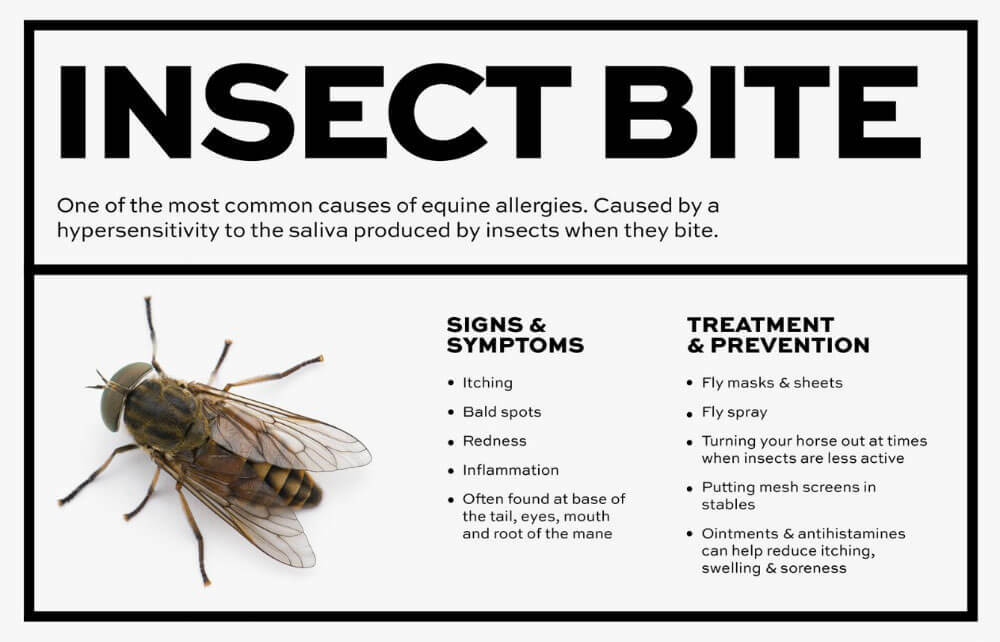
For many owners, insect allergies are the first thing that comes to mind and with good reason. Hypersensitivity to insect saliva is one of the most common allergic conditions seen in horses.
Midges are usually the biggest culprit, causing the condition we know as sweet itch. Horse flies, mosquitoes, mites and other biting insects can also trigger reactions.
Signs your horse may have an insect allergy
- Intense itching
- Rubbing the mane or tail
- Hair loss
- Broken skin
- Crusty patches
- Inflamed or sore skin
- Restlessness during turnout
Many horses with sweet itch start rubbing the base of the mane and tail long before owners notice obvious skin damage. Catching it early often makes management much easier.
Practical management
From experience, prevention really is better than cure with insect allergies.
Helpful management strategies include:
- Using a well-fitting fly rug during midge season
- Wearing a fly mask to protect sensitive areas
- Applying fly repellents regularly
- Turning out overnight or during breezier periods when midges are less active
- Avoiding turnout near standing water where possible
If your horse is already uncomfortable, speak to your vet before introducing medications or supplements. Severe cases may need veterinary treatment.
Struggling to keep flies away? Explore our range of fly rugs, fly masks and fly repellents designed to help keep sensitive horses comfortable throughout the warmer months.
Food Allergies in Horses
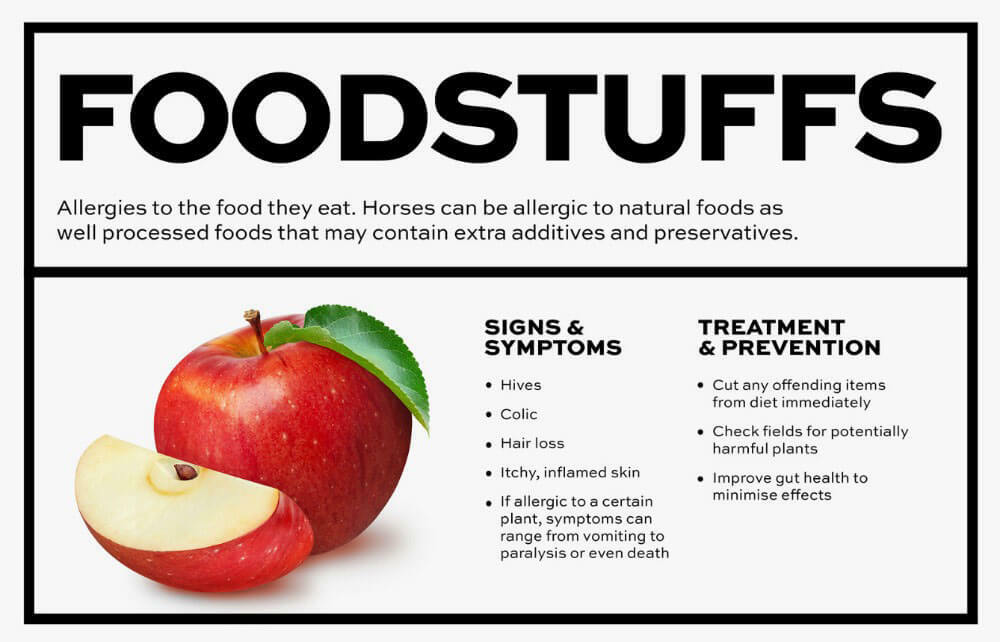
True food allergies are actually relatively uncommon in horses, although feed intolerances and sensitivities are discussed frequently on yards.
Horses can react to specific proteins within feeds and, occasionally, ingredients they have eaten happily for years may suddenly become problematic.
Possible signs of a food allergy
- Hives or raised lumps
- Generalised itching
- Loose droppings
- Changes in coat condition
- Recurrent skin issues
- Swelling around the face or muzzle
A genuine food allergy often causes widespread symptoms rather than irritation in one specific area.
Managing suspected feed allergies
If you suspect a feed-related issue:
- Keep a detailed diary of feeds, supplements and symptoms.
- Avoid making several changes at once.
- Work closely with your vet before removing major parts of the diet.
Many owners are surprised to discover that the feed itself isn't always responsible. Seasonal changes, stress, workload and environmental allergens can all muddy the picture.
Contact Allergies
Contact allergies occur when something touching your horse's skin triggers a reaction.
Common causes include:
- Saddle pads
- Rugs
- Grooming products
- Fly sprays
- Shampoos
- Stable disinfectants
- Bedding materials
Signs of contact allergies
Unlike other allergies, reactions are often localised.
You may notice:
- Redness beneath tack or rugs
- Small bumps
- Hair loss in a specific area
- Scurf or flaky skin
- Persistent rubbing in one location
Sometimes it isn't the entire product causing the issue. It may simply be one ingredient, detergent residue or fabric type.
If you notice soreness appearing exactly where a new item sits, remove it for a few days and monitor any improvement.
Airborne Allergens
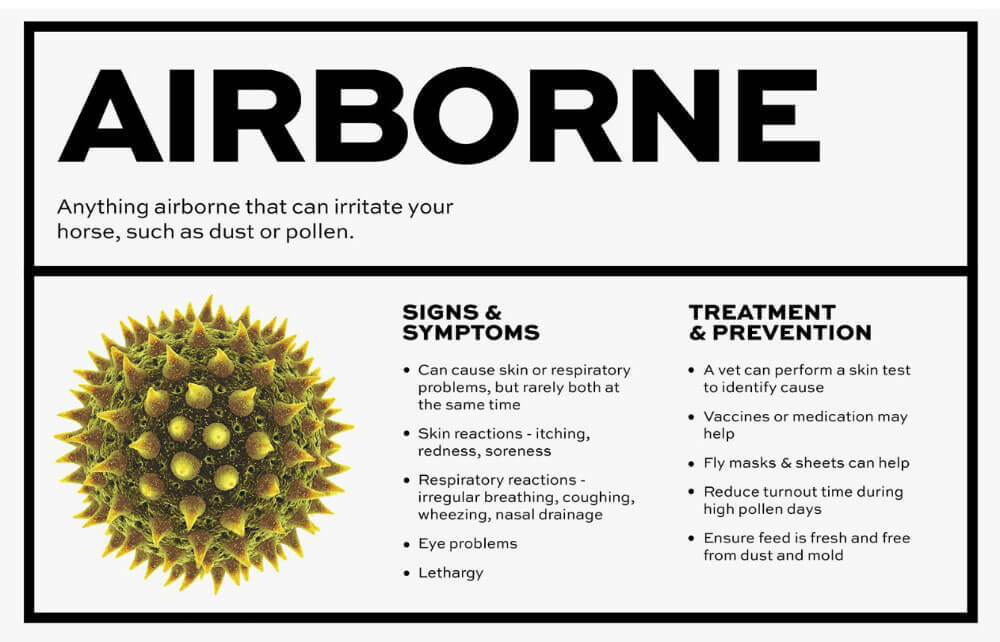
Dust, pollen, mould spores and stable debris can all trigger allergic reactions in sensitive horses. These allergens may affect the skin, respiratory system or both.
Spring and summer can be particularly challenging, especially during periods of high pollen or prolonged dry weather.
Signs your horse may be reacting to airborne allergens
- Coughing
- Wheezing
- Nasal discharge
- Increased respiratory effort
- Watery eyes
- Headshaking
- Itchy skin
- Lethargy
Management tips
Small changes to stable management can make a huge difference:
- Improve stable ventilation
- Choose low-dust bedding
- Steam or soak hay where appropriate
- Avoid sweeping while horses are stabled
- Store forage carefully to minimise mould growth
- Ride outside rather than in dusty indoor arenas during flare-ups
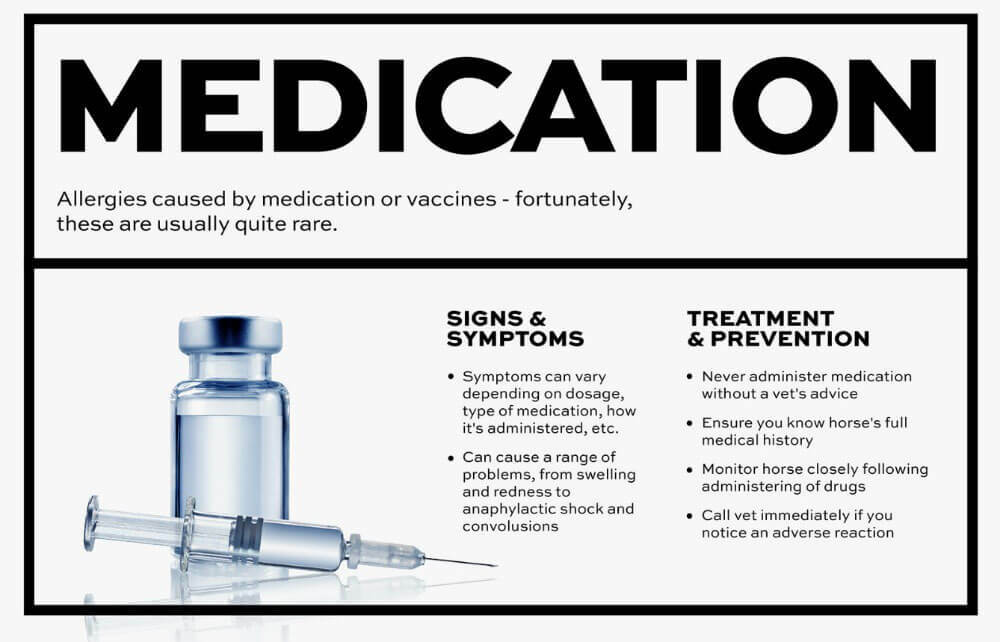
Allergic Reactions to Medications and Vaccines
Although uncommon, horses can occasionally react to medications, wormers or vaccinations. Reactions may occur immediately or several hours later.
Signs can include:
- Swelling at the injection site
- Hives
- Facial swelling
- Lethargy
- Breathing difficulties
Severe allergic reactions are rare but can become emergencies. If your horse shows breathing difficulties, collapses or develops sudden severe swelling, contact your vet immediately.
How Are Allergies Diagnosed?
Because many allergy symptoms overlap with other conditions, diagnosis often involves ruling out alternative causes first.
Your vet may recommend:
- A detailed clinical history
- Skin examinations
- Elimination diets
- Blood testing
- Intradermal allergy testing
- Reviewing management routines and environment
Keeping a diary of symptoms, weather conditions, turnout times and feed changes can be incredibly useful. Owners often spot patterns they hadn't initially noticed.
Living With an Allergic Horse
Managing allergies can feel frustrating at times, especially when symptoms flare just as you think everything is under control.
The good news is that most allergic horses can continue to live active, happy lives with thoughtful management. Often, it comes down to reducing exposure to triggers rather than eliminating them entirely.
What works brilliantly for one horse may make very little difference to another, so don't be disheartened if it takes some trial and error to find the right approach.
FAQs
Can horses suddenly develop allergies?
Yes. Horses can develop allergies at any age, even to substances they've been exposed to for years without any issues. Repeated exposure can sometimes trigger an immune response later in life.
Is sweet itch the same as a general skin allergy?
Not exactly. Sweet itch is a specific allergic reaction to midge saliva. Other skin allergies may be caused by feeds, environmental allergens or contact with certain products.
Should I change my horse's feed if I suspect an allergy?
Not without a plan. Sudden dietary changes can complicate diagnosis. It's best to work with your vet and make changes methodically while monitoring symptoms.
When should I call the vet?
Seek veterinary advice if your horse develops breathing difficulties, severe swelling, widespread hives, persistent coughing or intense itching that isn't improving.
Concerned your horse may be reacting to insects or seasonal allergens? Alongside veterinary guidance, effective fly and pest management can help reduce exposure to common triggers. Explore our range of fly rugs, fly masks, fly repellents and pest control essentials to help keep your horse comfortable throughout the season.
