



5 Steps to Successfully Bathe Your Horse
Jun 27th 2023

How to Bathe a Horse: 5 Simple Steps
Whether you're tackling stable stains, freshening up after a sweaty ride or getting competition-ready, knowing how to bathe a horse makes the job easier for both of you. A good bath should leave your horse clean and comfortable, with shampoo thoroughly rinsed out and plenty of time to dry.
From choosing the right shampoo to washing a reluctant tail, here's our five-step guide to horse bathing, plus answers to those questions that tend to crop up halfway through a wash!
What do you need to bathe a horse?
Have everything within reach before you start. There's nothing quite like discovering your towel is in the tack room when you're already holding a dripping horse.
- Clean sponges or a washing mitt: Use a large sponge for the body, a separate soft sponge for the face and another for beneath the tail. Different colours help avoid mix-ups.
- A soft rubber curry comb or washing brush: Choose from our horse brushes and combs to gently loosen dirt on fleshy areas. Avoid firm scrubbing over sensitive skin or bony areas.
- Horse shampoo: Pick a product suited to your horse's coat and skin from our horse shampoos and conditioners. Follow the label for dilution, contact time and rinsing.
- A hose or buckets of clean water: A gentle shower setting gives you more control than a strong jet.
- A sweat scraper and clean towels: A rubber-edged scraper, such as the Premier Equine Sweat Scraper, can remove excess water after a routine bath.
- Mane and tail conditioner: Optional for detangling, but best avoided on hair you plan to plait.
Building your kit from scratch? Our guide to essential horse grooming tools explains what each brush and tool is used for.
Step 1: Choose a safe spot and prepare your horse
Choose a calm, sheltered washing area with a non-slip surface and good drainage. For a full bath, aim for a mild day with enough time for your horse to dry before temperatures drop. Lukewarm water is often comfortable for routine bathing; avoid hot water.
Brush off loose dirt and gently work out obvious mane and tail tangles before wetting the coat. Check for sore patches or broken skin, and avoid scrubbing these. Persistent itching, scabs or hair loss need veterinary advice rather than another shampoo.
If your horse is unsure about bathing, ask an experienced helper to hold them in a suitable headcollar. Keep hoses and buckets out of the way of their feet, and use a safe quick-release arrangement if tying up. Never tie a horse that is panicking or pulling back.
Step 2: Wet the coat gradually
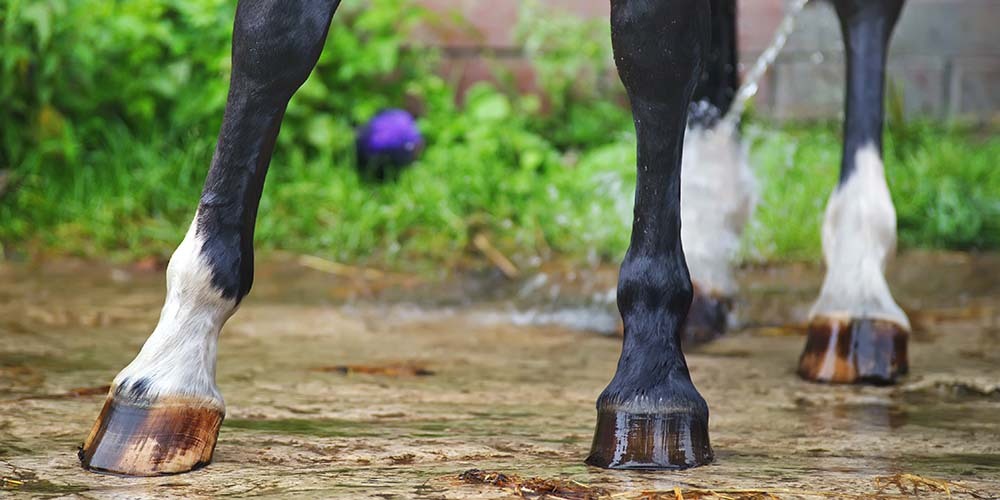
Start with a gentle flow of water on the lower legs, then gradually work towards the shoulder, body and hindquarters as your horse relaxes. Watch their reaction, keep the hose pressure low and pause if they become worried.
Wet the coat thoroughly before applying shampoo, including the mane and tail. Approach the belly and beneath the tail carefully, staying in a safe position rather than directly behind your horse. Keep the hose away from the face, eyes, nostrils and ears.
Step 3: Shampoo the body, mane and tail
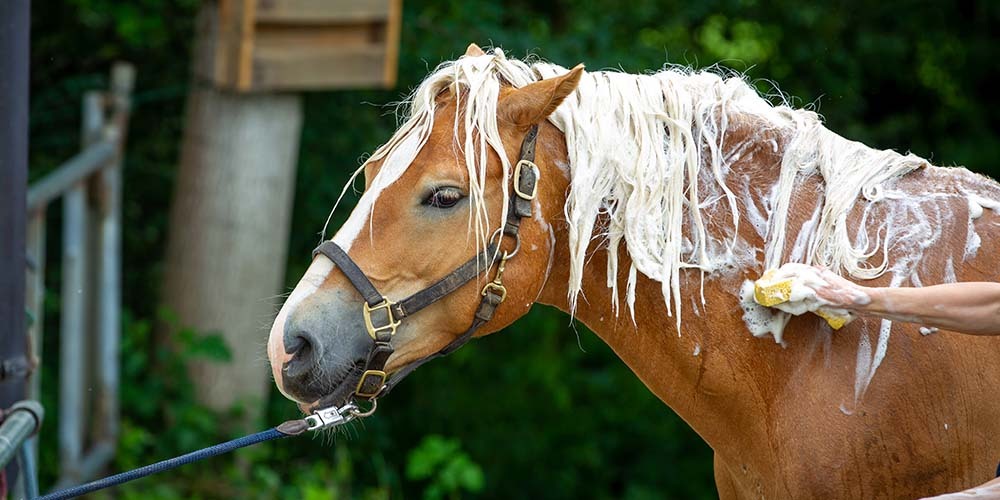
Prepare your shampoo as directed on the label, then apply it with your body sponge or washing mitt. Work in manageable sections so the shampoo doesn't dry on the coat, rinsing each section before moving on if needed.
Gently massage the shampoo through the coat with your fingers or a suitable soft washing brush. More bubbles don't necessarily mean a cleaner horse: using too much product simply makes rinsing harder.
For the mane, work carefully from the roots through the lengths without letting suds run into the eyes. Wash the tail through its lengths and gently around the dock. If using a bucket, hold it yourself and never leave the tail sitting in an unattended bucket.
Use a separate damp sponge to gently wipe beneath the tail. Avoid applying ordinary coat shampoo to genital areas.
Step 4: Rinse thoroughly and gently clean the face
Rinse with clean water until the coat is free from suds and no longer feels soapy. Pay particular attention to the mane roots, belly, between the legs and around the dock, where shampoo can be easy to miss. Residue can irritate the skin, so this is one step worth taking your time over.
Clean the face with its own soft sponge or cloth dampened with plain water. Gently wipe around the muzzle and cheeks, taking care around the eyes and nostrils. Avoid spraying the head with a hose or allowing water into the ears.
Step 5: Remove excess water and help your horse dry
After a routine bath, gently use a rubber-edged sweat scraper over the neck and body, following the direction of the coat. Use clean towels for the face, legs and sensitive areas. Take extra care to dry thick feathers and skin folds.
Let your horse finish drying somewhere sheltered. If the weather is cool, a suitable horse cooler or drying rug can help wick moisture away. Check underneath regularly and remove or change it if it becomes wet. Wait until your horse is dry before putting on their usual stable or turnout rug.
Apply mane and tail detangler according to its instructions, gently working through tangles from the ends upwards. Skip conditioner on areas you intend to plait, and keep slippery finishing sprays away from the saddle and girth areas.
Cooling a hot horse is different: If your horse needs cooling after exercise or in hot weather, keep applying cold water without stopping to scrape it off. Don't put a cooler rug on a horse that is still overheated. For more guidance, read our horse heatwave advice.

Horse bathing FAQs
How often should you bathe a horse?
There's no fixed schedule. Base full shampoo baths on your horse's coat, skin, workload and how dirty they are. Frequent shampooing can strip natural oils, so regular brushing, spot cleaning or a plain-water rinse may be enough between baths. If your vet has prescribed a medicated shampoo, follow their washing schedule.
Can you wash a horse with cold water?
Yes. Cold water is useful for cooling horses after exercise or in hot weather. For an ordinary bath, lukewarm water may be more comfortable, especially for a horse that dislikes cold hosing. Consider the weather, your horse's condition and how easily you can dry them afterwards.
Can you bathe a horse in winter?
A full bath is best saved for conditions where you can keep your horse comfortable and dry them thoroughly. In cold, windy weather, spot cleaning or a horse-safe no-rinse product is often more practical. Be particularly cautious with older, underweight or clipped horses, and avoid leaving a thick winter coat wet as temperatures fall.
How do you remove stains from a grey horse?
Use a horse-safe stain remover or whitening shampoo designed for the job. Our stain removal and whitening range includes options for stable stains and discoloured coats. Follow the recommended contact time and rinse instructions; purple shampoos can discolour pale hair if left on too long. Avoid household bleach and harsh scrubbing.
Can you use human shampoo or washing-up liquid on a horse?
A shampoo formulated for horses is the better choice for routine bathing. Human shampoos and household detergents aren't designed for equine skin, and strong detergents can remove too much natural oil. For sensitive skin or a suspected skin condition, ask your vet which product to use.
What if my horse is frightened of the hose?
Start with a damp sponge and short, calm sessions. Introduce water gradually at the feet, reward relaxed behaviour and build up at your horse's pace. An experienced handler can help; forcing a full bath while your horse is frightened can make the next attempt harder.
Should you bathe a horse the day before a competition?
Bathing the day before can give you time to dry your horse thoroughly and tackle any missed stains. If you're plaiting, avoid mane conditioner or detangler beforehand, as slippery hair is harder to grip. For the finishing touches, see our guide to competition turnout.
And there you have it: a clean coat, a tidy tail and a horse ready for their moment in the spotlight. Whether they stay that way until the show, or find the nearest patch of mud first, is another matter!
