


What to Wear for Show Jumping
What should you wear for show jumping?
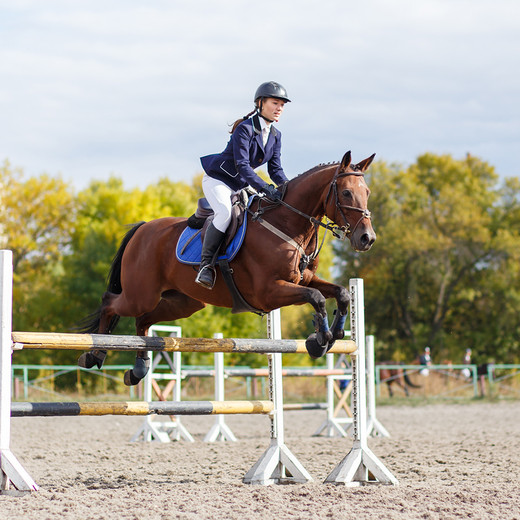
If you’re heading to a riding-school show, local clear round or relaxed unaffiliated competition, you can usually start with a correctly fitted riding hat, proper riding boots and clean, comfortable riding clothes. You don’t necessarily need to rush out and buy a full competition wardrobe. As you move into more formal unaffiliated shows and affiliated British Showjumping, you’ll generally add competition breeches, a show shirt and jacket and need to pay closer attention to the official dress rules.
The golden rule at any level is simple: check the show schedule before you go. Riding schools and unaffiliated organisers can set their own dress codes, while affiliated competitions follow British Showjumping rules.
Here’s how your show jumping wardrobe is likely to change as you progress.
Show jumping outfit checklist
For most formal show jumping competitions, you’ll need:
- A correctly fitted riding hat that meets the required safety standards
- A competition jacket
- A show shirt with a white collar
- Light-coloured competition breeches or jodhpurs
- Long riding boots, or permitted short boots with suitable gaiters
- Optional gloves, body protection, spurs and a compliant padded baton
Your first riding-school show
A riding-school show is often where riders get their first taste of competition and turnout is usually fairly relaxed.
If you’re riding a horse or pony from the school, the emphasis is likely to be on being safe, comfortable and neatly presented rather than looking as though you’re heading straight into a championship class.
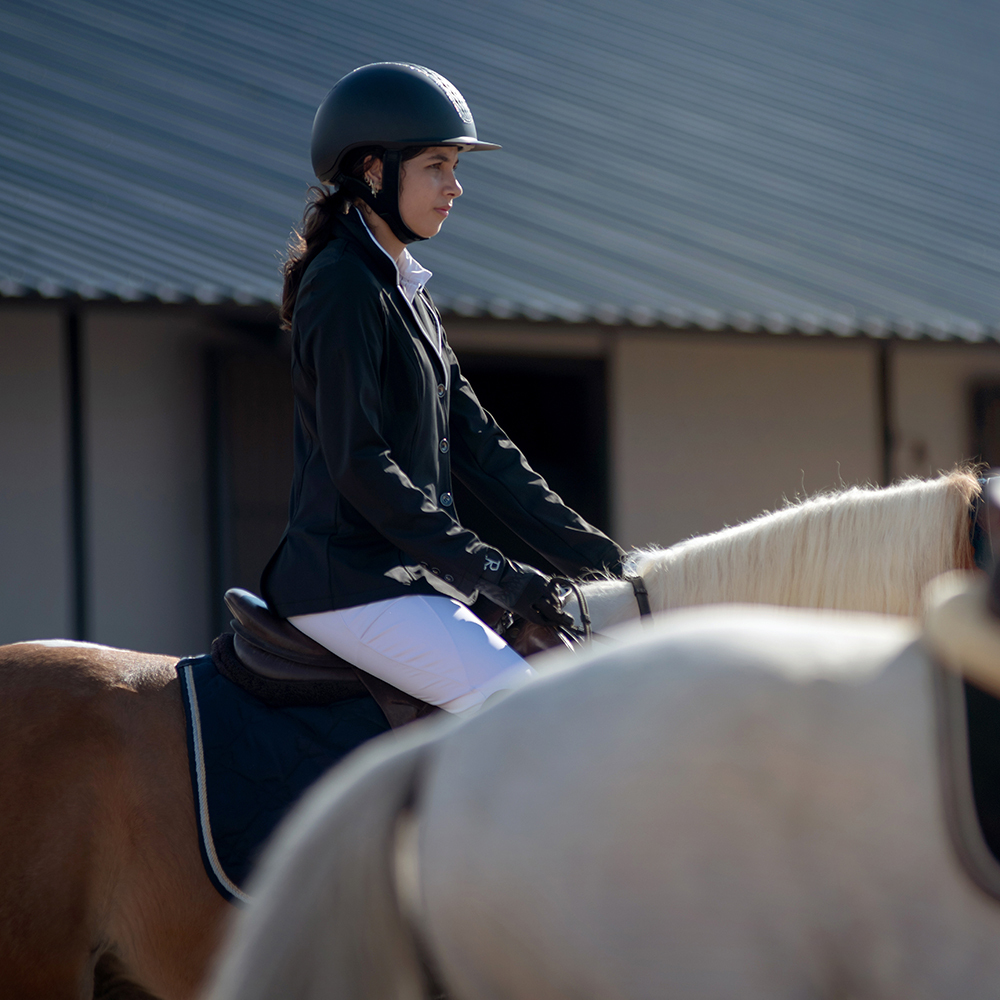
Your normal smart riding kit may be absolutely fine. Think clean jodhpurs or breeches, a tidy riding top, correctly fitted riding hat and proper riding boots.
Some riding schools encourage children to wear a shirt and jacket, particularly for an end-of-year show or more formal competition, while others are perfectly happy with lesson clothing.
There is no universal rule here, so ask your instructor or check the show information beforehand.
Our advice? Don’t buy a complete competition outfit just for your first riding-school show unless you know you’ll use it again.
A good riding hat and correctly fitting riding boots are far more important purchases at this stage.
What to wear for a clear round
Clear round jumping is another brilliant way to start competing without quite as much pressure.
At many local venues, turnout is relaxed. You might see riders in breeches and a base layer alongside someone wearing a full show jacket. That is completely normal.
For a typical local clear round, smart everyday riding clothes are often enough, provided your riding hat and footwear meet the organiser’s safety requirements.
If you’re starting to compete more regularly, this is also a good opportunity to begin wearing your show kit. It lets you find out whether your new breeches are actually comfortable and whether your jacket gives you enough room across the shoulders before the competition matters.
One thing to watch is where the clear round is being held. Clear round classes held as part of an affiliated British Showjumping show can be run under British Showjumping Rule 101, so don’t automatically assume every clear round has a relaxed dress code. Current British Showjumping schedules do list clear-round classes under Rule 101.
When in doubt, check the schedule.
Moving into local and unaffiliated show jumping
Once you start entering local unaffiliated classes, you’ll probably notice riders becoming a little smarter.
There is no single national dress code for unaffiliated show jumping. Each venue or organiser can set its own rules and some are much more relaxed than others. Many, however, use affiliated turnout as a guide.
This is the point where investing in a simple competition outfit makes sense.
A useful show jumping wardrobe would include:
-
A navy or black competition jacket
-
A competition shirt with a smart white collar
-
Competition breeches or jodhpurs
-
A correctly fitted riding hat
-
Long riding boots or suitable short riding boots where permitted
-
Riding gloves if you prefer them
You don’t need anything particularly flashy.
A simple navy jacket, comfortable show shirt and traditional competition breeches will work at most local shows and can continue to be worn if you decide to affiliate later.
What colour breeches should you choose?
For local and unaffiliated competition, check the organiser’s rules because colours can vary.
If you want one pair that will work across lots of different competitions, white, beige, fawn or light grey are sensible choices. They give you a traditional competition look and avoid buying another pair when you move into more formal classes.
White breeches are undoubtedly the classic show jumping choice. They are also remarkably talented at finding mud approximately three minutes after you put them on.
What to wear for affiliated British Showjumping
Once you affiliate with British Showjumping, the dress code becomes much clearer because you are competing under the British Showjumping Members Handbook.
The 2026 rules cover what competitors can wear under Rule 101 and British Showjumping also publishes amendments during the season, so it’s worth checking both before competing.
This is where the full competition outfit comes in.
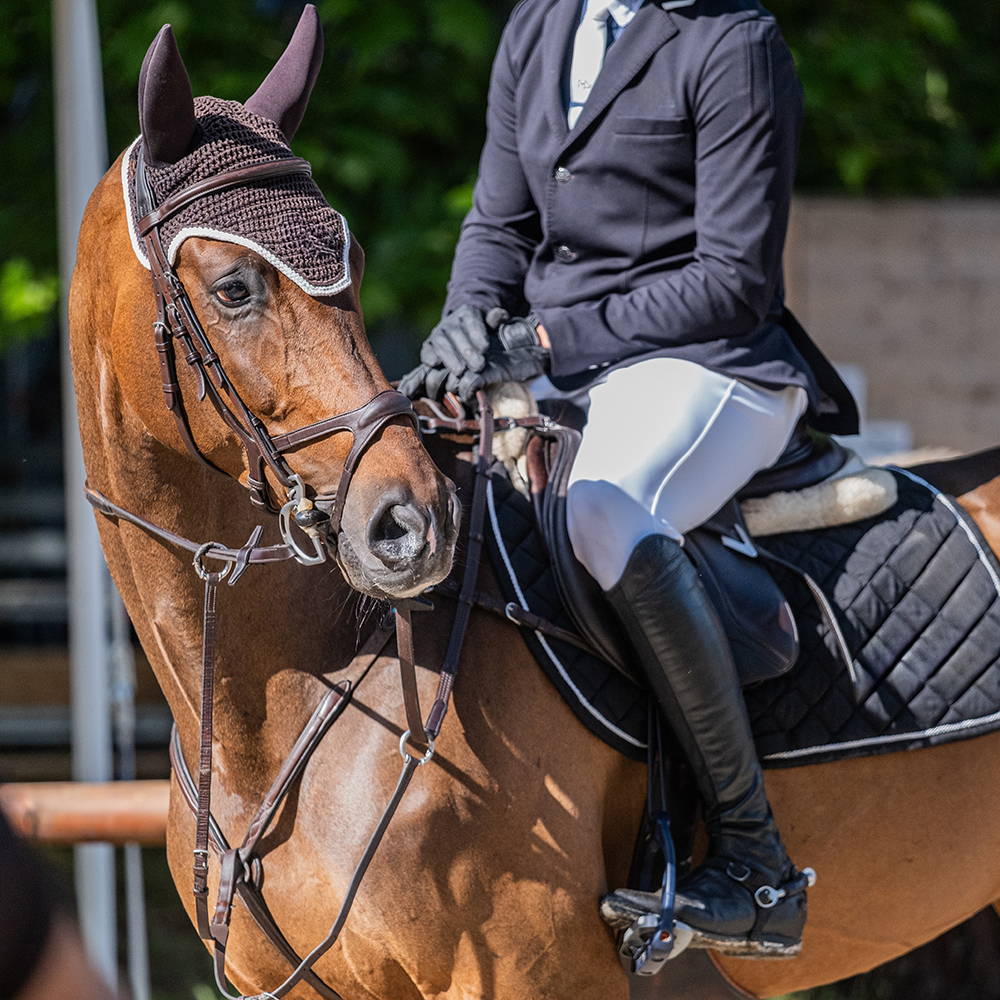
Competition jacket
Competitors should wear a proper show jumping jacket in the arena.
Traditional tailored jackets are permitted as well as approved modern competition styles. For most riders, navy and black are the easiest colours to wear and coordinate.
Modern technical jackets are particularly useful for jumping because they offer far more stretch than traditional stiff fabrics.
When trying one on, don't just stand in front of the mirror.
Bring your hands into a riding position, bend your elbows and fold forwards slightly. If the jacket is pulling across your shoulders in the changing room, it won't improve when you're halfway over an oxer.
Can you wear a coloured show jumping jacket?
Navy and black may be the traditional choices, but coloured competition jackets are becoming increasingly popular. Shades such as burgundy, pink, green and rich blue can bring more personality to your competition outfit while still looking smart and polished.
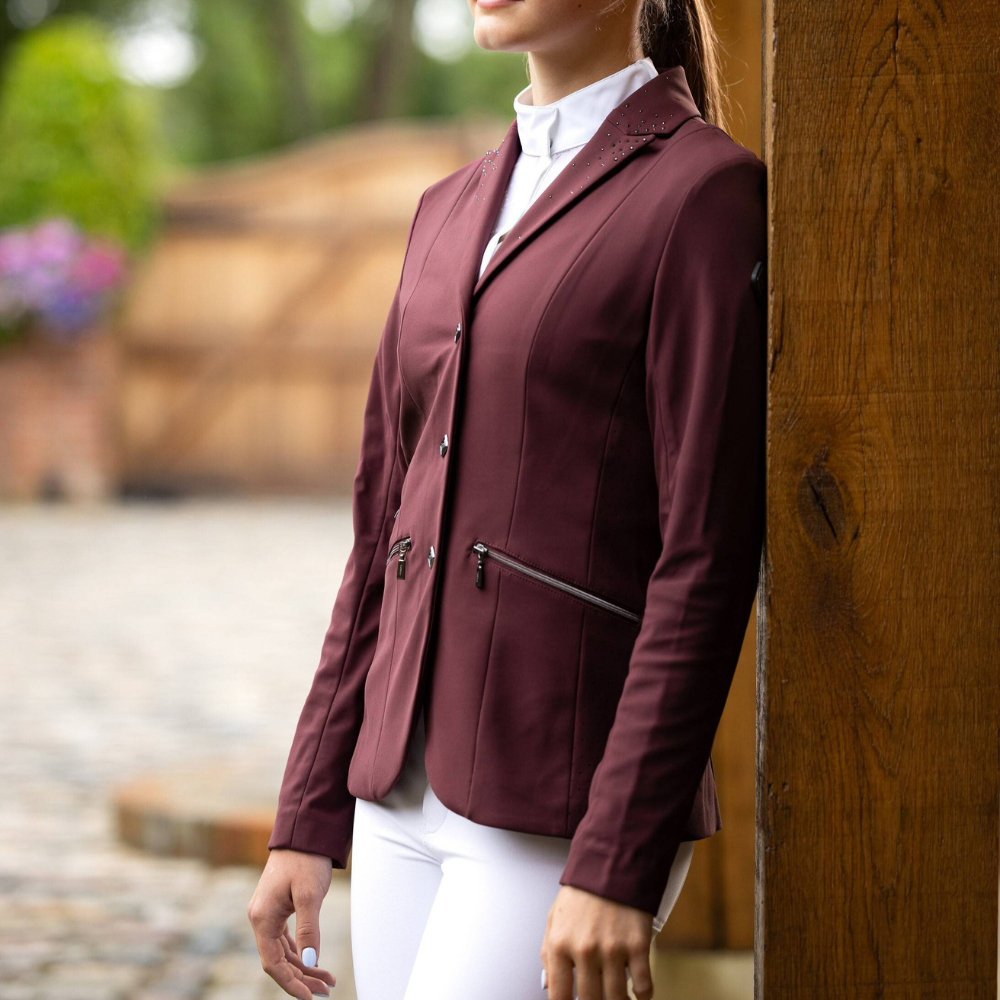
For unaffiliated shows, whether coloured jackets are permitted will depend on the organiser’s dress code. British Showjumping allows a wider choice of colour than many riders realise, although the jacket’s overall style and design must still comply with the current rules, and British Team colours are reserved.
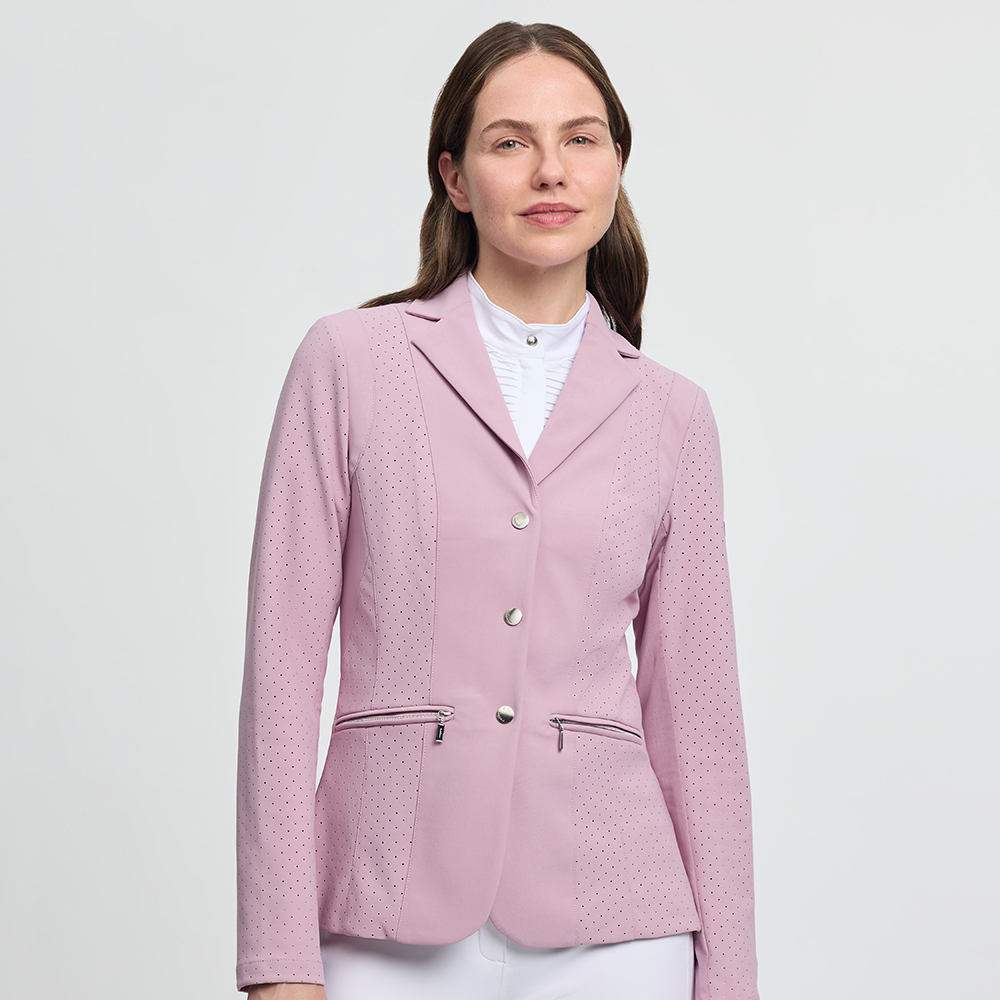
If you’re investing in a statement jacket, check the competition rules first and choose a colour that works with your breeches, shirt and riding hat. Burgundy and deeper jewel tones are particularly easy to coordinate, while brighter pinks create a bolder look in the ring.
Show jumping shirt
Your competition shirt can have long or short sleeves but should have a white collar. Long-sleeved shirts should also have white cuffs and shirts need to be properly fastened.
High white-collar show shirts give the clean, modern competition look most riders associate with show jumping.
Technical stretch fabrics are well worth considering. They fit neatly beneath a jacket and make a considerable difference when you’ve spent half an hour warming up on a hot day.
Competition breeches and jodhpurs
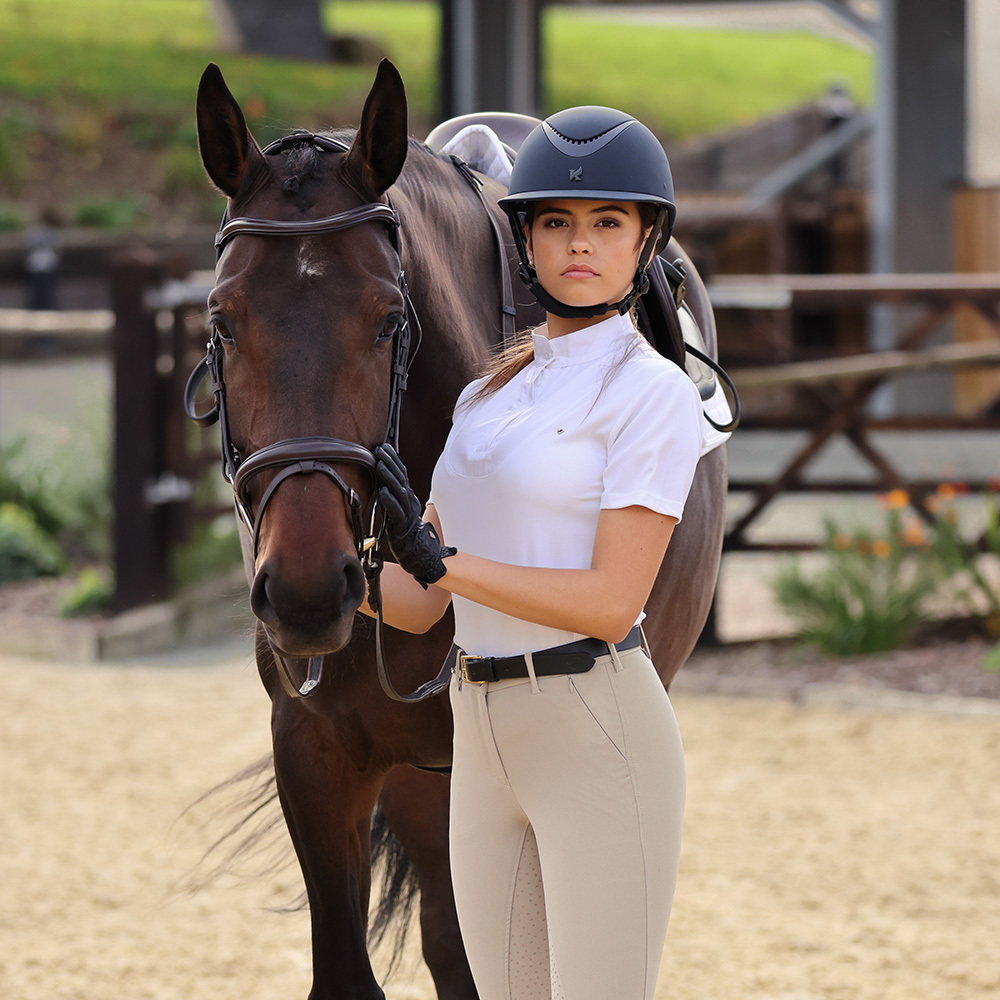
Under current National British Showjumping rules, breeches and jodhpurs must be white, pale yellow, beige, grey or fawn. Black and navy are not permitted.
That makes white, beige or light grey the most versatile choices if you want competition breeches that will take you from local unaffiliated shows into British Showjumping.
Colour aside, choose breeches you can actually ride in.
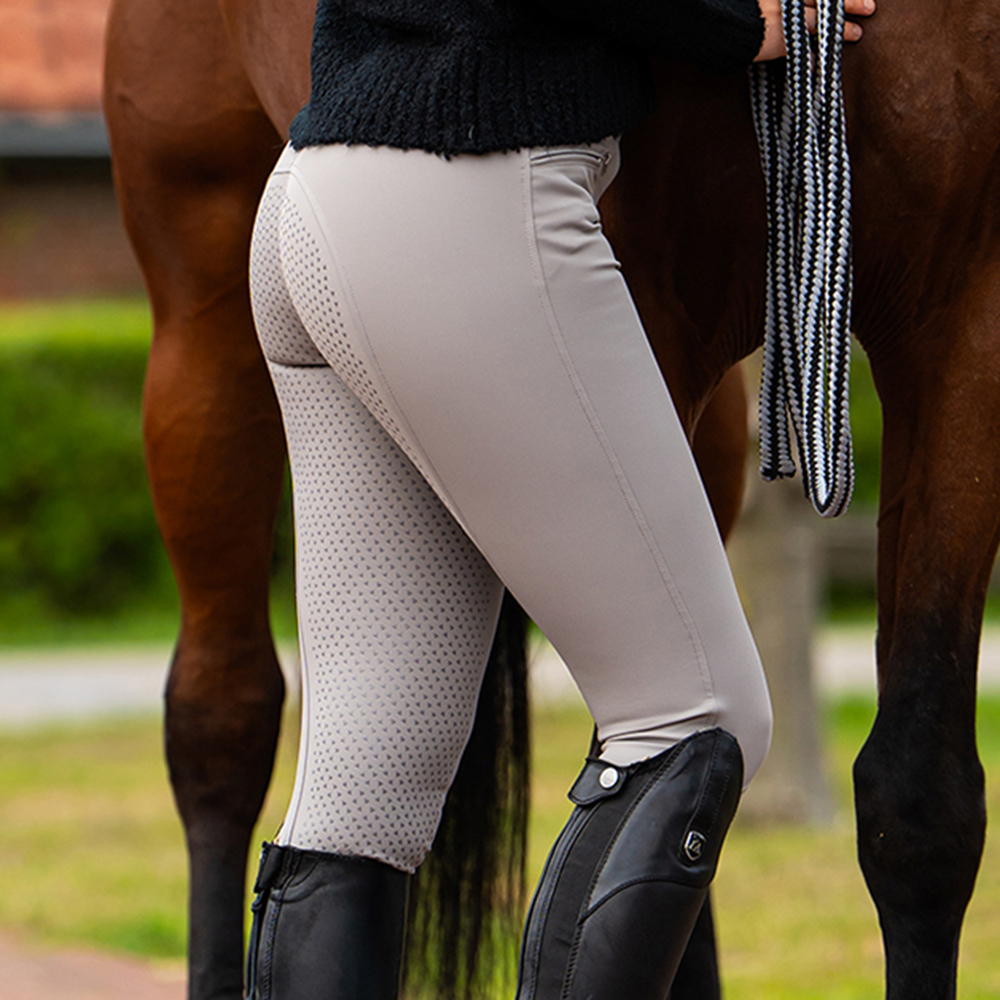
For show jumping, many riders like a knee-grip breech because it gives some security through the leg while leaving the seat free to move. Others prefer a full-seat grip. Neither is automatically better; what matters is whether you can move naturally into and out of your jumping position.
Riding boots
For affiliated competition, traditional riding boots can be black, brown or navy. Short riding boots can also be worn with matching leather gaiters and junior riders have additional options around half chaps.
Long boots remain the classic show jumping choice.
Field boots have lacing around the ankle, which some riders find gives them a little more flexibility. Dress boots have a smooth front and create a very clean competition look.
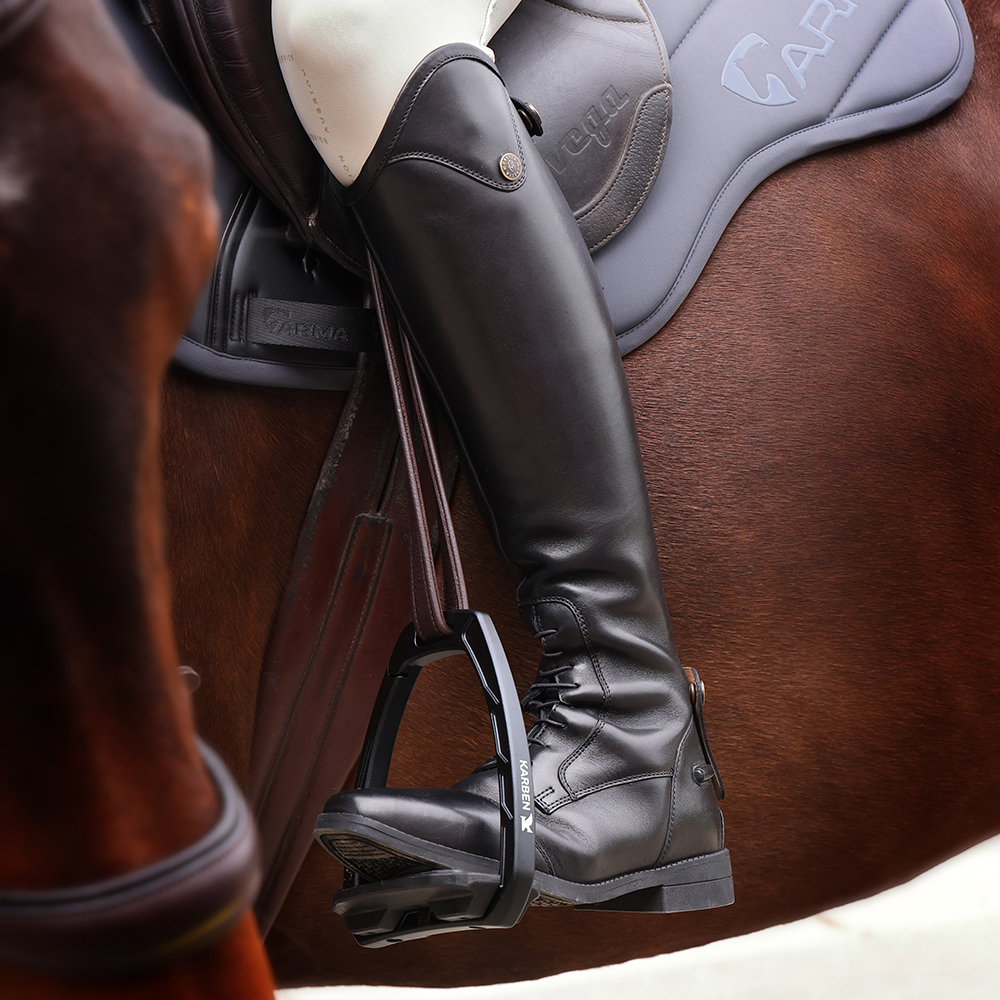
Whichever you choose, your boots need to fit safely with your stirrups and allow you to flex through the ankle.
What riding hat do you need for show jumping?
Whether you're jumping 40cm at the riding school or competing affiliated, your riding hat is the piece of kit we wouldn't compromise on.
For affiliated British Showjumping, protective headgear must be worn whenever you are mounted and the harness must be correctly adjusted and fastened.
Under British Showjumping’s 2026 rules, accepted standards include EN 1384:2023, PAS 015:2011 and VG1, provided they carry the required BSI Kitemark or Inspec IC mark. Specified ASTM/SEI, SNELL and Australian/New Zealand standards are also accepted.
Because both the safety standard and its accompanying quality mark matter, always check the current British Showjumping Members Handbook before buying a hat for affiliated competition.
Peaked and wide-peak hats are particularly popular for show jumping, but fit should decide which model you choose.
Heads come in different shapes as well as sizes. A riding hat that fits your friend perfectly might rock backwards on you or create pressure around your temples.
This is why we strongly recommend professional fitting, especially when buying for a growing child. You can visit our Olney store for a professional riding hat fitting with a trained member of the team.
Do you need a body protector or back protector for show jumping?
A body protector is not generally compulsory for standard show jumping, but plenty of riders choose to wear one for extra protection and confidence. This is particularly common with younger riders, anyone jumping a young or unfamiliar horse or riders returning after a fall.
It is important to check the rules for your particular competition, especially for children. Some riding schools, venues and competition organisers make body protectors compulsory for junior riders or certain classes, even where the wider discipline rules do not. Individual centres can also have additional safety requirements linked to their own policies or insurance. (bhs.org.uk)
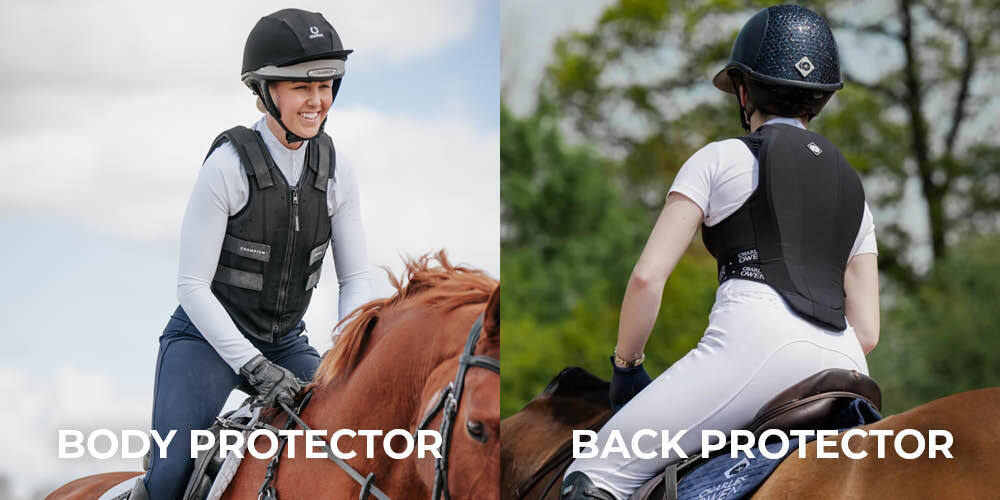
Body protector or back protector?
They are not quite the same thing. A full body protector is designed to protect a larger area of the torso including the back, ribs and chest. If you are buying one for general riding and competition, look for the current BETA 2018 Level 3 standard. BETA considers Level 3 suitable for normal riding, competition and working with horses. (beta-uk.org)
A back protector is usually slimmer and lighter, concentrating protection around the spine and back. This can make it appealing to show jumpers who want something discreet beneath a jacket without the bulk of a full body protector.
The trade-off is that a back protector offers less overall coverage. For example, the Racesafe MotionLite is designed as lightweight back protection and is certified to a different standard from Racesafe's BETA Level 3 full body protectors. It is not a substitute where competition rules specifically require a full body protector.
So the choice comes down to the level of protection you want and the rules of the competition you're entering. If a body protector is compulsory, check exactly which safety standard is required rather than assuming a back protector will qualify.
Whichever you choose, fit matters. A protector should sit securely without catching the saddle or restricting you when you fold over a fence, so professional fitting is always worthwhile.
What about gloves, spurs and a jumping crop?
Gloves are optional for affiliated British Showjumping. Most riders still choose to wear them because they help with grip and protect the hands, particularly on wet competition days.
Spurs are also optional but must comply with the current British Showjumping rules if you wear them.
What riders often still call a crop or jumping whip is referred to by British Showjumping as a padded baton. Current rules specify its dimensions, weight and padding, so if you're buying one for affiliated competition, look for one specifically designed to comply with British Showjumping rules. British Showjumping advises members to check current equipment amendments because rules can change during the season.
At a riding-school or local show, you may never need spurs or a padded baton at all. They are riding aids, not compulsory pieces of a competition outfit.
When is it worth upgrading your stirrups?
You don't need specialist show jumping stirrups to enter your first competition. Correct size and safe positioning come first.
As riders progress, many start looking at technical stirrups for a wider footbed, additional grip or greater comfort through the ankles and knees.
Freejump and Flex-On are both particularly popular within show jumping, but they have a different feel.
Freejump designs tend to appeal to riders who like a secure, close-contact platform. Flex-On offers different tread angles and grip options, which can be useful if you're trying to improve comfort or find a foot position that feels natural.
There isn't one "best" jumping stirrup. The best option is the one that works with your boots, ankle mobility and natural lower-leg position.
What about men's and children's show jumping clothing?
The basic outfit doesn't change dramatically between women, men and children. The biggest difference is fit.
Men's competition jackets are cut differently through the shoulders and body, while women's styles tend to have more shaping through the waist. Children's competition wear needs to allow them to move comfortably without swamping them.
Children may be able to get away with a little sensible growing room in a jacket or shirt.
Safety equipment is different. Never buy a riding hat or body protector several sizes too large so that a child can "grow into it". Both need to fit correctly while they're being worn.
Your show jumping wardrobe can grow with you
If you're just starting out, you really don't need to buy everything at once.
For a riding-school show or local clear round, concentrate on safe, correctly fitted kit and being comfortably dressed to ride.
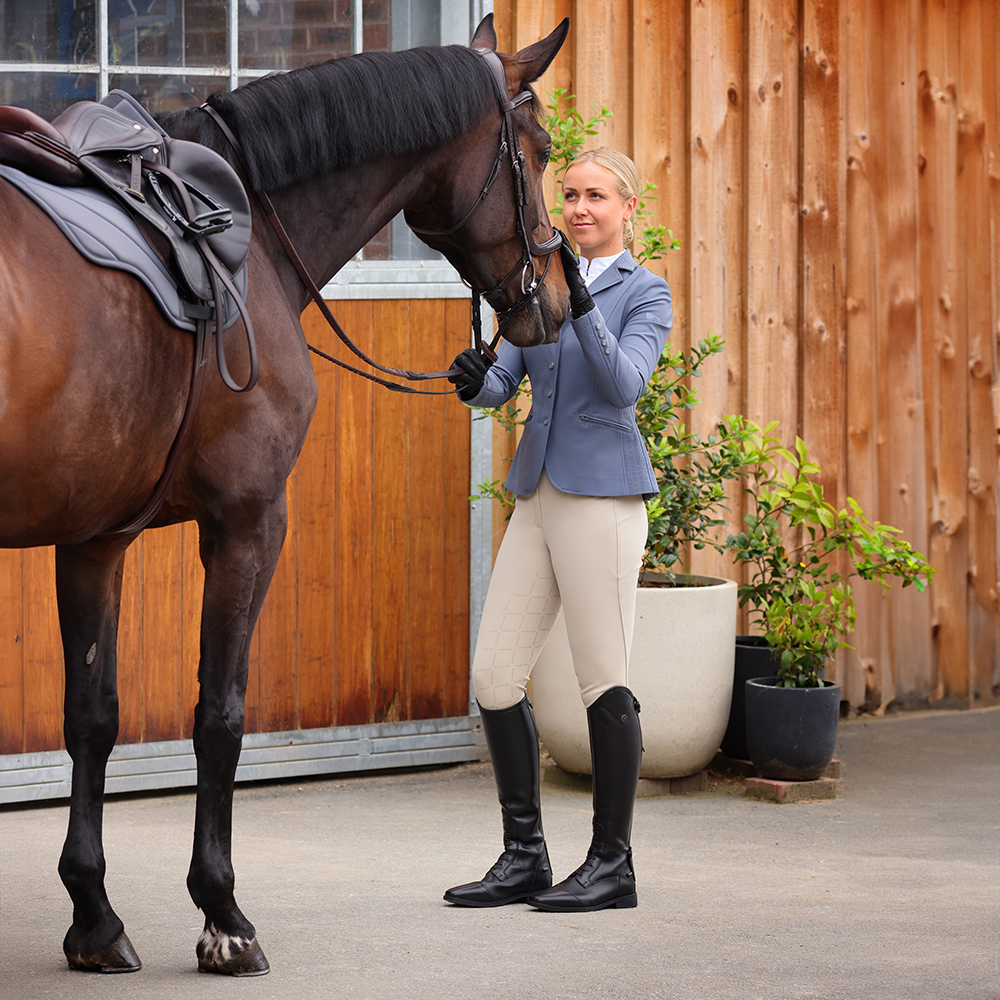
Once you start entering unaffiliated shows regularly, a good competition shirt, breeches and simple show jacket are useful investments.
If you move into affiliated British Showjumping, you can then check your existing kit against the current Rule 101 dress requirements and upgrade anything that doesn't meet the rules.
Most importantly, check the schedule before every competition. A local clear round can be very relaxed, while another venue may expect full competition turnout.
Get the essentials right and the rest can grow with you. After all, once the bell rings, you're much better off thinking about the next fence than whether you've bought the most fashionable jacket in the warm-up.
To learn more about what to wear to horse show, check out our handy horse show guide.
