



An Honest Review of Shires Turnout Rugs
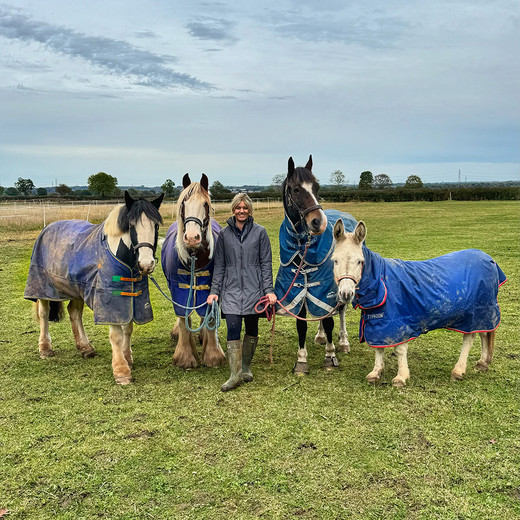
Choosing a turnout rug for one horse can involve a surprising amount of trial and error. Choosing for a yard containing fine ex-racers, broader cobs, ponies and a donkey is quite another challenge.
That is why we asked Country & Stable EVERYday ambassador Emma from @adventures_ofabaldequestrian to talk us through the Shires turnout rugs she uses across her yard. Emma has used Shires rugs since childhood, with some of her current rugs now more than six years old, so this is not a first-impression review after a few tidy days in the field.
These rugs have faced clay mud, prolonged rain, fluctuating temperatures, herd turnout and horses who are not remotely interested in keeping their wardrobe pristine.
The experiences below are Emma’s own. We have added occasional Country & Stable notes where some extra fitting or rugging guidance may be helpful.
What different types of Shires rugs do you currently use?
I currently use a selection of Shires turnout rugs from the Typhoon, Tempest and Highlander ranges.
I have different weights and styles depending on the individual horse and what the weather is doing, which means I am not necessarily reaching for the same rug for every animal.
As a general guide on my yard:
| Shires range | Who it suits on my yard | My standout feature |
|---|---|---|
| Typhoon | Poppy, Snowy and Major, who are smaller or finer framed | Plenty of practical rug for the money |
| Tempest | My broader horses and those who benefit from an adjustable front fit | Adjustable chest clips |
| Highlander | Trigger, Prince and Charlie, particularly the wider cobby types | Shoulder gussets and freedom through the chest |
That is based on how the rugs sit on my own animals rather than a rule that will apply to every horse. There is some crossover too. Several of the boys can comfortably wear rugs from more than one of the ranges.
Which turnout rug weights do you use throughout the seasons?
I tend to have a mixture of 50g, 100g and the occasional 200g rug so I can adapt depending on the temperature, wind and rain.
I do not simply rug according to the time of year. I choose a rug dependent on weather conditions and the individual horse. In the milder months, a lightweight turnout rug is ideal when I want waterproof protection without unnecessary warmth.
I also use Shires Warmarug rug liners, which are compatible with selected Tempest and Highlander rugs. I really like them because they give me the flexibility to add warmth to a turnout rug when needed, rather than having to own a different rug for every possible weather condition.
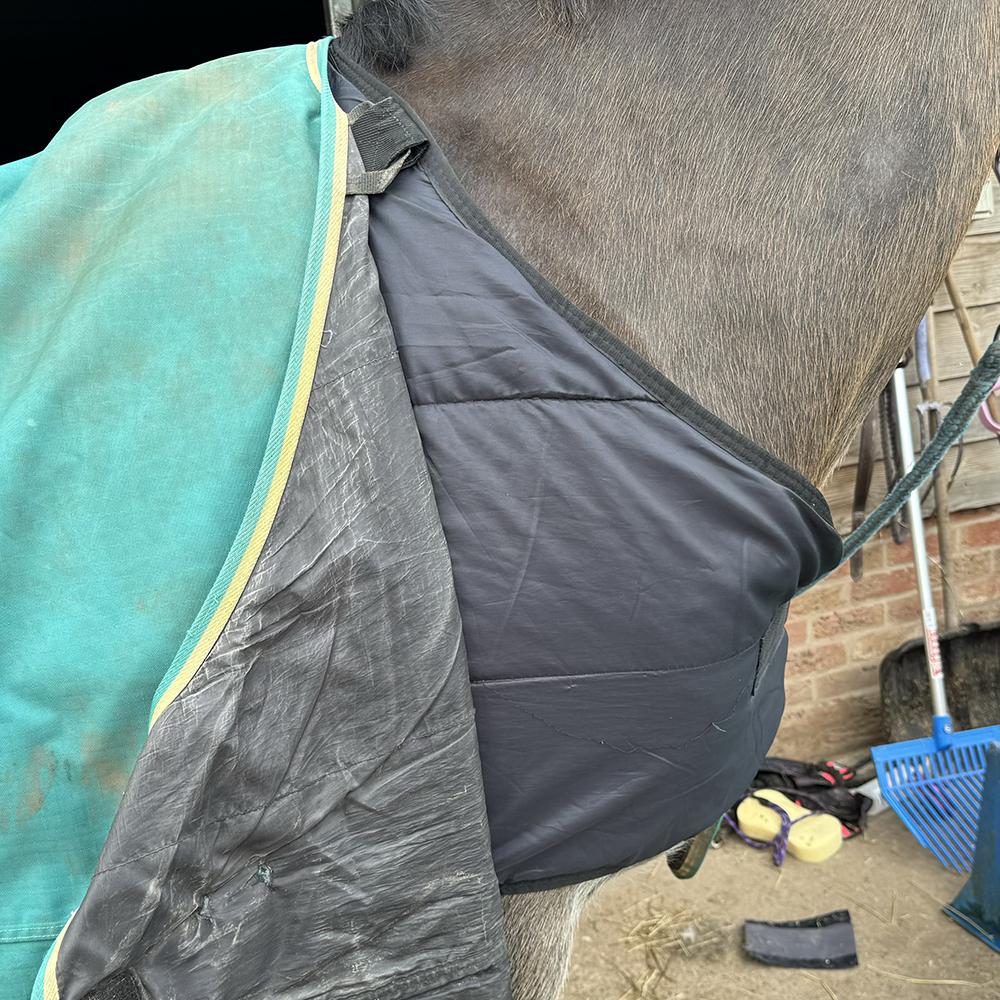
When it gets colder, I can add a liner underneath to increase the warmth without changing the outer rug, then remove it again when conditions become milder. I find this particularly useful when temperatures fluctuate, which they so often do in the UK!
Having two horses in their late twenties, being able to layer according to the conditions and the individual horse is a godsend.
Country & Stable note: Not every rug within a range will necessarily accept a liner, so check the individual product description before pairing a Warmaliner with a turnout rug. Liners should attach securely and must not pull tightly across the shoulders or alter the fit of the outer rug.
View this post on Instagram
How have the rugs performed in typical British weather?
They have been really well suited to the weather we get here, particularly the combination of rain, wind, mud and then the occasional completely unexpected change in temperature!
They have coped well with everyday turnout and kept my horses protected without feeling overly bulky. I have them washed and reproofed at the end of each season as a matter of routine, and they have continued to cope really well, even years down the line.
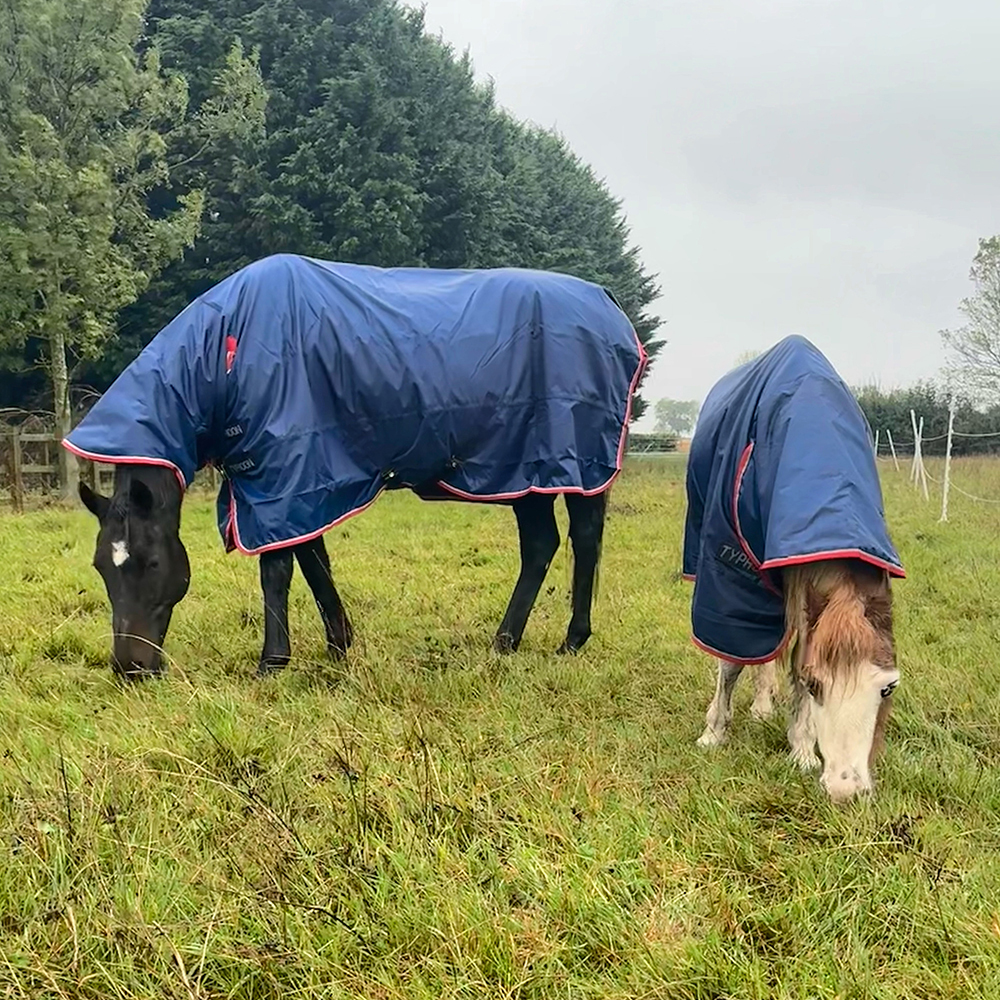
Do not get me wrong, a 0g sheet cannot always cope with a huge downpour of what feels like a month’s rain in an hour, but nor would any of my coats!
Which Shires rug works best for a horse, pony or donkey?
This is where I love the Shires range!
Shires Typhoon for finer or smaller frames
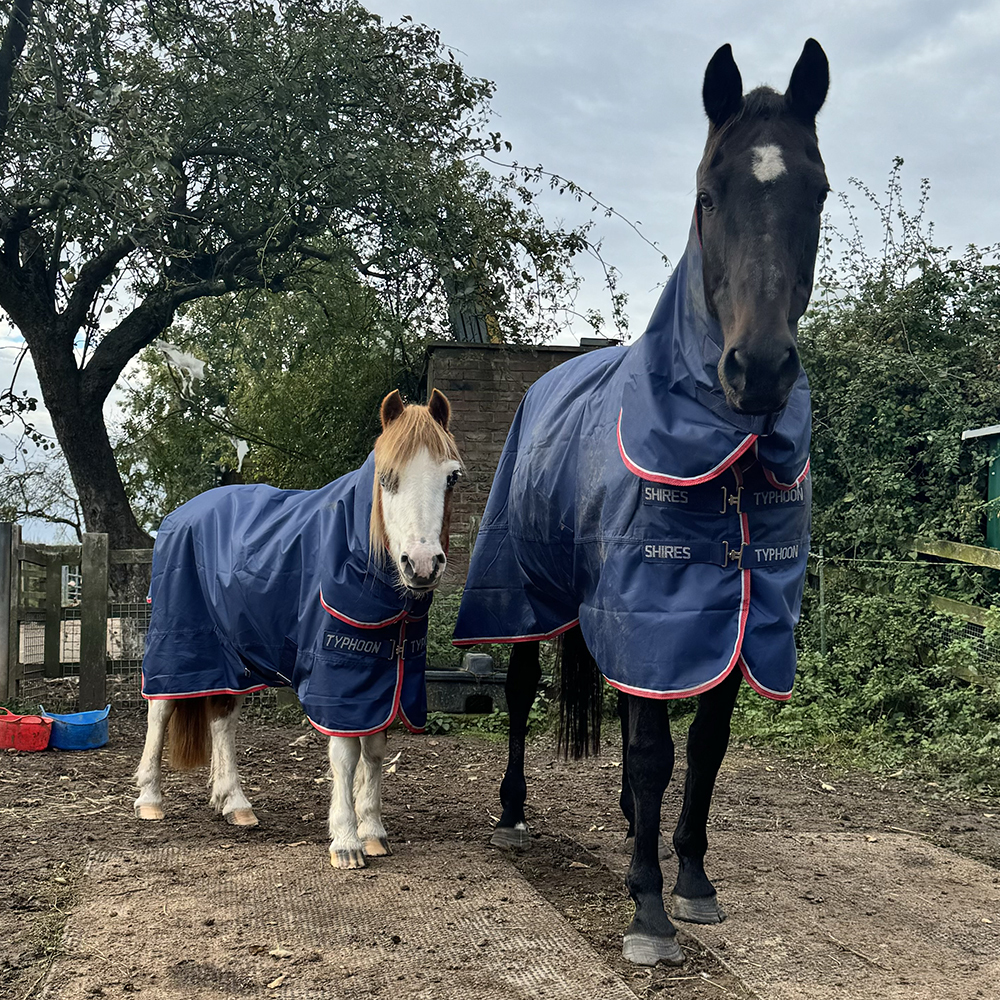
The Typhoon is perfect for my small-framed pony Poppy, my donkey Snowy and my ex-racer Major. I find that its cut sits nicely on their smaller or finer frames.
Shires Tempest and Highlander for broader builds
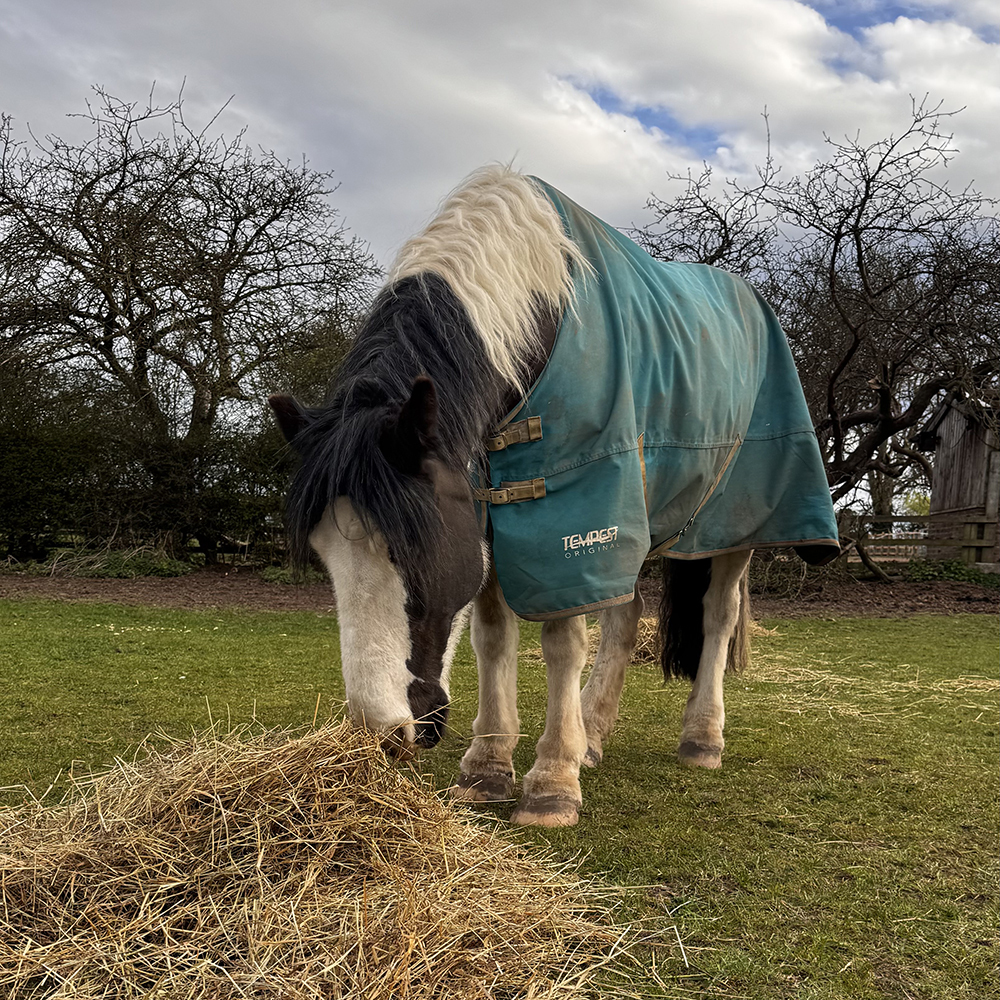
The Tempest and Highlander suit my wider-framed, cobby types... I'm looking at you, Trigger, Prince and Charlie!
The great thing is that most of the boys fit into two out of the three ranges, so there is still lots of choice. Each model has different features while remaining affordable across the ranges.
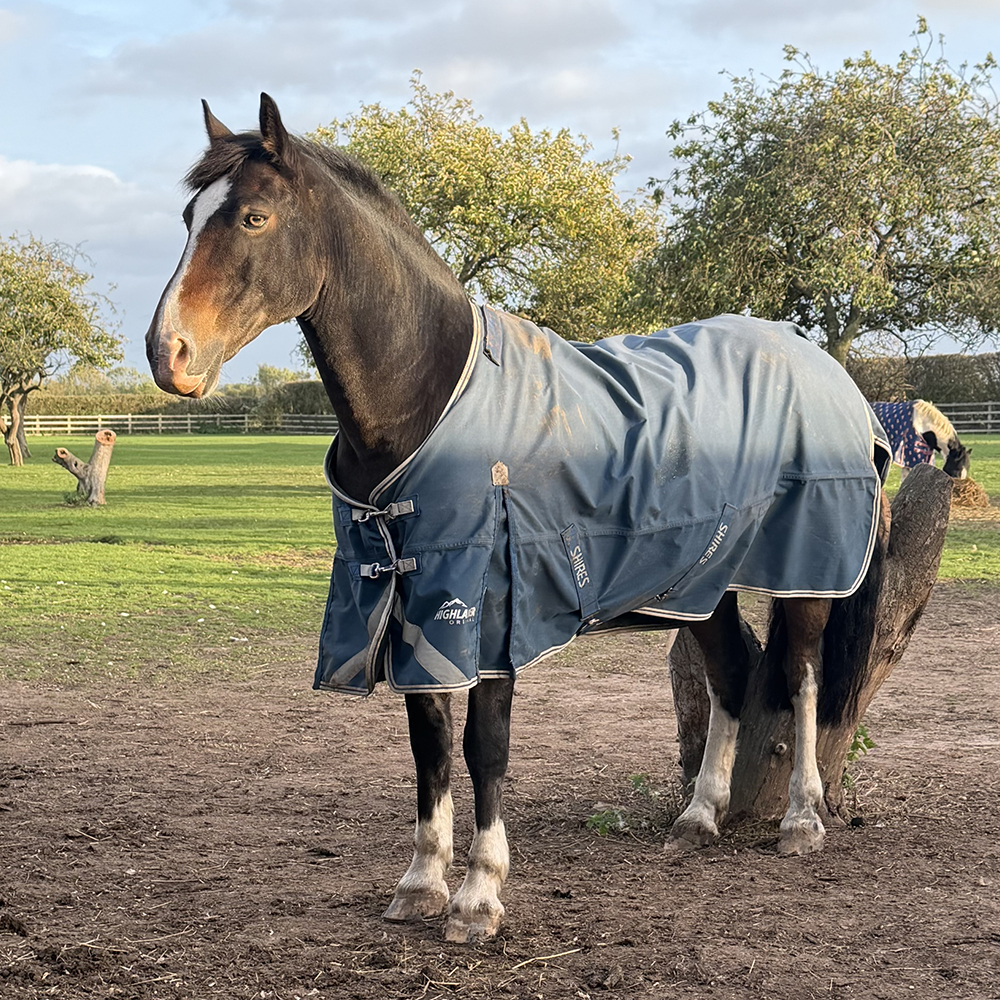
In terms of sizing, I find the rugs pretty true to size, but the different cuts across the ranges make a big difference. Rather than simply going by rug size, I choose the range based on the horse’s build and shape, as that gives me the best overall fit.
Country & Stable note: When trying a turnout rug, check that the front closure sits comfortably without pulling backwards against the shoulders. The rug should cover the hindquarters without hanging too far beyond them and the surcingles should leave a safe hand’s width beneath the belly. Watch the horse walk, graze and turn before deciding the fit is right.
What are your favourite features across the turnout rugs?
I have a different favourite feature from each range.
Typhoon: practical without an expensive price tag
With the Typhoon, I love how much rug you get for your money! It is a no-fuss rug without an expensive price tag, while remaining really practical with both combo and standard neck options.
Tempest: adjustable chest clips
My favourite feature on the Tempest is the adjustable chest clips. As I use the same rug on different horses, finding the best fit possible is paramount to me, and the adjustable front helps me do that.
Highlander: shoulder gussets
For the Highlander, it has to be the shoulder gussets!
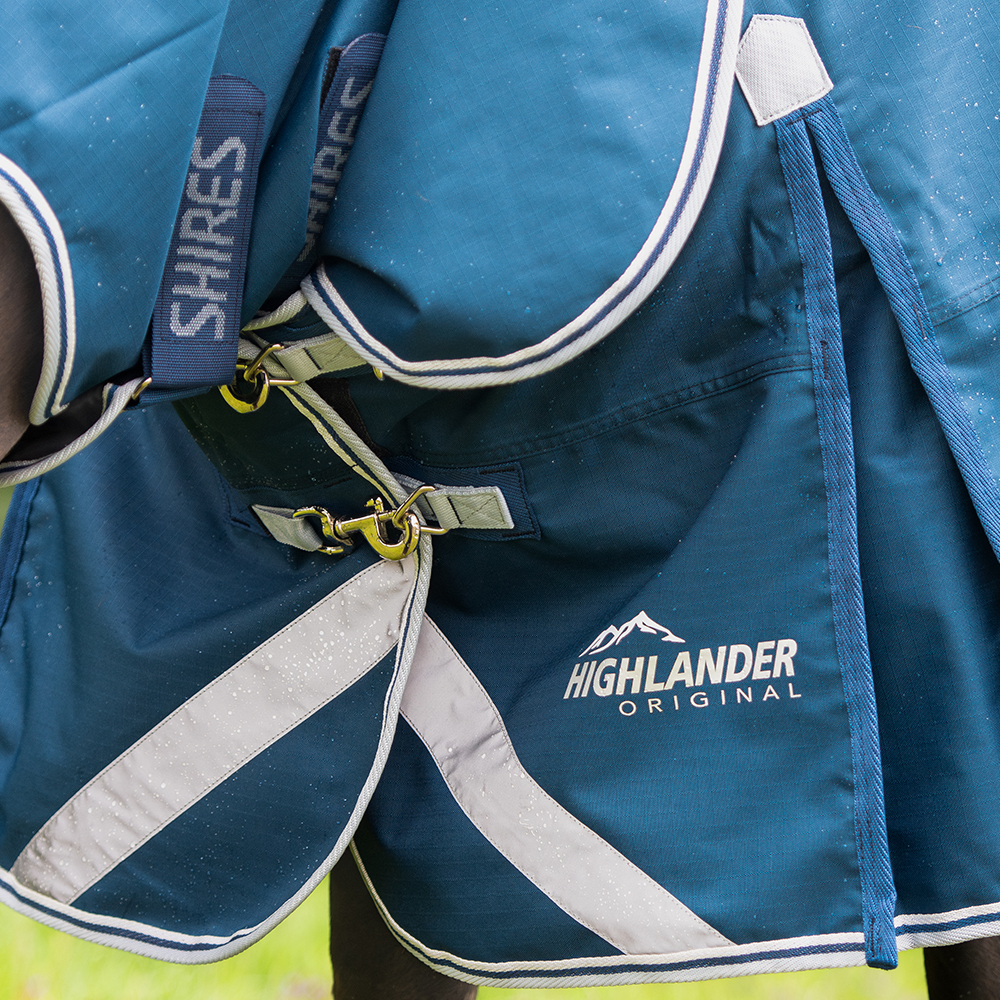
Charlie is especially wide across the chest and, if I am not careful, he can get chest rubs. Having the gusset allows greater freedom of movement and makes him much more comfortable.
Did I mention that the Tempest and Highlander models can come with detachable necks too?
How well have the rugs fitted and stayed in place?
I have found them secure during normal day-to-day turnout. A good fit is something I am quite particular about, especially with horses who are out for long periods, and I have been pleased with how the rugs across the ranges sit and stay in place rather than constantly needing to be readjusted.
Snowy the donkey does occasionally need his Typhoon adjusting because of his conformation, but it has never moved enough to cause any concerns for his wellbeing.
Have they held up to mud, rain, rolling and regular wear?
If I tell you that some of these rugs are more than six years old, does that tell you everything you need to know?
Poppy and Major are rugged much more than the other horses because of their ages and individual needs, so naturally their rugs are subject to more use.
I also have the cobby boys in herd turnout, and they do love a scrap or two! I have had to have a few repairs made, but I would argue that is due to the horses being a little too rough with each other rather than general wear.
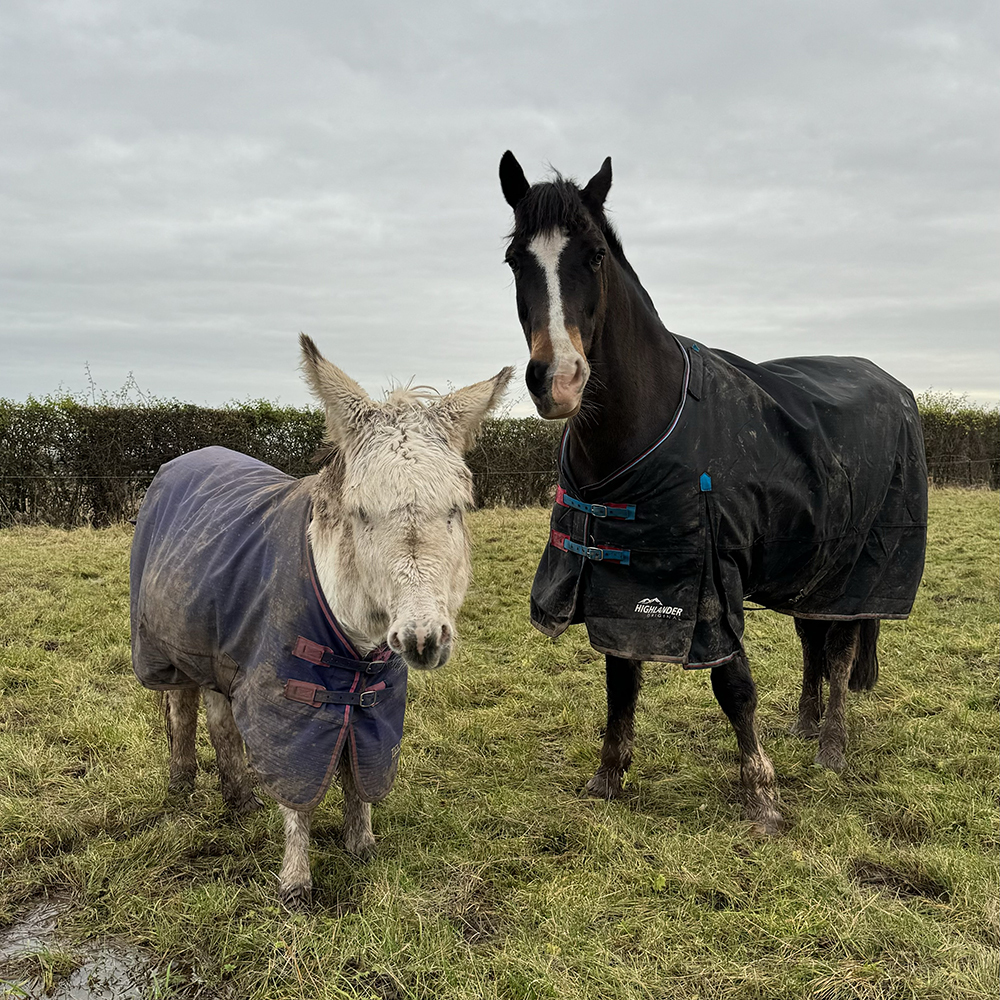
We live on clay-based land too, so our rugs do not stay clean for long! A quick hose off and leaving them to dry sorts them out pretty quickly. When they come back from the reproofers, they look as good as new.
I also find them comfortable for longer periods of turnout, without my horses feeling sweaty underneath. That is particularly important when temperatures are fluctuating.
How effective are Shires turnout rugs during incessant rain?
This is a huge test, especially in British weather! I am going to be honest: I will always choose a 50g rug over a rain sheet, and I think a 50g copes really well when the heavens open.
All of my horses have been out in constant rain all day and then come in dry. Prince lives out all year, and I do not always need to change his rug.
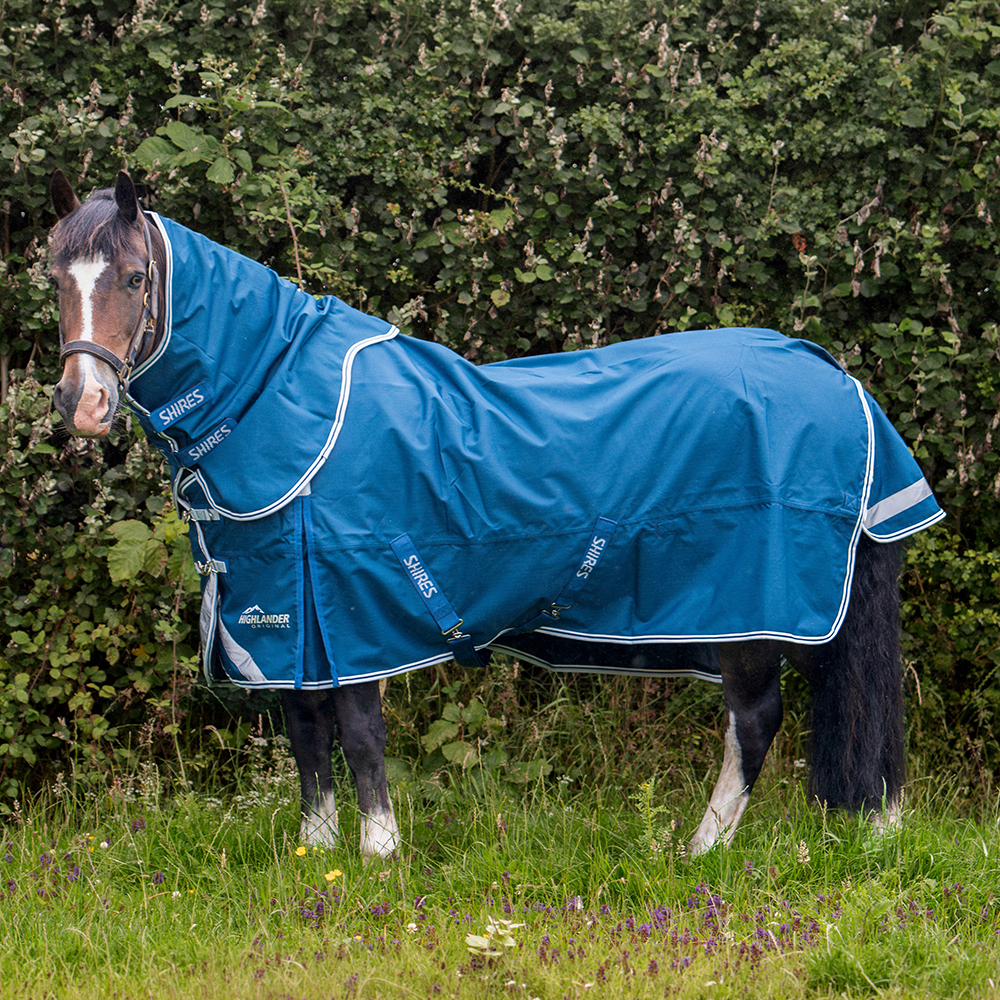
When I use a detachable neck, I find there is plenty of overlap to make sure their necks stay dry.
Country & Stable note: A rug’s fill does not create its waterproofing. Waterproof performance depends on the outer fabric, coating, taped seams, condition and fit. Emma’s preference for 50g reflects how those rugs have performed on her own yard. A sound, well-maintained 0g rug can still provide excellent rain protection, but some people find that a 50g rug helps keep their horse drier because the filling creates an insulating layer between the outer fabric and the horse’s body.
If a horse feels damp beneath a rug, check whether water has penetrated from outside or whether the horse has become warm and clammy underneath. The solution may be reproofing, repairing a damaged seam or choosing a lighter rug rather than automatically adding more fill.
Which rug would you most recommend for everyday use?
Can I say them all?!
For Poppy, Major and Snowy, it would definitely be the Typhoon range. In my experience, it suits their smaller frames and is available in 0g, 100g and 200g options, which gives me plenty of choice.
For Trigger, Prince and Charlie, I find myself choosing the Highlander range. The versatility of the fit, weights and detachable neck options makes it a standout all-rounder for my yard.
The added bonus of being compatible with Warmarug Liners means I do not need to buy one of every weight “just in case”.
My overall verdict after years of use
Overall, what I like most about Shires turnout rugs is that they are practical and a great affordable option, no matter your budget.
They are designed for horses who are actually going to be turned out in British weather - not horses who politely stand in a field looking pristine!
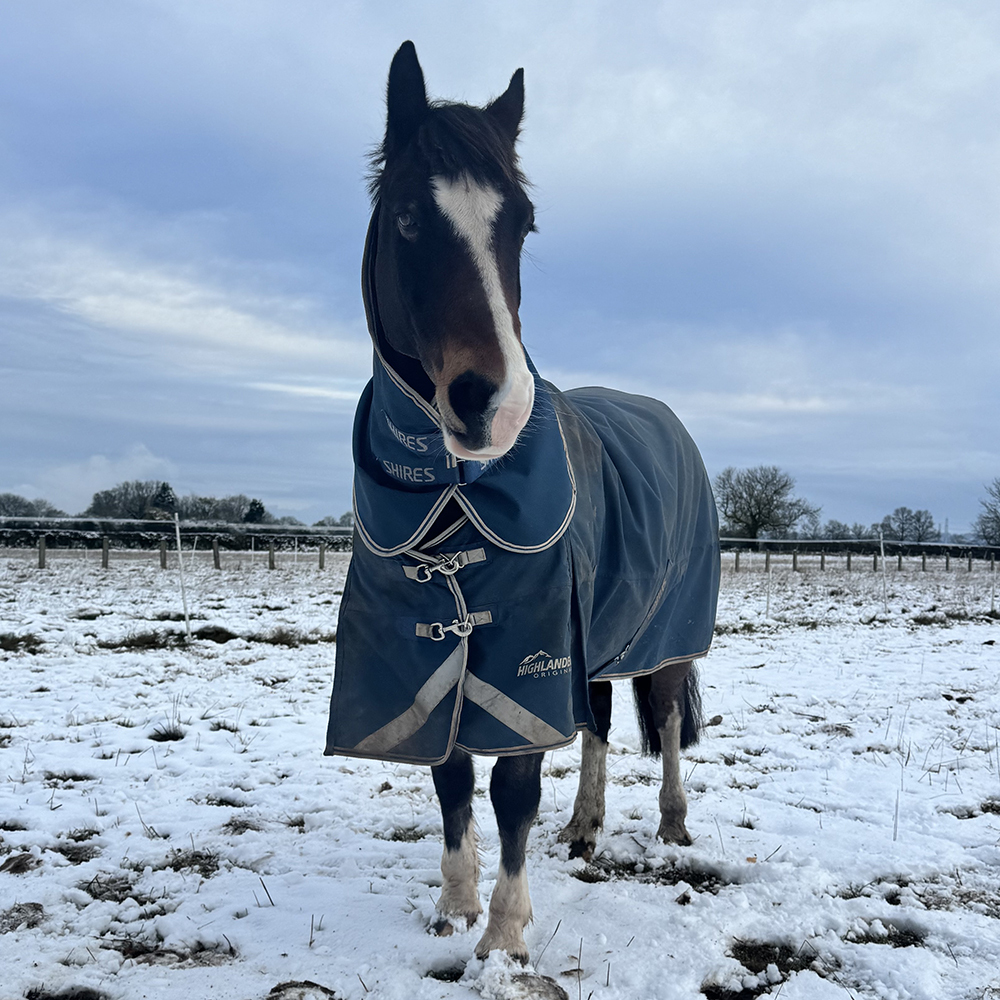
They have been part of my everyday rug rotation since I was a child because my mum knew she could rely on them when the weather does what British weather does best. A mere 30-plus years later, they are still our rug brand of choice.
Explore Shires horse rugs at Country & Stable or browse our complete collection of horse turnout rugs to find the right weight, cut and neck style for your horse.
FAQs about Shires turnout rugs
Are Shires turnout rugs true to size?
Emma has found them true to size across her yard, but the cut of the individual range still affects the fit. Two horses that measure the same length may need different shapes through the chest, shoulder and neck. Treat the measurement as your starting point, then assess the rug on the horse while they move and graze.
Is a 50g turnout rug better than a 0g rug in heavy rain?
Not automatically. Fill provides insulation rather than waterproofing. Emma prefers her 50g Shires rugs during prolonged rain because of how they have performed on her horses, but a well-maintained 0g rug can also be waterproof. Consider the horse’s need for warmth separately from the likelihood of rain.
Can a Shires Warmarug Liner be used under any turnout rug?
No. Liners should only be used with compatible rugs and secured using the intended attachment points. Check the individual product description before buying a liner for an existing rug. Once attached, make sure the extra layer has not made the outer rug tight across the chest or shoulders.
How often should a turnout rug be washed and reproofed?
This depends on how heavily the rug is used and whether its waterproof performance has started to deteriorate. Emma has hers professionally washed and reproofed at the end of each season. Between washes, she hoses off heavy clay mud and allows the rug to dry thoroughly. Avoid unnecessary full washes because harsh detergents or incorrect cleaning can affect the waterproof finish.
Can a horse turnout rug be used on a donkey?
Sometimes, but the fit needs particularly careful monitoring because donkey conformation differs from that of a horse. Emma uses a Typhoon rug on Snowy but occasionally needs to adjust it. Check the chest, shoulders, withers, hindquarters and straps daily. If the rug regularly slips or rubs, a donkey-specific cut may be the better choice.
