



How to Rewax a Barbour Jacket
Oct 26th 2026
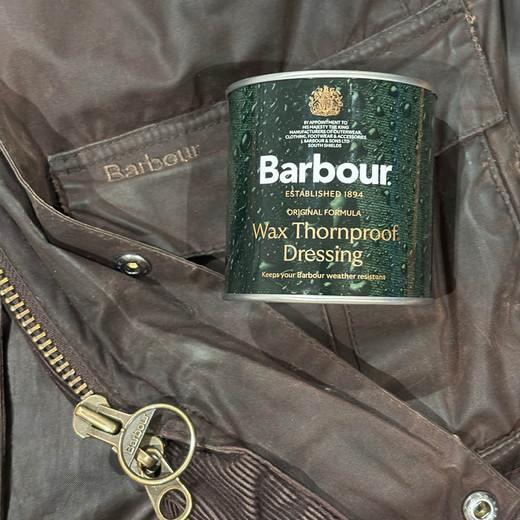
How to Rewax a Barbour Jacket: A Simple Step-by-Step Guide
From early dog walks to drizzly sunday strolls that end at the village pub, a favourite Barbour jacket earns its place by the door. If yours is looking a little dry or worn, a fresh coat of wax could be just the care it needs.
To rewax a Barbour jacket, gently clean the outside with cold water, let it dry completely, then work the correct softened wax into the fabric. Wipe away any excess and hang the jacket overnight before wearing it again.
It is a job you can tackle at home, although taking a sponge of melted wax to your much-loved jacket might feel a little daunting at first!
To help you get started, we’re sharing a simple guide alongside Country & Stable team member Neil’s experience of using Barbour Wax Thornproof Dressing on his own jacket. From preparing your workspace to knowing what the finished result should look like, here’s how to give your trusty Barbour a little attention.
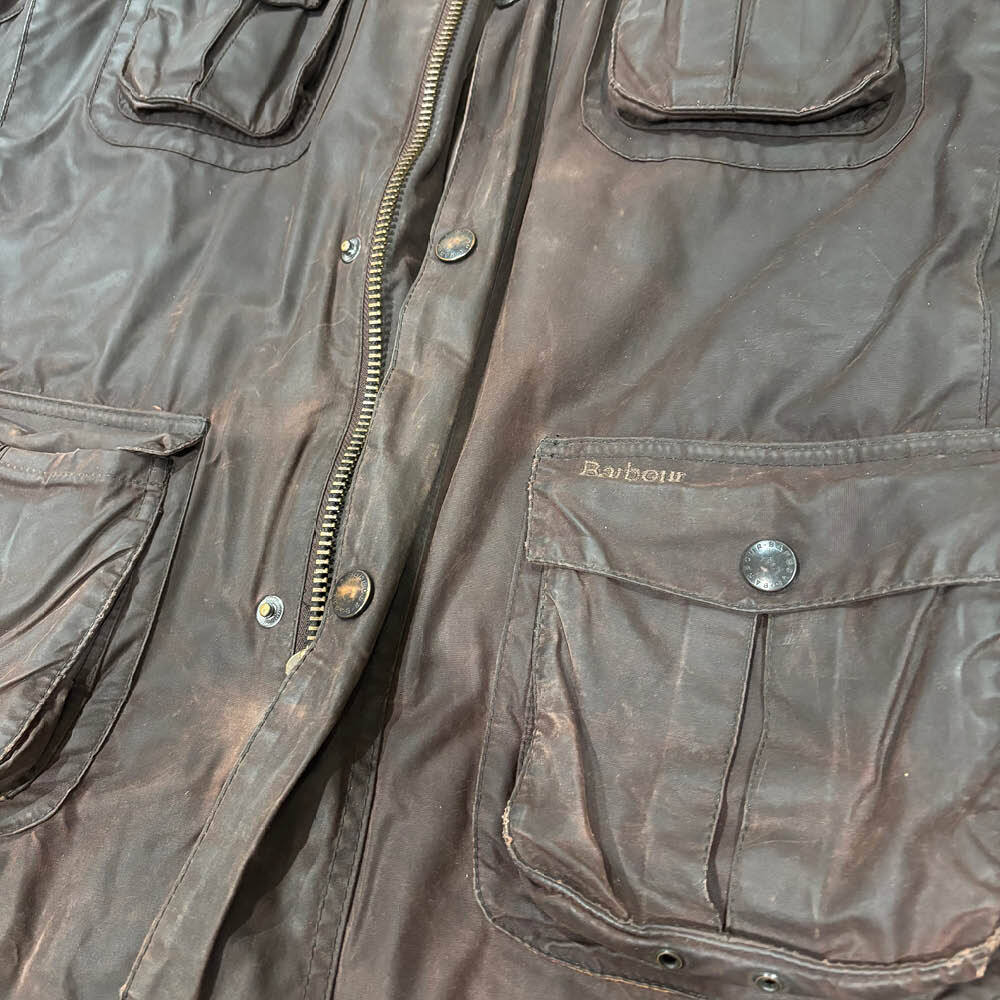
Before You Start: Check Your Jacket’s Care Label
This guide is for traditional Barbour waxed cotton jackets suitable for Thornproof Dressing. Always check the care label and the instructions on your wax before starting.
Some lightweight Barbour wax jackets require a different wax and application method. Quilted jackets and non-waxed waterproof coats also need their own care routine. If you are unsure which product your jacket needs, check with Barbour before applying anything.
How Often Should You Rewax a Barbour Jacket?
Barbour recommends rewaxing around once a year, depending on how often you wear your jacket.
A coat that joins you for daily walks may need attention sooner than one worn occasionally. Look for dry-looking patches and areas where the waxed finish has worn, particularly around creases and frequently handled areas.
It is also worth checking for holes or damaged seams before starting. Wax helps maintain the protective finish, but it cannot repair damaged fabric.
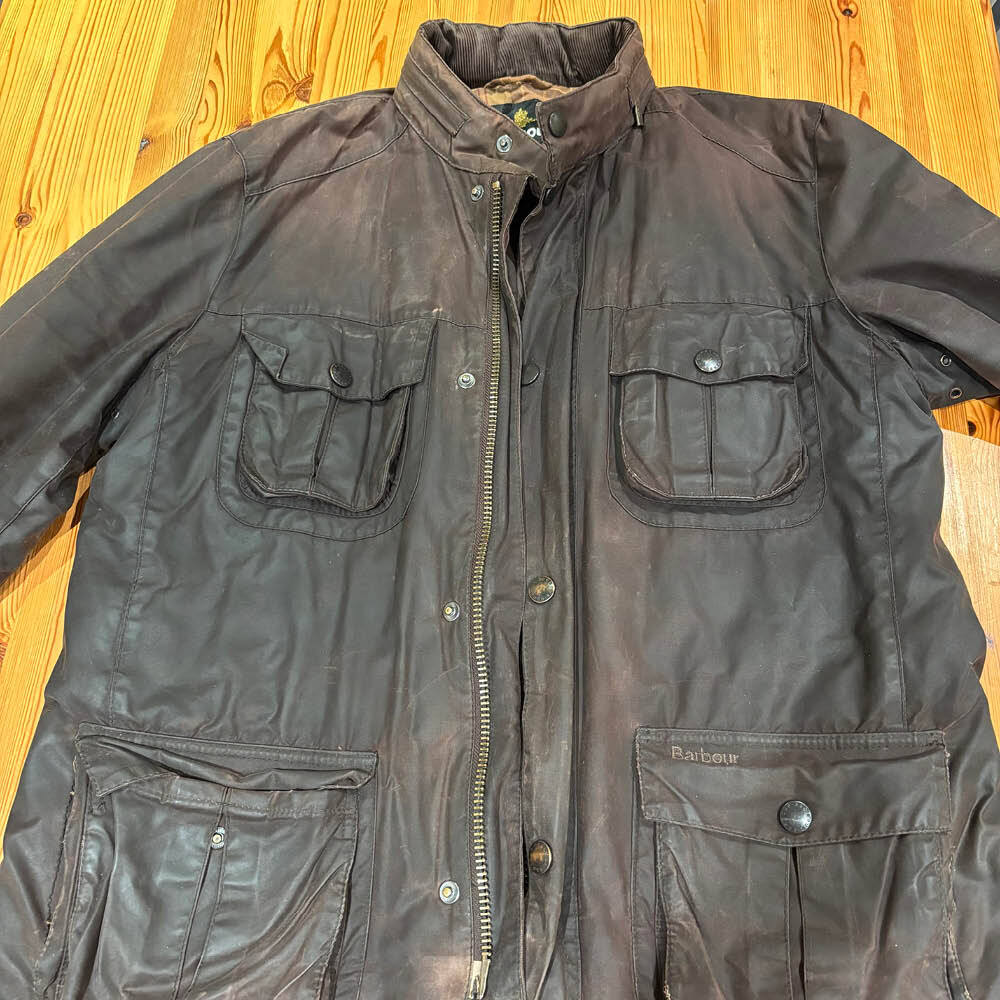
What You’ll Need to Rewax Your Barbour Jacket
Gather everything before you begin:
-
The correct wax for your jacket, such as Barbour Wax Thornproof Dressing for compatible traditional waxed cotton styles.
- A warm room to stop the wax hardening too quickly.
-
A clean, soft sponge or lint-free cloth to apply the wax.
-
A second clean cloth to remove excess dressing.
-
A heatproof container and hot water to soften the wax.
-
A protected work surface with enough room to spread out your jacket.
-
A sturdy hanger and somewhere suitable to leave the jacket overnight.
Our tip: Choose a time when you can work without rushing. Clear your workspace and cover it before opening the wax.
Step 1: Clean Your Barbour Jacket
Gently wipe the outer fabric with a clean sponge and cold water to remove surface dirt. Leave the jacket to dry naturally in a well-ventilated place before applying wax.
Do not machine wash, dry clean or use soap or detergent on a traditional Barbour wax jacket. These can damage the protective finish. Avoid tumble drying or placing the jacket against a radiator to speed things up.
Empty the pockets and make sure the fabric is completely dry before moving on.
Step 2: Soften the Wax
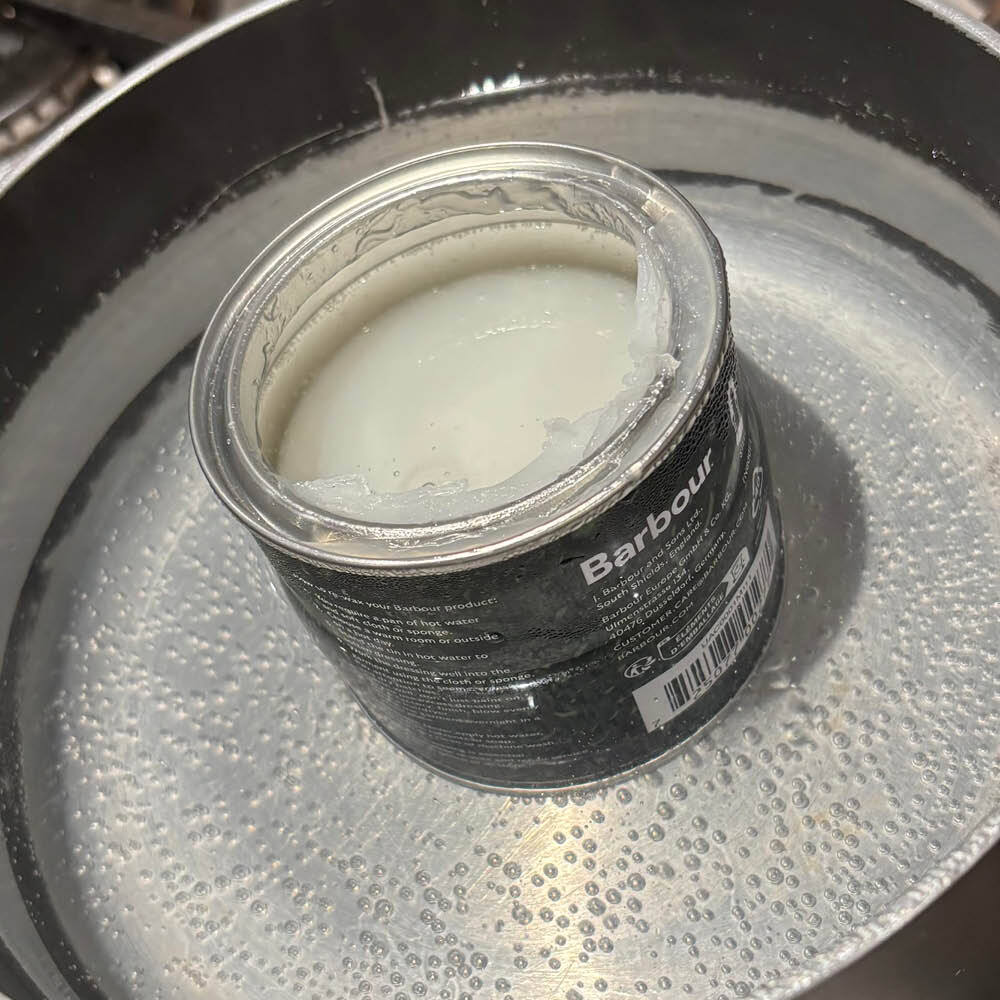
Remove the lid from your tin of dressing and stand it in a heatproof container of hot water. Keep the water below the rim so it cannot enter the wax and leave in the water until it has fully melted.
Keep the tin standing in the hot-water bath while you work. If the wax begins to harden, carefully refresh the water to keep it soft enough to spread. Always follow the instructions on the tin.
Step 3: Work the Wax into the Fabric
Lay your dry jacket on the protected surface. Pick up a small amount of softened wax with your sponge or cloth and work it into the outer fabric.
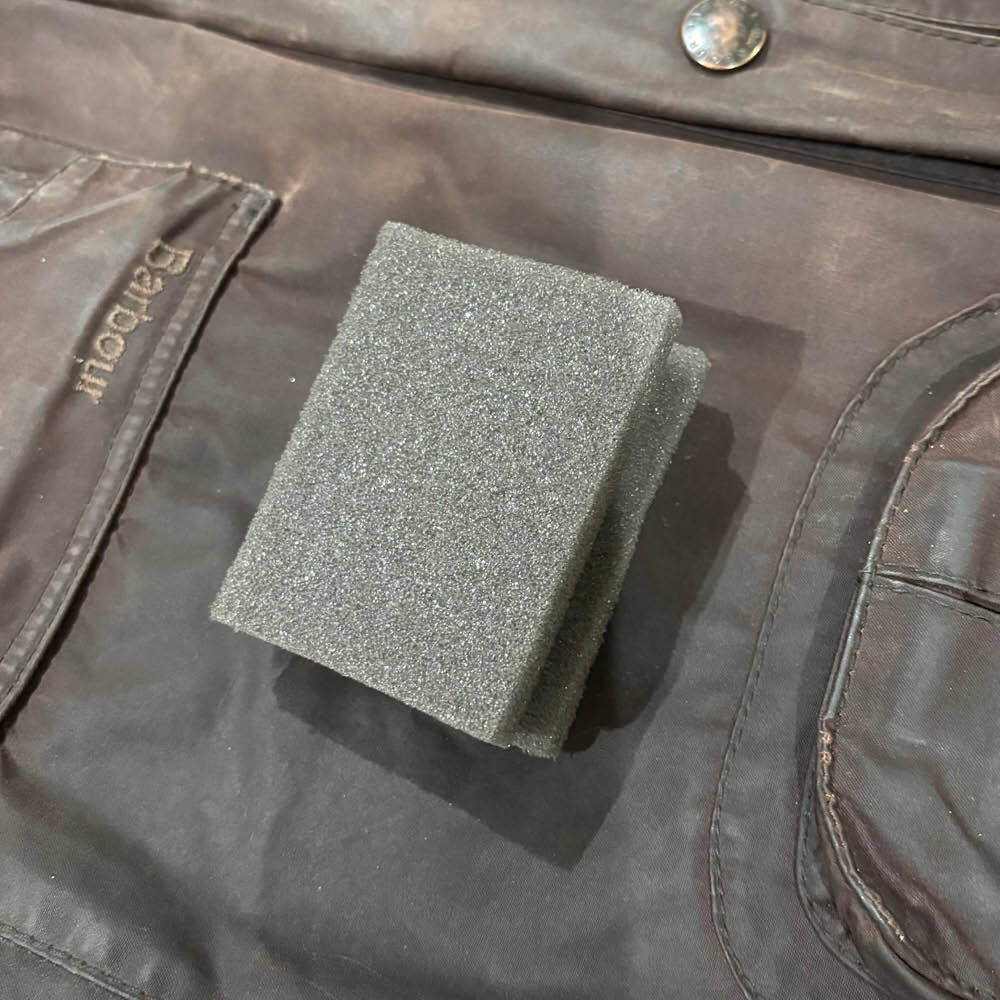
Work methodically, finishing one manageable section before moving to the next. You might find it easiest to start with the back, then work across the front panels and sleeves.
Apply small amounts and spread them evenly. Pay particular attention to seams, creases and dry patches.
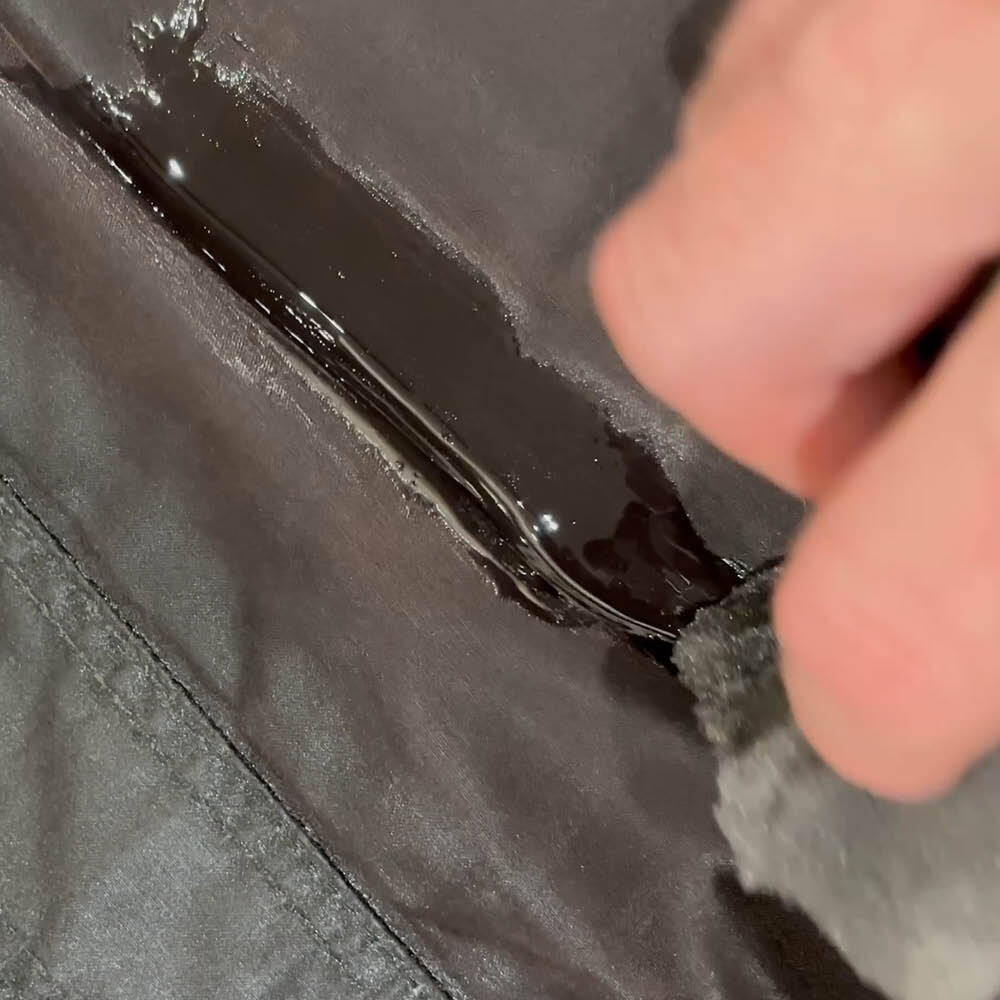
Keep wax away from the corduroy collar, lining and pocket interiors, along with any trims or materials excluded by your jacket’s care instructions.
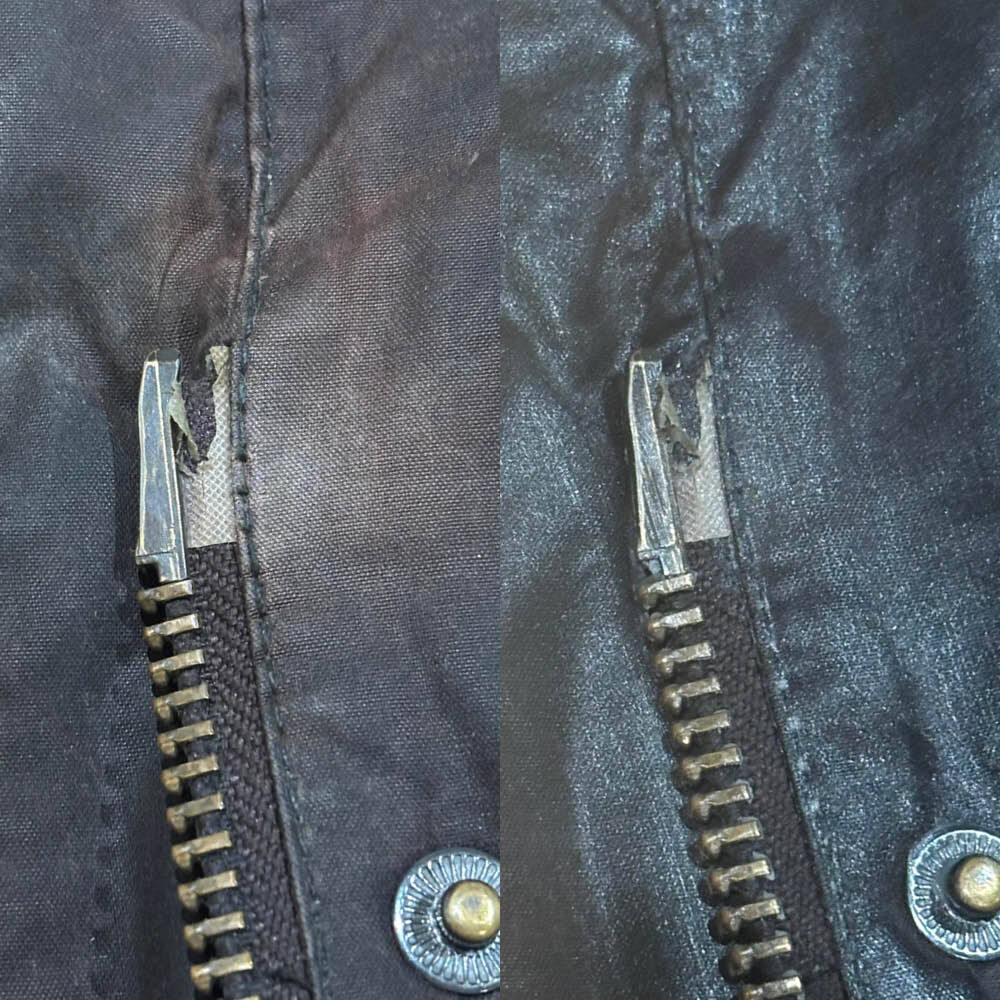
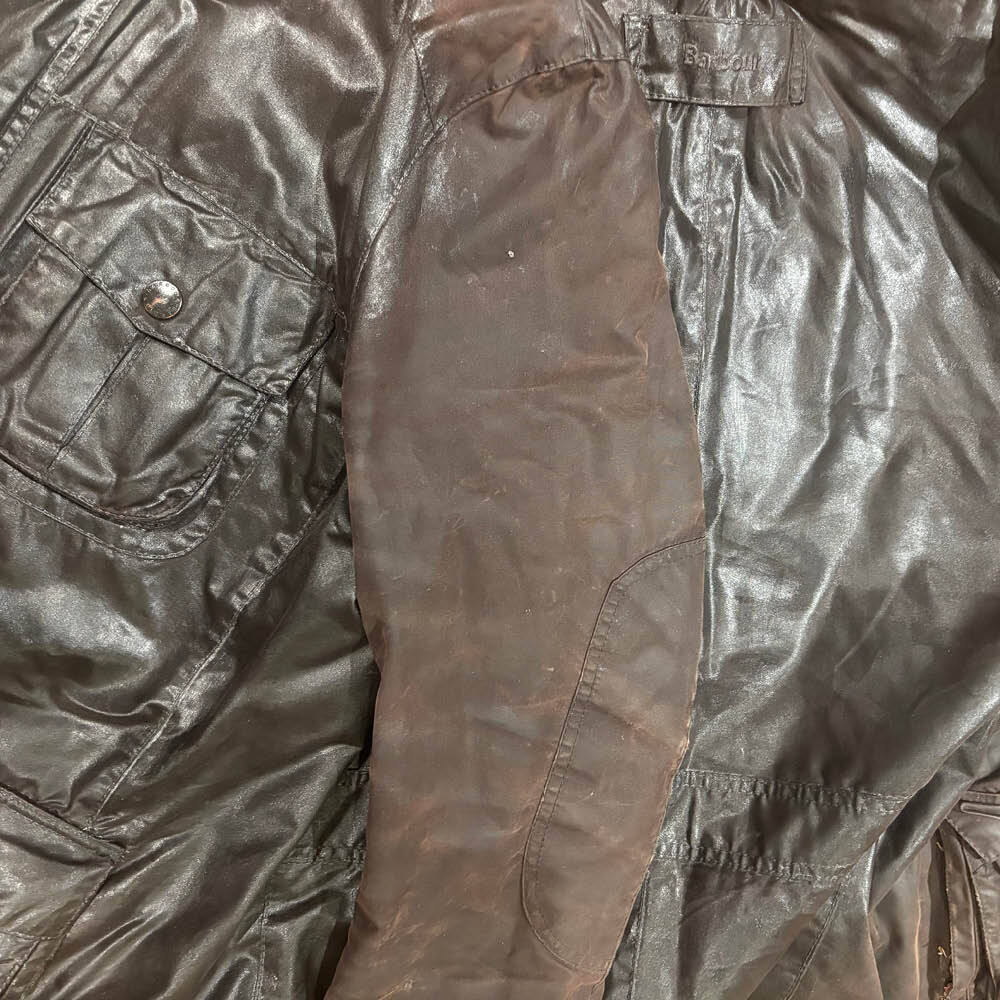
The photograph below shows the difference between the unwaxed sleeve and the freshly waxed body during application. A change in appearance can be noticeable as you work, so take your time and focus on even coverage.
Step 4: Wipe Away Excess Wax
Once you have covered the suitable outer fabric, use your clean cloth to remove surplus dressing.
Check for thick patches or areas where wax is sitting on the surface. Work these over gently rather than adding more.
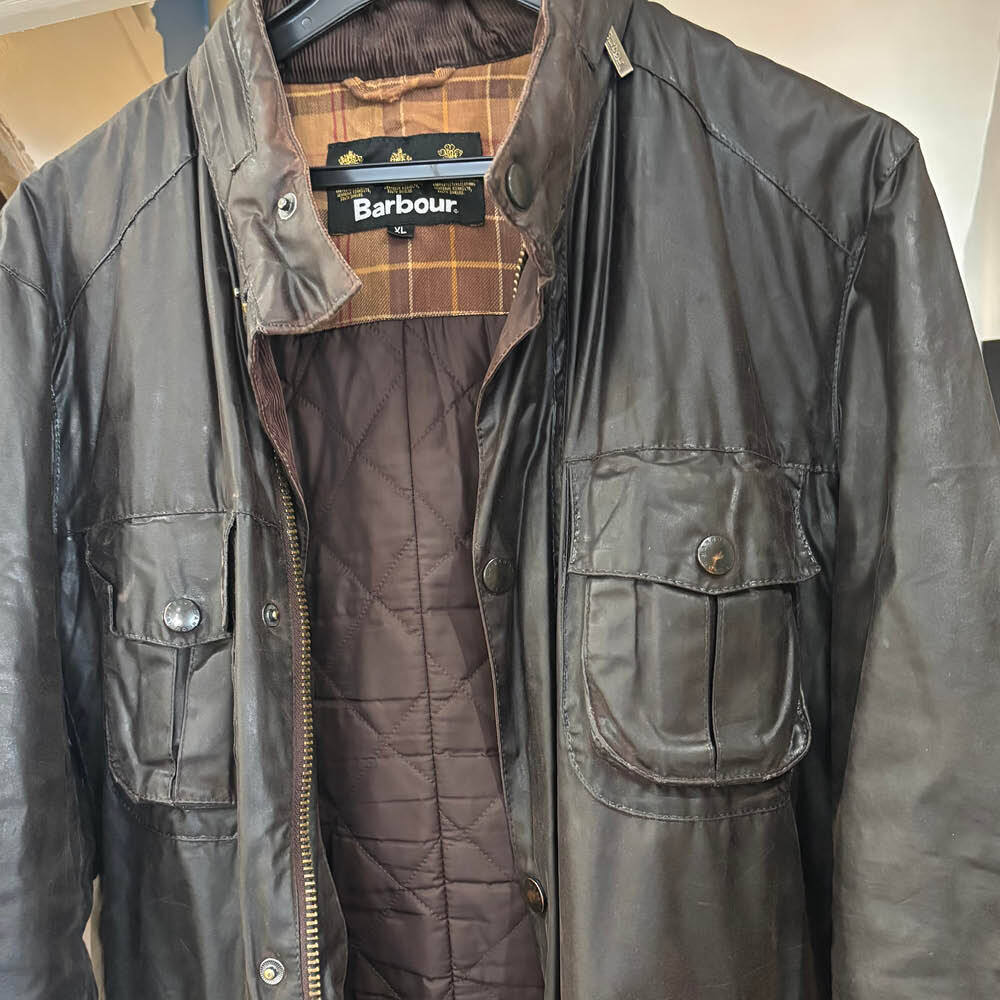
Your jacket may look darker or shinier immediately after application, depending on its colour and finish. Give it time to settle before judging the result.
Step 5: Hang Your Jacket Overnight
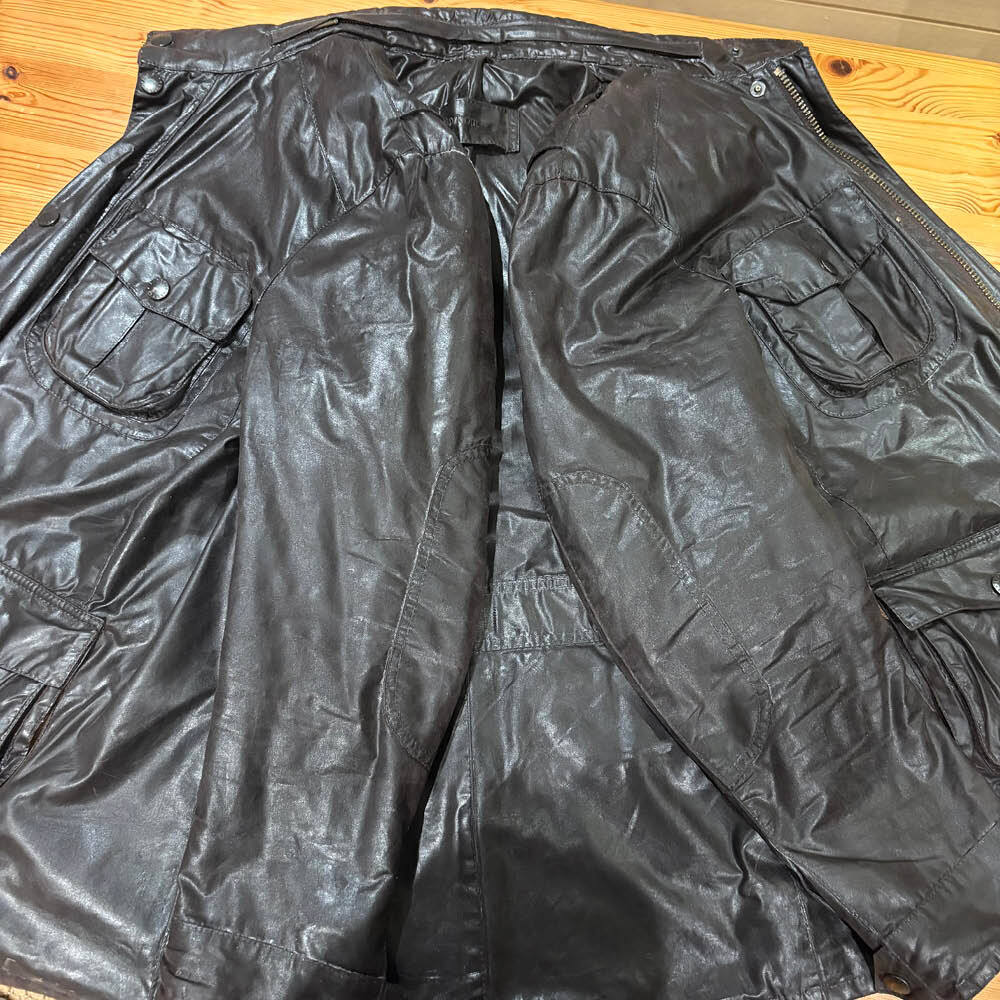
Hang the jacket in a warm, ventilated place overnight, away from other garments, leather and upholstery. Fresh wax can transfer, so leave plenty of space around it and protect the area underneath.
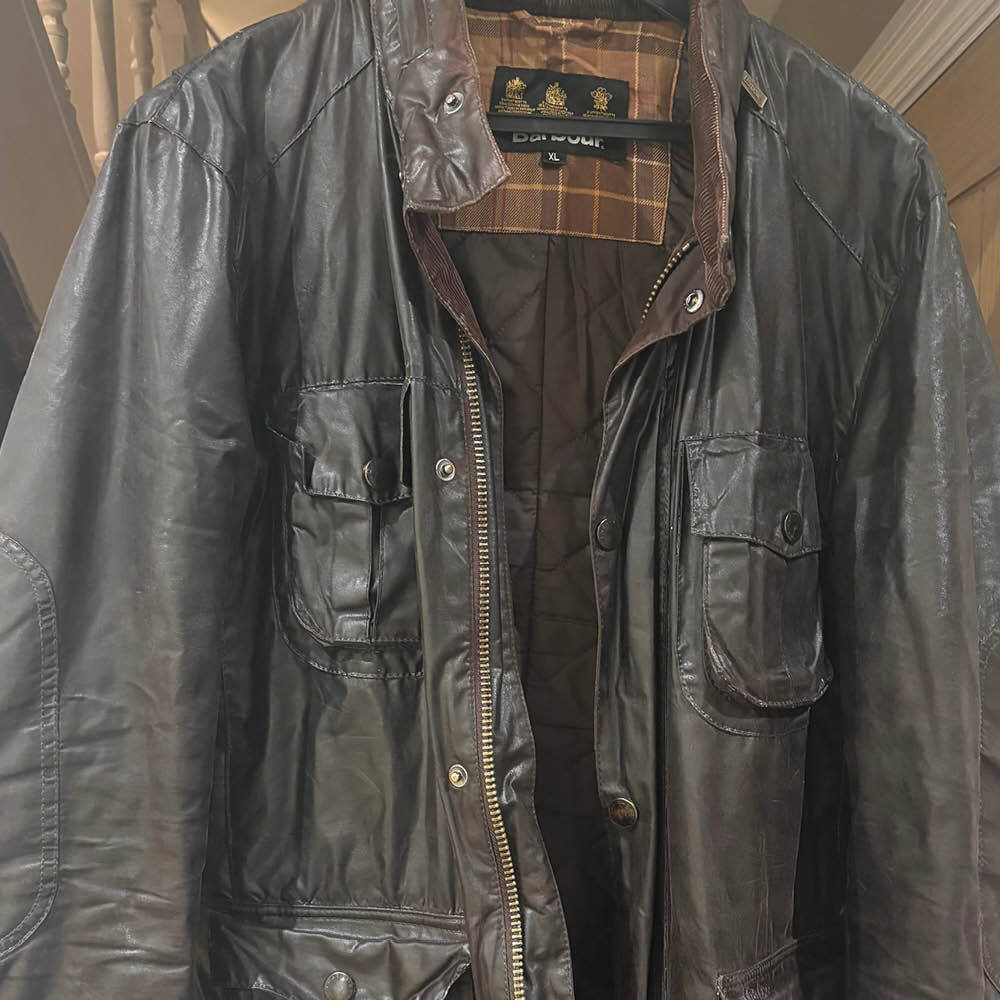
The following day, check the finish and gently wipe away any remaining excess before wearing it.
Tried & Tested: Neil’s Barbour Jacket Rewaxing Experience
Neil used Barbour Wax Thornproof Dressing to refresh his own jacket and help prolong the life of the fabric. Here, he shares how he found the process and what he would tell someone trying it for the first time.
How did you feel about rewaxing your jacket?
“If you’re doing it for the first time, it can be a bit of a daunting task. You’ve got a nice wax jacket and you’re about to cover it in melted wax. The first time I used this wax, I thought I’d ruined my jacket!
My advice would be to watch some guides online and trust the process. It literally does what it says on the tin.”
What did you like about the product?
“In a throwaway society, anything that can prolong the life of something is always good. Using this to refresh my trusty Barbour jacket is great.
Although there are lots of handy guides and video tutorials online, it also has instructions on the side of the tin, which helps confirm you’re on the right track.”
Was there anything you found tricky?
“It can be a bit tricky to get the hang of and to get the wax to the correct consistency. It takes a bit of time and can get messy if you’re not prepared. It took me about two hours from start to finish.”
Neil’s experience is a useful reminder to prepare your workspace and give yourself time. Remember to allow for cleaning and drying beforehand, plus hanging the jacket overnight afterwards.
How much wax did you use?
“I got the 200ml tin. My jacket hadn’t been waxed for quite a while, and I still had around half a tin left afterwards, which I expect will be enough to do my jacket again next year.”
The amount needed will vary with the jacket’s size and condition. Use Neil’s experience as a helpful reference, rather than a fixed measure, and aim for an even application with excess wax removed.
Would you recommend it and use it again?
“Yes. It helps keep the fabric in good condition so you can keep using your coat season after season. I used about half a tin, so getting another use out of it makes it great value. Much more affordable than buying a whole new jacket.”
Barbour Jacket Rewaxing FAQs
Can you rewax a Barbour jacket yourself?
Yes, many traditional Barbour wax jackets can be rewaxed at home using the correct dressing. Check the care label first and follow the product instructions.
If you would prefer someone else to take care of it, Barbour also offers a professional repair and rewax service starting around £35.00.
Can you just rewax the worn patches?
Compatible Thornproof Dressing can be used to treat dry patches as well as the whole jacket. Check the entire garment before deciding: if several areas look worn, a full rewax may be more practical.
Does rewaxing make a Barbour jacket waterproof?
Rewaxing helps restore the water resistance of suitable waxed cotton fabric. It does not repair holes or damaged seams, and it should not be treated as a guarantee that the jacket will keep you dry in every condition.
Why does my jacket look darker after waxing?
Fresh dressing can temporarily deepen the colour and increase the sheen. The effect varies between jackets. Apply the wax evenly, remove any excess and allow the jacket to hang overnight before assessing the finish.
What if I have put too much wax on?
Gently work over the affected area with a clean cloth to remove surplus dressing. Avoid adding more wax to an area that already looks heavily coated, and follow Barbour’s guidance if you are unsure about the finish.
A Little Care for Plenty More Country Days
A favourite jacket carries plenty of memories and giving it a little care is a satisfying way to keep it part of everyday country life.
As Neil discovered, rewaxing takes some patience and preparation, but it is a manageable job once you understand the process.
Get ready for your next care session with Barbour Wax Thornproof Dressing, or explore our Barbour clothing and footwear collection for more country favourites.
