



How to Do a Worm Egg Count for Horses at Home: WEC Guide
Parasite control is an essential part of responsible horse care. However, routine worming on a fixed schedule is no longer recommended for most adult horses, with vets now favouring a targeted approach. Instead, treatment is based on worm egg count (WEC) results.
An at-home worm count kit allows horse owners to collect a manure sample and send it to a laboratory for analysis. The results help determine whether a horse is shedding worm eggs and whether treatment is necessary.
In this guide we explain:
-
how to collect and submit a dung sample correctly
-
how worm egg count results are analysed
-
what low, medium and high results mean
-
how often horses should be tested depending on management
-
which horses are at higher risk of parasites
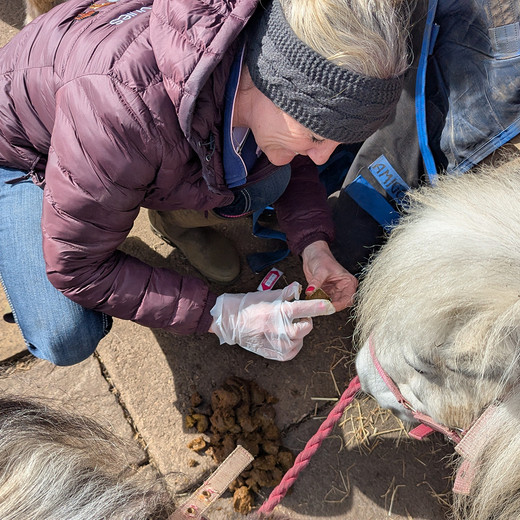
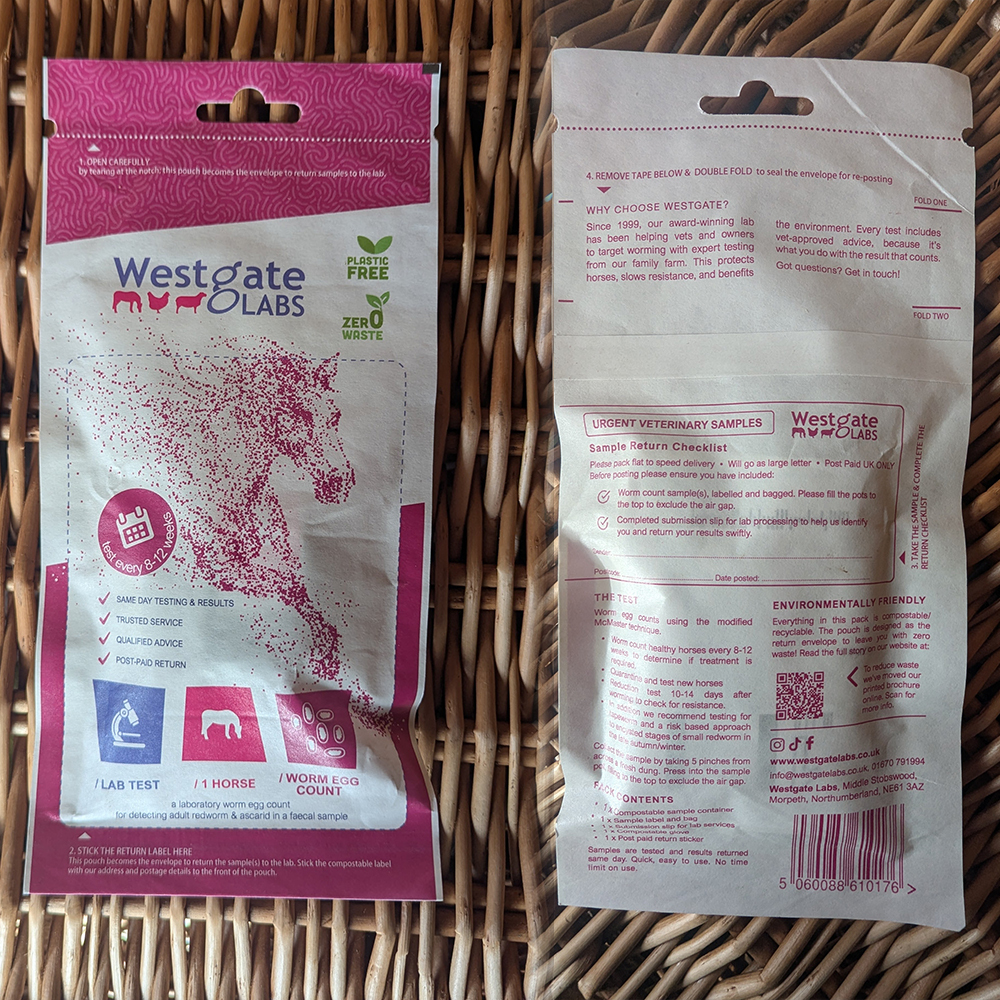
The images in this guide feature the Dinky Ponies, with their owner Sarah demonstrating the process step-by-step using a Westgate Labs Worm Egg Count Test Kit.
Why Worm Egg Counts Are Important for Horses
Worm egg counts measure the number of parasite eggs present in a horse’s manure. The most commonly detected parasites are strongyles (small redworms).
Testing is important because:
-
many horses carry very low parasite burdens
-
unnecessary worming contributes to anthelmintic resistance
-
testing identifies high egg-shedding horses
-
treatments can be targeted only when needed
Modern parasite control programmes recommended by organisations such as the British Equine Veterinary Association and American Association of Equine Practitioners emphasise monitoring through egg counts rather than routine blanket worming.
This approach is designed to slow the development of wormer resistance, which is now a growing concern in equine health.
What You Need for an At-Home Worm Egg Count Kit
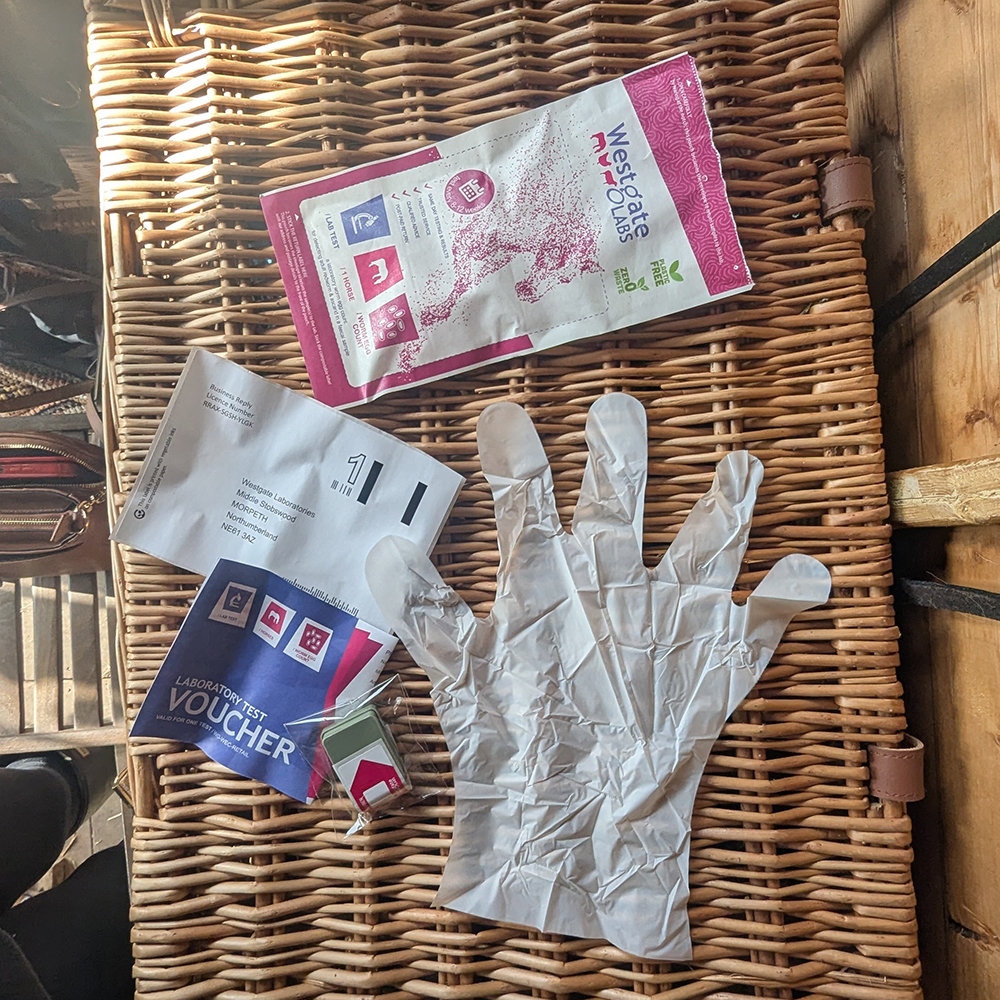
Most postal worm egg count kits include:
-
disposable glove
-
sample container
-
grip-seal bag
-
submission form or voucher
-
prepaid envelope or pouch
The horse owner collects the sample and sends it to a laboratory where the egg count is performed.
Step 1: Collect a Fresh Dung Sample
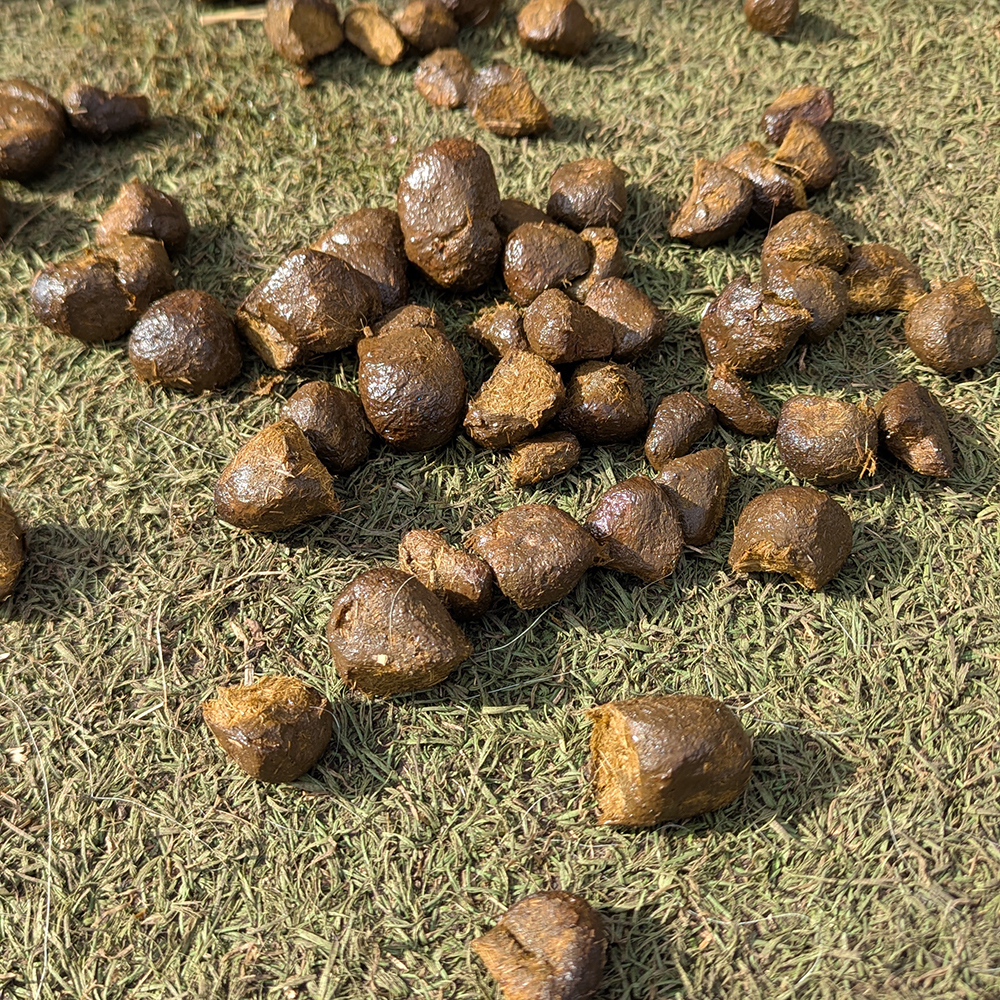
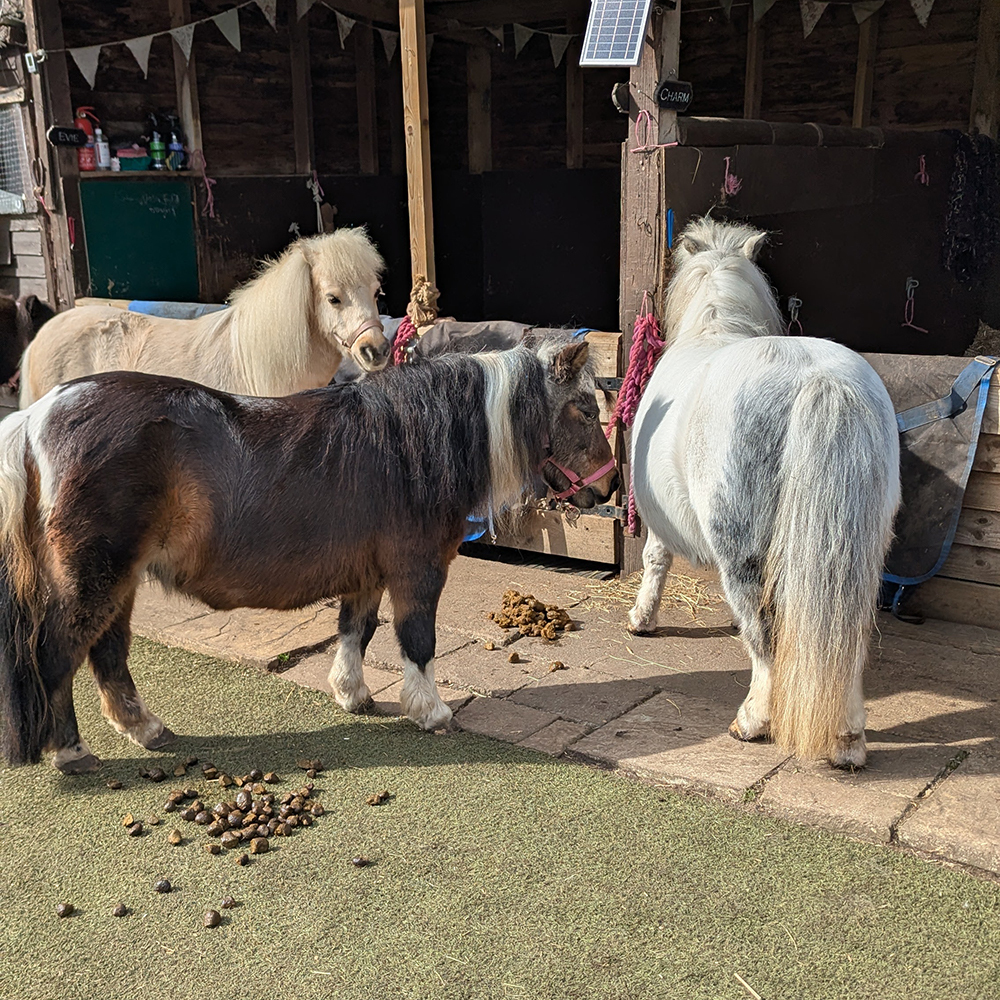
Using the glove provided, take around five small pinches of dung from different areas of a fresh pile.
Sampling from multiple points gives a more representative sample of the manure.
The dung should be:
-
freshly passed
-
uncontaminated by bedding
-
not dried out or old
Step 2: Fill the Sample Container
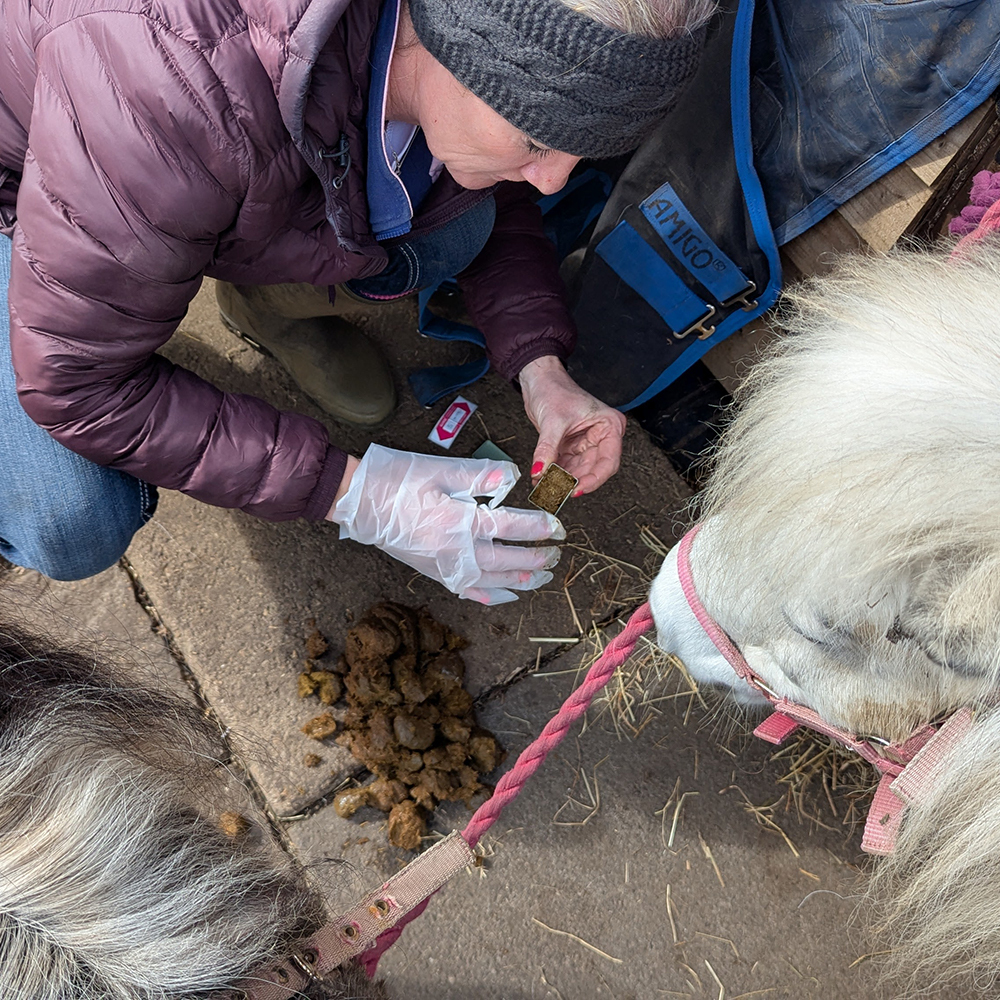
Press the dung into the container until it is completely full.
Eliminating air gaps helps preserve the sample during transit and ensures the laboratory receives the freshest possible material.
Step 3: Label the Sample Clearly
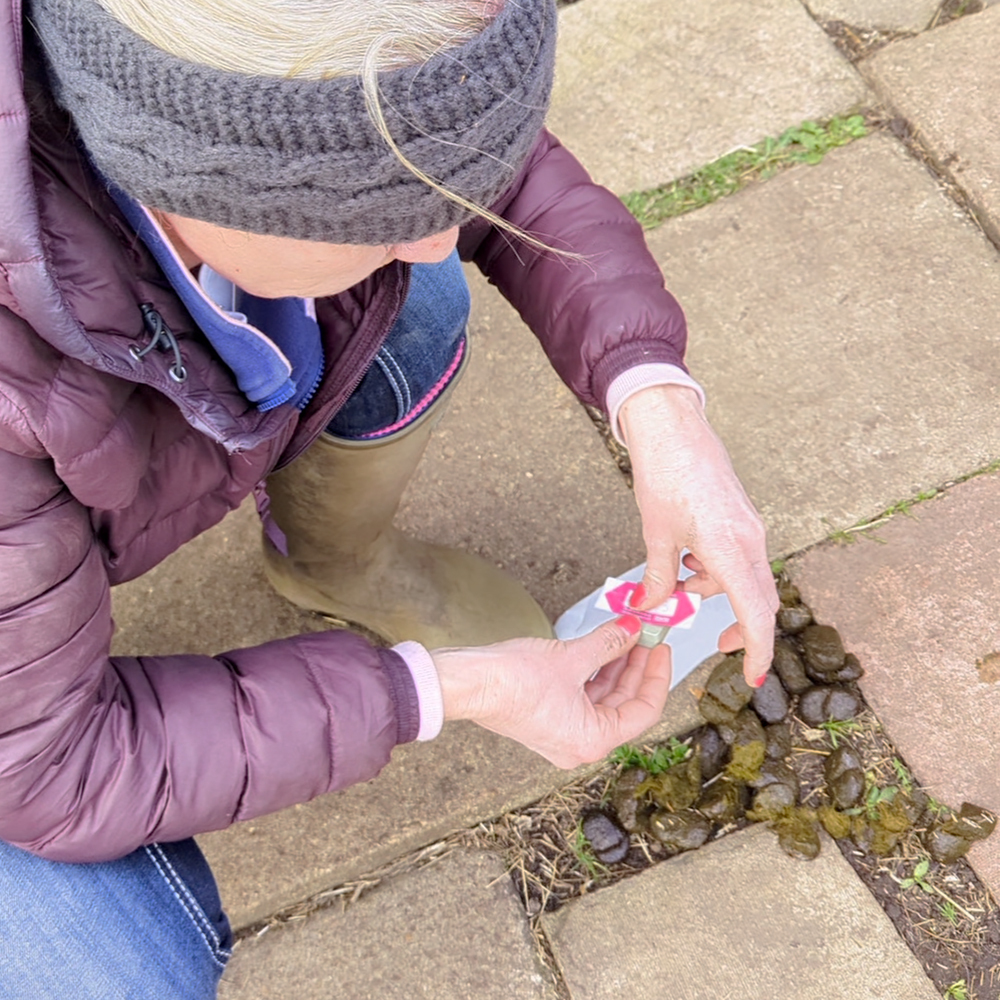
Write the horse’s name clearly on the pot using a ballpoint pen so the ink does not wash off.
If sending samples from multiple horses, ensure each container is labelled correctly.
Step 4: Package the Sample
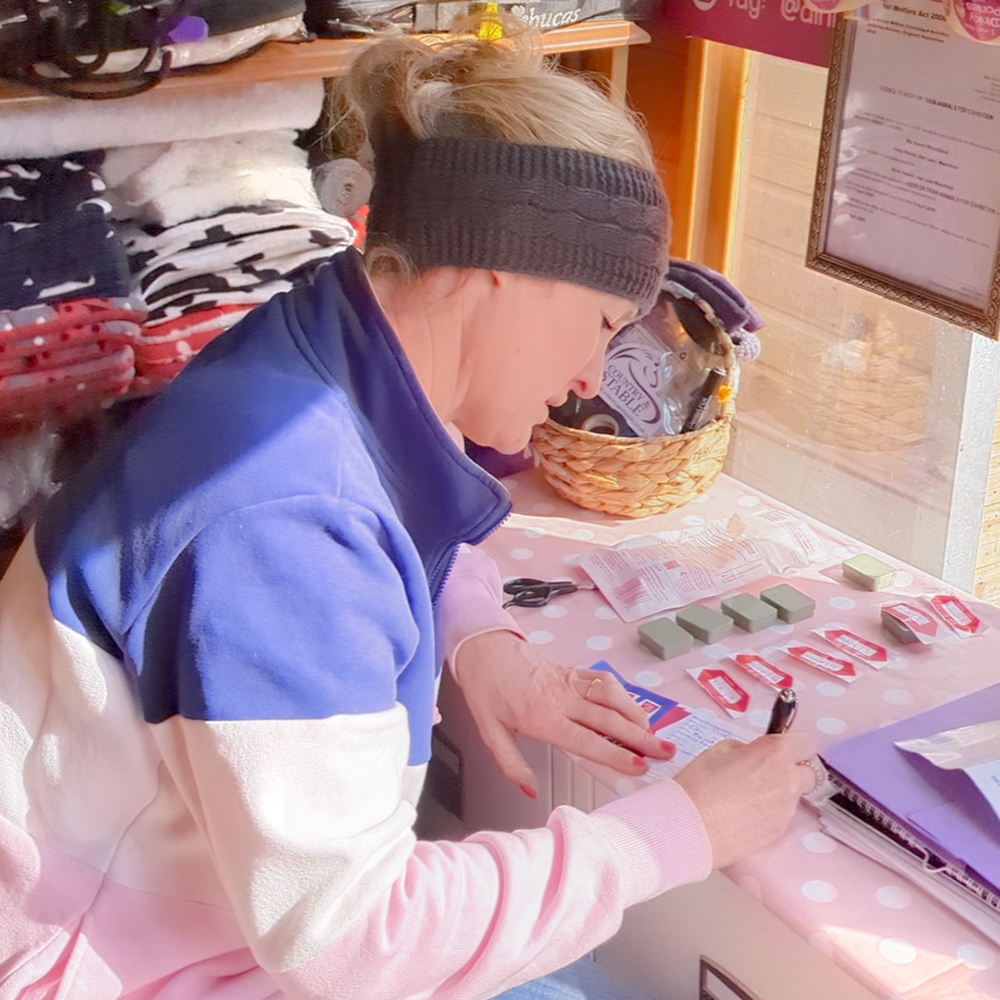
Place the container inside the plastic grip-seal bag provided.
Then place the bag and completed submission form into the prepaid envelope or pouch.
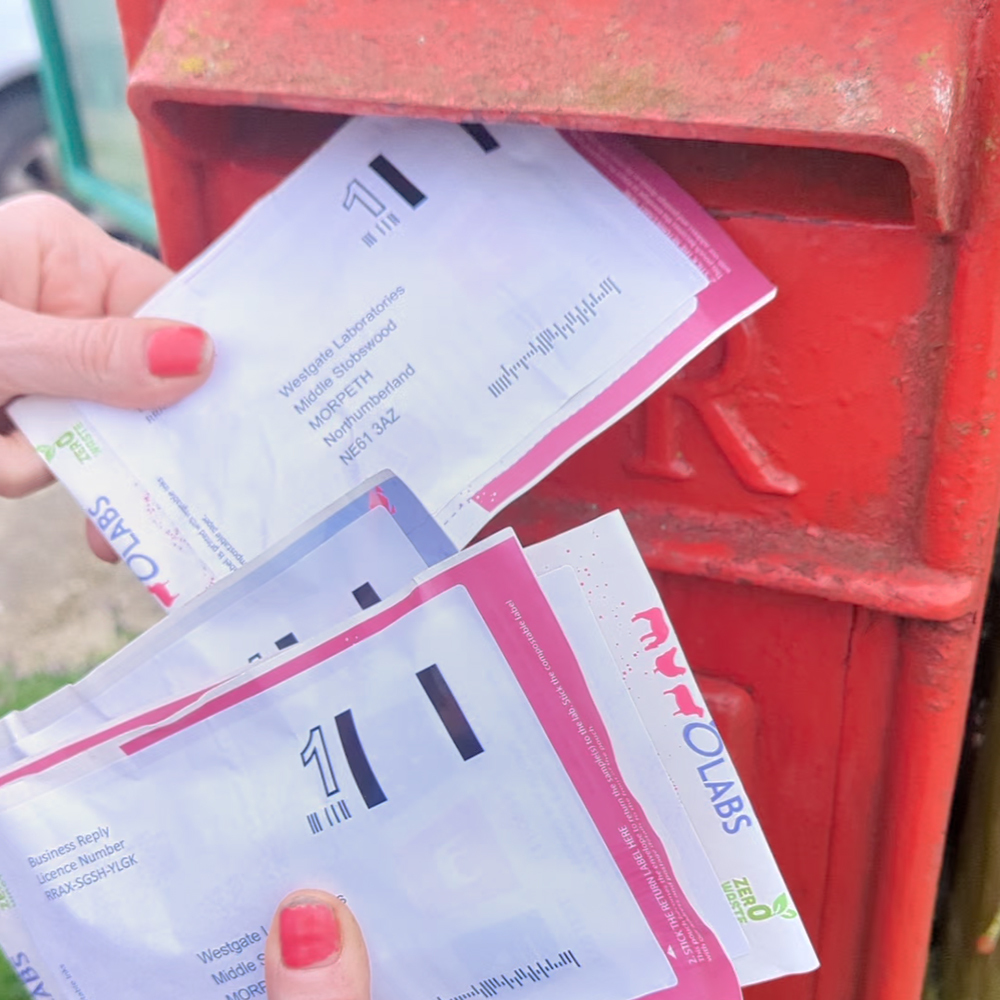
Step 5: Post the Sample
Seal the envelope and post it as soon as possible.
Most laboratories recommend that samples are received within around six days of collection to ensure reliable results.
Results are typically returned within 24 hours of the sample arriving at the laboratory, although total turnaround time depends on postage.
Understanding Worm Egg Count Results
Results are usually sent by email and laboratories report results as eggs per gram (EPG) of manure.
These numbers indicate how many parasite eggs were detected in the sample and help determine whether your horse requires worming.
| Date | Horse | Test | Result Indicator | Result |
|---|---|---|---|---|
| 12 Mar 2026 | Gracie | Worm Egg Count | ● | 50 e.p.g. Strongyle eggs (Low) |
| 12 Mar 2026 | Charm | Worm Egg Count | ● | 50 e.p.g. Strongyle eggs (Low) |
| 12 Mar 2026 | Georgie | Worm Egg Count | ● | 50 e.p.g. Strongyle eggs (Low) |
| 12 Mar 2026 | Abbey | Worm Egg Count | ● | 300 e.p.g. Strongyle eggs (Medium) |
| 12 Mar 2026 | Tinks | Worm Egg Count | ● | <50 e.p.g. No eggs seen |
| 12 Mar 2026 | Evie | Worm Egg Count | ● | 300 e.p.g. Strongyle eggs (Medium) |
| 18 Mar 2026 | Poppy | Worm Egg Count | ● | 25 e.p.g. Strongyle eggs (Low) |
According to commonly used veterinary guidelines referenced by the British Equine Veterinary Association:
| Eggs per Gram (EPG) | Interpretation | Typical Recommendation |
|---|---|---|
| 0–200 EPG | Low egg count | Usually no worming needed |
| 200–500 EPG | Medium egg count | Monitor or treat depending on risk |
| 500+ EPG | High egg count | Worming typically recommended |
Thresholds can vary slightly between laboratories and veterinary advice should always be followed.
Your vet should always be consulted before treatment, particularly for horses with health issues or unusual results.
It is also important to remember that worm egg counts mainly detect strongyles and do not identify every parasite species.
Worm egg counts do not detect encysted redworm or immature life stages, which is why seasonal risk-based treatment may still be needed even when a count is low.
When Should You Worm Based on WEC Results?
Veterinary advice generally follows these principles:
Low Egg Count (0–200 EPG)
If the result is low:
-
treatment is usually not necessary
-
continue monitoring through regular testing
Many adult horses consistently fall into this category.
Medium Egg Count (200–500 EPG)
In this range, your vet may recommend:
-
monitoring closely
-
considering treatment depending on season or pasture management
Management factors such as grazing density and pasture hygiene play an important role here.
High Egg Count (500+ EPG)
A higher result usually indicates:
-
a significant level of egg shedding
-
increased risk of pasture contamination
In this case, vets typically recommend targeted worming treatment.
When Should You Do a Worm Egg Count?
A worm egg count (WEC) isn’t a one-off task, it’s something you should build into your horse’s routine care throughout the year.
According to Westgate Labs, testing should follow a targeted, seasonal approach:
Redworm & Roundworm (Worm Egg Counts)
-
Test every 8 - 12 weeks during the grazing season (spring–autumn)
-
This helps monitor worm burdens and only treat when necessary, helping reduce resistance.
Tapeworm
-
Test every 6 months (e.g. spring & autumn)
-
Tapeworm doesn’t reliably show up in standard worm egg counts, so it needs separate testing.
Winter (Encysted Redworm Risk)
-
In late autumn/winter, your plan should include a risk-based approach to encysted redworm.
-
This may involve testing or strategic treatment depending on your horse.
In short:
-
Spring - Autumn: Regular WECs every 8-12 weeks
-
Twice yearly: Tapeworm testing
-
Winter: Target encysted redworm
Different Types of Worm Tests & Kits
Not all worm tests are the same and it’s important to use the right one for the parasite you’re targeting.
Worm Egg Count Kits (Dung Sample)
-
Detect redworm and roundworm eggs
-
The most common and essential test
-
Should be the foundation of your worming programme
These are the kits most horse owners will use regularly.
Pinworm Tests
-
Usually done via a Pinworm tape test, not dung
-
Used if you notice symptoms like:
-
Tail rubbing
-
Irritation around the dock
-
These are more symptom-led tests, rather than routine.
Tapeworm Tests
You now have two options:
-
Saliva test (e.g. EquiSal) – traditionally done via labs or vets
-
Dung-based tapeworm tests (kits now available, although saliva tests are still more widely used)
This means you don’t always need a vet saliva test; you can test at home with the right kit.
Learn more about different types of equine worms in our guide.
How Often Should Horses Have Worm Egg Counts?
Testing frequency depends largely on how horses are managed.
Horses Grazing in Herds
When horses share grazing, parasites spread more easily through pasture contamination.
Recommended approach:
-
test regularly during the grazing season
-
monitor all horses in the group
Shared grazing increases exposure risk.
Horses Turned Out Individually
Horses grazing alone may have lower exposure, particularly if paddocks are well managed and droppings are removed regularly.
However, routine monitoring is still recommended.
Horses at Higher Risk of Worm Burdens
Some horses are more susceptible to parasites.
Higher-risk groups include:
Young Horses
Young horses have less developed immunity and may carry higher burdens.
Horses on Busy Livery Yards
Shared grazing increases transmission risk.
Horses on Overgrazed Pasture
High stocking density can increase contamination levels.
Horses With a History of High Egg Counts
Some individuals are naturally high shedders and require closer monitoring.
Horses With Unknown Worming History
Testing is especially important when management history is unclear.
Best Practices for Horse Parasite Control
Modern worm control focuses on monitoring and pasture management, not routine worming.
Good practices include:
-
regular worm egg count testing
-
removing droppings from paddocks
-
avoiding overstocking fields
-
identifying high egg-shedding horses
-
working with your vet to create a parasite control plan
These strategies help protect horses while reducing wormer resistance.
Final Thoughts
Using an at-home worm egg count kit for horses is a simple and effective way to monitor parasite levels and support responsible worm control.
By collecting samples correctly, posting them promptly, and interpreting the results with veterinary guidance, horse owners can make informed decisions about when worming is actually necessary.
With Sarah and the Dinky Ponies demonstrating the process, it’s easy to see how straightforward worm egg counts can be as part of a regular equine health routine. By testing regularly and choosing the right kit for each parasite, you can create a smarter, more targeted worming plan that helps reduce unnecessary treatments while keeping your horse healthy all year-round.
Shop equine worm control online at Country & Stable today.
