



Grazing Muzzle for Ponies: FreeGraze AirFlow Reviewed
Oct 28th 2026
Grazing Muzzle for Ponies: FreeGraze AirFlow Review
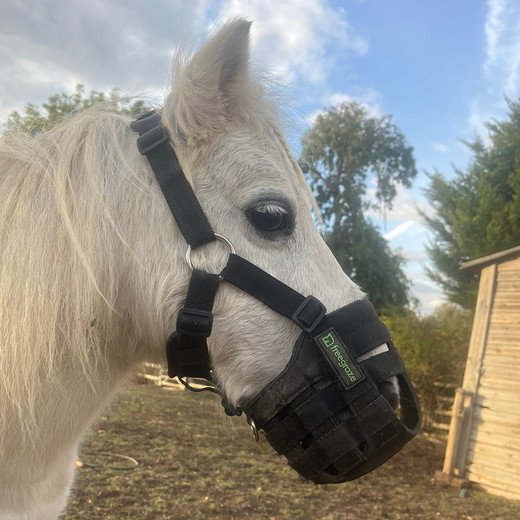
Finding a grazing muzzle that fits a small pony can take a little trial and error. For Gemma, the first two rubbed or came off. She needed a better option for her miniature Shetland, who shares a field with two larger horses.
Here, Gemma reviews the FreeGraze AirFlow Grazing Muzzle, covering comfort, fit and value for money. We also explain what to check before using a muzzle on your own pony, including why restricting grass should never mean leaving them without enough forage.
Gemma’s FreeGraze AirFlow Grazing Muzzle Review
Why did you need a grazing muzzle for your Shetland?
“I have three horses that I keep on our own private yard, so it is important they can all be together rather than any of them being kept on their own.
Our miniature Shetland cannot eat the same amount of grass as our two larger horses. I needed something to restrict her intake while giving her the ability to stay out in the field with her companions rather than being shut in on her own.”
What were your first impressions, and what did you like about it?
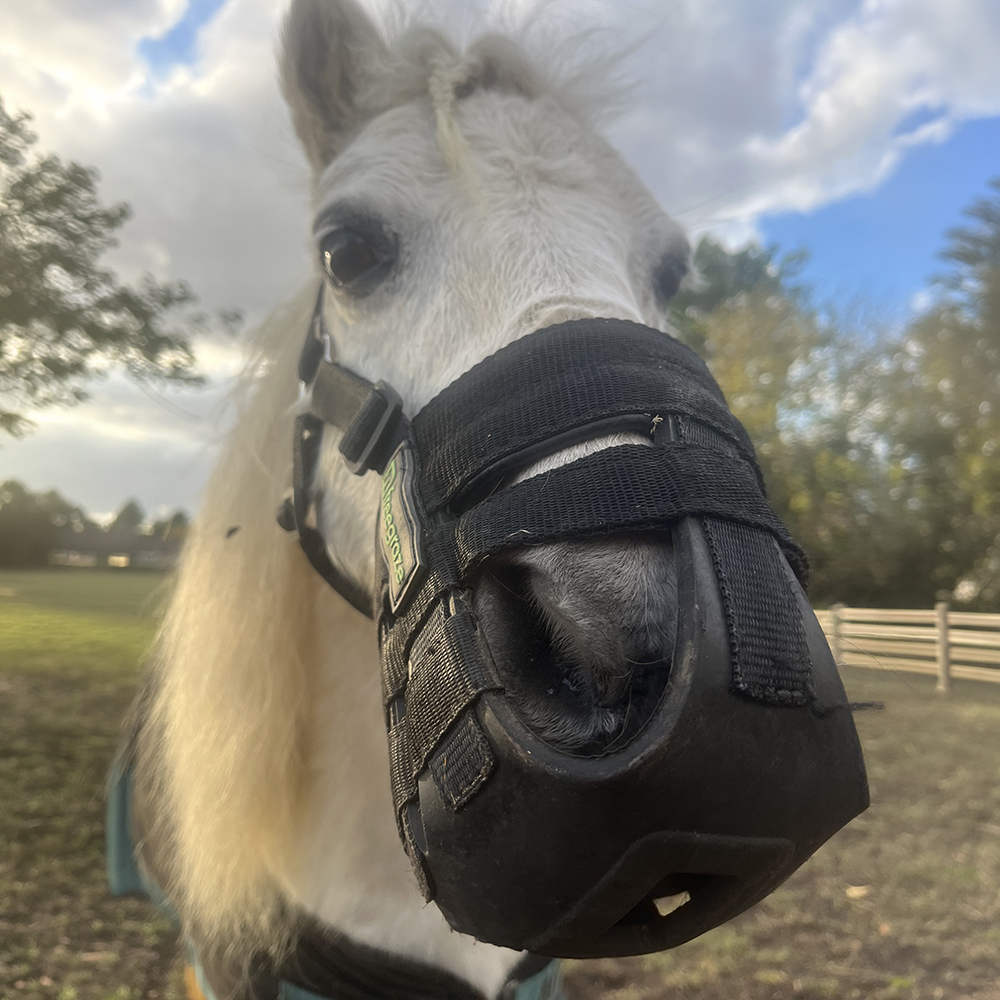
“I love this product! I have tried others in the past which haven’t worked for us.
It’s lightweight and flexible around her face. It is fully adjustable, which helped me get the right fit, and most importantly it doesn’t rub her. I also like that it comes as a whole, so you don’t have to purchase another field-safe headcollar.”
Which size did you choose, and did it stay on?
“I purchased the Small Pony size. It fits very well because it is so adjustable. She also hasn’t managed to get it off yet, unlike our previous ones!”
Gemma’s experience is a useful starting point if you are looking for a grazing muzzle for a Shetland. Head shapes vary, though, so follow the manufacturer’s fitting guidance rather than choosing by breed alone.
How comfortable has your pony found it?
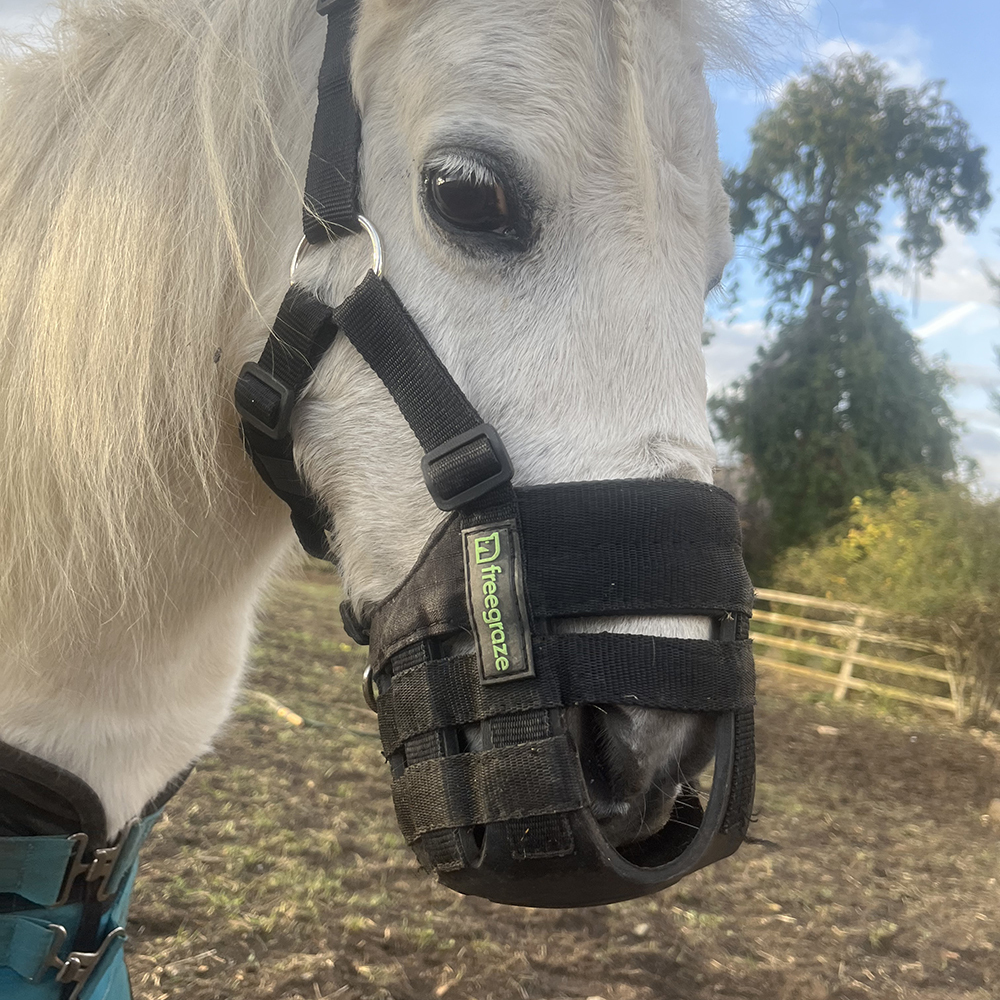
“Wonderful, we’ve not experienced even one rub. Our previous two both rubbed her badly, so that has been a big difference.”
Was there anything you disliked?
“I don’t like the look of any of them! They look very mean, but this one is slightly more discreet than her last one.”
How did it compare on price?
“The price is amazing too. It was less than a quarter of the price of our previous one and has worked much better for us.
Don’t be fooled into thinking that because it is cheaper it won’t be up to the job. For us, it absolutely has been.”
Would you recommend it, and will you keep using it?
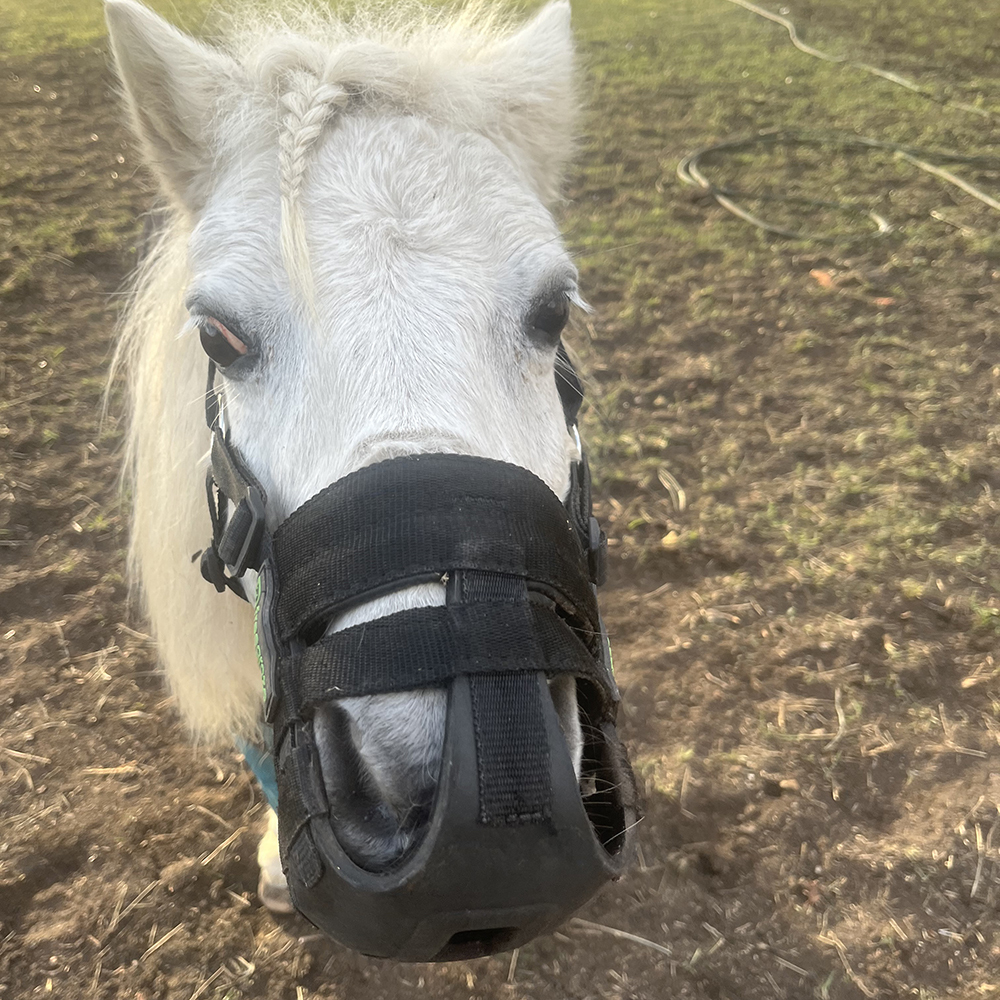
“Yes, yes, yes! This is our third one to try and by far the best for us. She doesn’t even protest when I put it on.
Yes, it’s a game changer for us. It gives her the opportunity to stay out with her companions while I manage her grass intake.”
FreeGraze AirFlow Grazing Muzzle: The Product Details
The FreeGraze AirFlow Grazing Muzzle combines an adjustable harness with a rubber grazing basket. Its main features include:
- An open section around the nostrils for ventilation.
- A curved rubber base with an opening for grass.
- Cushioned lining and a cut-back shape beneath the chin.
- Two field-safe fastenings.
- Sizes from Small Pony to Extra Full.
If you are comparing shapes and harness styles, our grazing muzzles collection includes other options.
Leading to and from the field: Shires includes a D-ring for attaching a lead rope. Bear in mind that the harness has field-safe fastenings, which are intended to release under pressure. Where more secure control is needed, use a suitable, well-fitting headcollar for leading and remove it before turnout unless it is designed for safe field use. Never disable the muzzle’s safety fastenings to make it more secure.
What Can a Grazing Muzzle Help With?
A grazing muzzle helps reduce grass intake while allowing a horse or pony to continue grazing. For ponies that adapt comfortably to one, it can help manage their intake while they enjoy turnout and the company of other horses.
It is one part of a feeding and weight-management plan. Wearing a muzzle does not automatically mean a pony is eating the right amount, losing weight or protected from laminitis.
Why does a pony on restricted grazing still need forage?
Horses and ponies are trickle feeders, adapted to eating small amounts of fibre through much of the day and night. Chewing produces saliva, which helps buffer stomach acid, while fibre supports normal digestive function. Long periods without forage can increase the risk of gastric ulcers.
A bare paddock may reduce grass intake, but it still needs an appropriate forage supply. Leaving a pony with little to eat for hours is not a suitable weight-loss plan. Lower-calorie forage and ways of making their ration last longer can help meet their need to chew without providing excessive calories.
A well-fitted muzzle can allow slower grazing, but you must check that the pony can actually reach the grass through it. It cannot guarantee sufficient forage intake on its own. The British Horse Society’s feeding guidance explains why forage remains essential when managing weight.
Using a Grazing Muzzle: What to Check
Before relying on any design, check how it works on your pony in their own field. These are the practical points that matter:
- Introduce it gradually. Begin with short, supervised sessions. Confirm your pony can graze and drink from their usual water source before leaving them wearing it.
- Check the fit and skin daily. Look for pressure points, rubbing and changes in behaviour. Remove the muzzle if it causes soreness or prevents comfortable eating or drinking, and reassess the fit before using it again.
- Watch the grass length. Very short grass may be out of reach, while long grass can fold over instead of entering the opening.
- Plan muzzle-free time. Muzzles must not be worn around the clock. World Horse Welfare advises building up gradually to a maximum of 10–12 hours a day; your pony may need less.
- Manage the rest of the day. Some ponies eat more when the muzzle comes off. Plan suitable forage and turnout for those hours rather than automatically returning them to unrestricted grass.
- Monitor body condition. Use regular fat scoring and consistent weight-tape measurements to check the trend. Review the diet with your vet or an equine nutritionist if it is not working as intended.
The British Horse Society’s grazing muzzle guidance is a useful reference when introducing one. If a pony repeatedly removes their muzzle, reassess the fit or design rather than overtightening it or adding ties that stop the safety release working.
For ponies with a history of laminitis or a metabolic condition, agree grass access with your vet. A muzzle does not make every pasture suitable. If you suspect active laminitis, contact your vet immediately rather than continuing normal turnout with a muzzle.
Video Guide: 5 Types of Grazing Muzzles Explained
Not sure which grazing muzzle is right for your horse? In our video guide, we compare five popular grazing muzzles, exploring the differences between soft and structured designs, how they restrict grass intake and what to consider when choosing the best option for your horse or pony.
We also share practical fitting advice, including how to check for comfort around the nose, chin and headpiece, plus important safety features to look out for.
Is the FreeGraze AirFlow Worth Considering for Your Pony?
For Gemma, this was the design that made a shared turnout routine easier. Her review gives a useful account of fit, comfort and everyday handling on a miniature Shetland; it does not measure weight loss or a reduction in laminitis risk.
If you are comparing options, start with your pony’s head shape, their ability to graze and drink, and the routine you need it to work within.
View the FreeGraze AirFlow Grazing Muzzle for the current price and available sizes, or browse our grazing muzzle range to compare alternatives.
