



A Q&A with Cavallo’s Owner: Hoof Boot Fit, Styles & the Dinky Ponies
Whether you’re considering hoof boots for everyday riding, making the transition to barefoot or looking for temporary protection after a lost shoe, knowing where to start can feel confusing. Cavallo hoof boots aren’t just for barefoot horses and your hoof-care professional can help you choose the right option. A comfortable, secure fit starts with accurate measurements taken after a fresh trim.
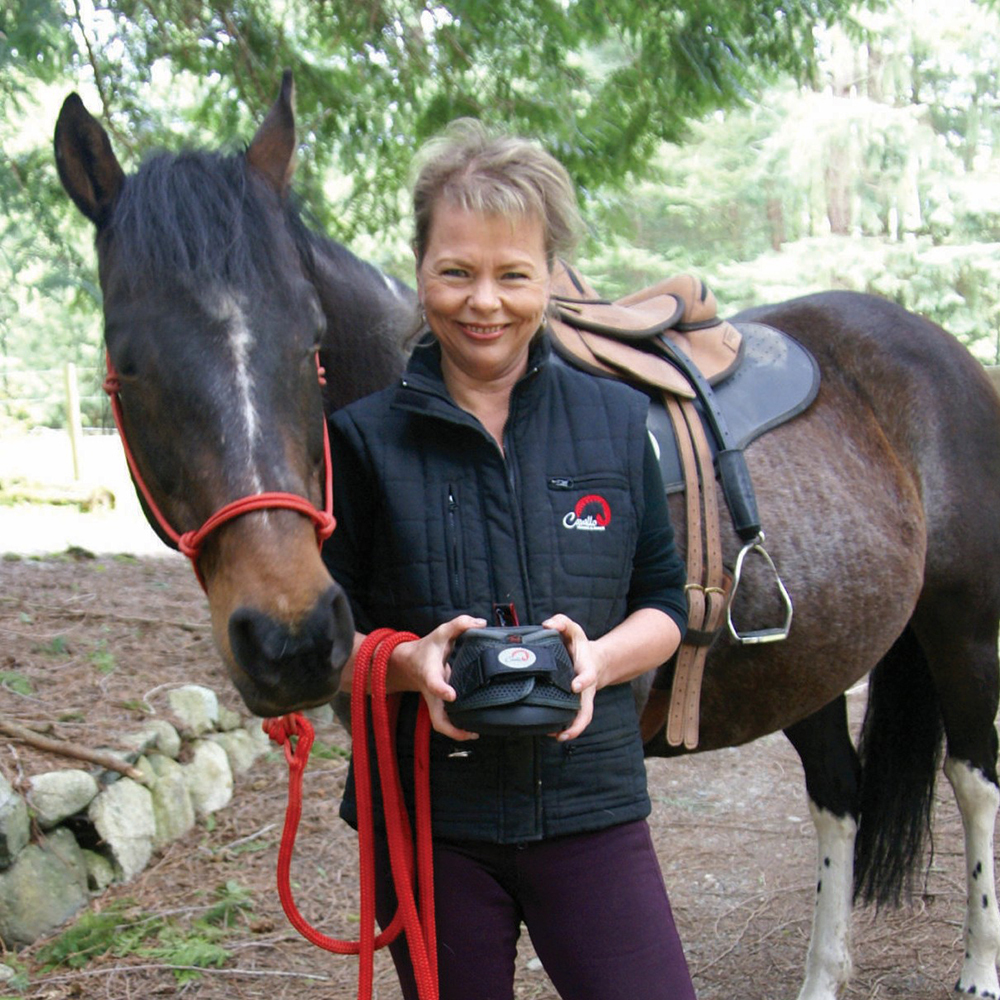
In this Q&A, we chat with Cavallo founder Carole Herder about choosing between Trek, Simple and Sport designs, understanding Regular and Slim soles and avoiding common measuring mistakes. We also meet the horse who inspired Cavallo and discover how the boots help the Dinky Therapy Ponies on their special visits.
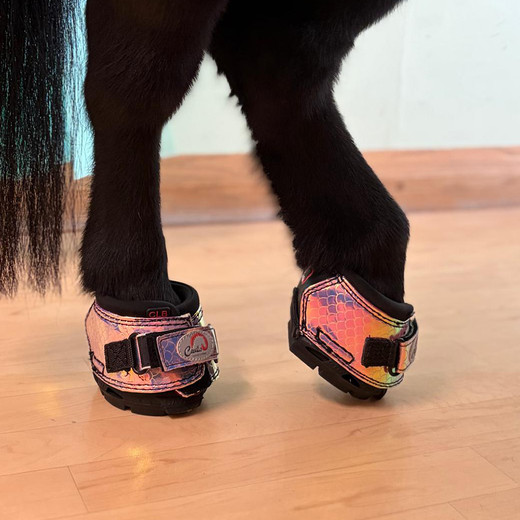
Cavallo proudly support the Dinky Ponies, who wear Cavallo Hoof Boots during their visits to care homes, hospitals and schools. We wanted to know what their work means to the people behind the boots, too. Cavallo founder Carole Herder answered our questions, starting with Rocky, the horse who inspired her to create them.
Was there a horse or experience that led to the first Cavallo hoof boot?
"Yes. I fell madly in love with my first horse, Rocky. He was the beginning of this whole journey. I lost him through a series of health issues, which were all hoof related. Losing him made me start to ask the questions I had not known to ask before: why were so many horses struggling with navicular, laminitis and other hoof-related lameness? Why were these ailments simply considered part of horse ownership?
As I learned more, I became convinced that nailing metal into a living hoof was not necessarily, or always, the healthiest answer. But I also knew it was not fair to ask domestic horses to go barefoot over every surface, carrying riders, without any protection at all.
I wanted to create a practical alternative: a boot that would protect the hoof, absorb concussion, allow the hoof to function more naturally and give owners more choices. They needed a Nike. That was the beginning of Cavallo."
Country & Stable note: That is Carole's reason for developing boots, rather than a blanket recommendation to remove shoes. Some horses thrive shod, some barefoot and some use boots for particular jobs. Your farrier or hoof-care professional can help you work out what suits your horse.
Are hoof boots only for barefoot horses hacking on stony ground?
"Aggressive trails are certainly one use, but hoof boots can be useful in many more situations. We see them helping horses transitioning out of metal shoes, seniors with thin soles or arthritis and horses recovering from hoof issues, abscesses or laminitis, always alongside appropriate veterinary and hoof-care guidance. They can also help horses who need more comfort over hard, frozen, gravelly or uneven ground.
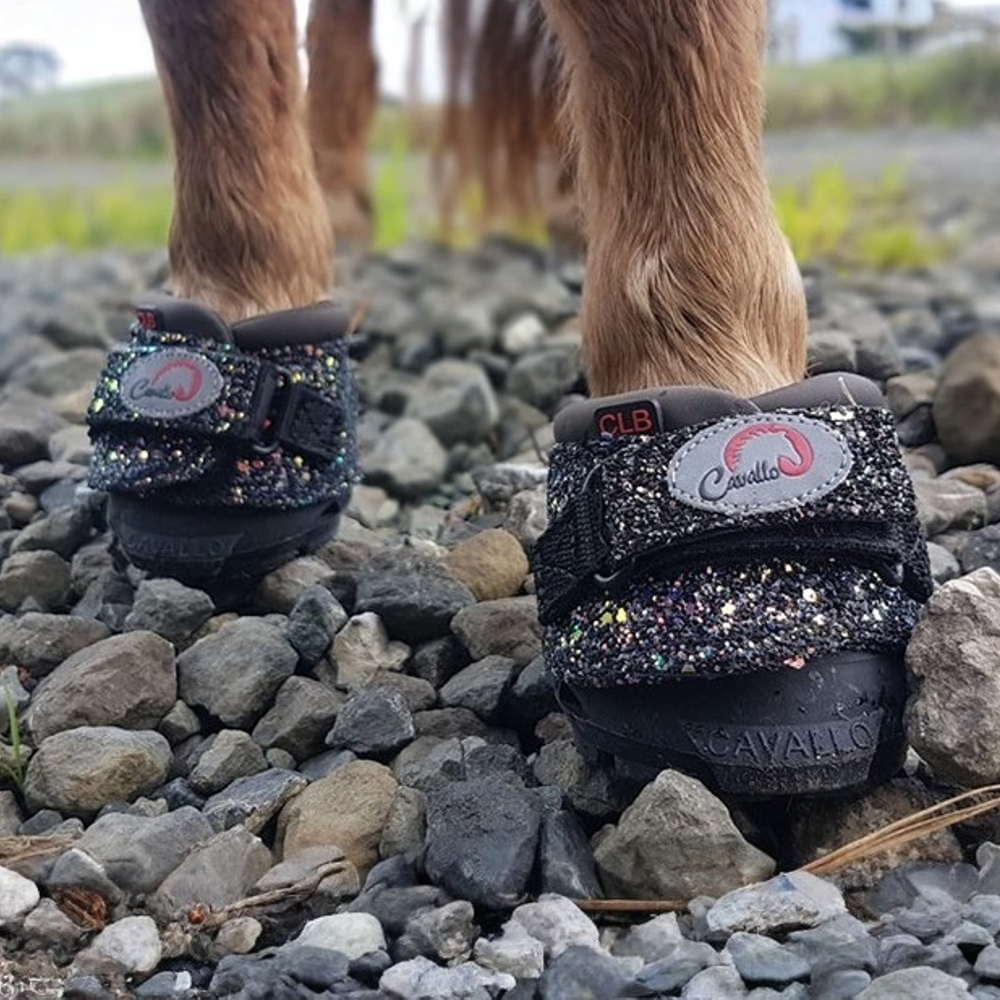
They can be useful for trailering, turnout, hand-walking, riding on pavement and giving temporary protection when a horse has lost a shoe. Some riders even use them over properly fitted shoes for added protection or cushioning in particular circumstances. They are about comfort, protection and flexibility for many purposes, not just one kind of horse or rider."
Country & Stable note: Think of the horse who is happy barefoot in the field but slows right down on a newly gravelled bridleway. That is a different question from managing a painful hoof condition, where the support needed and the time a boot can safely be worn require individual veterinary and hoof-care advice.
What is the difference between Trek, Simple and Sport, and between Regular and Slim soles?
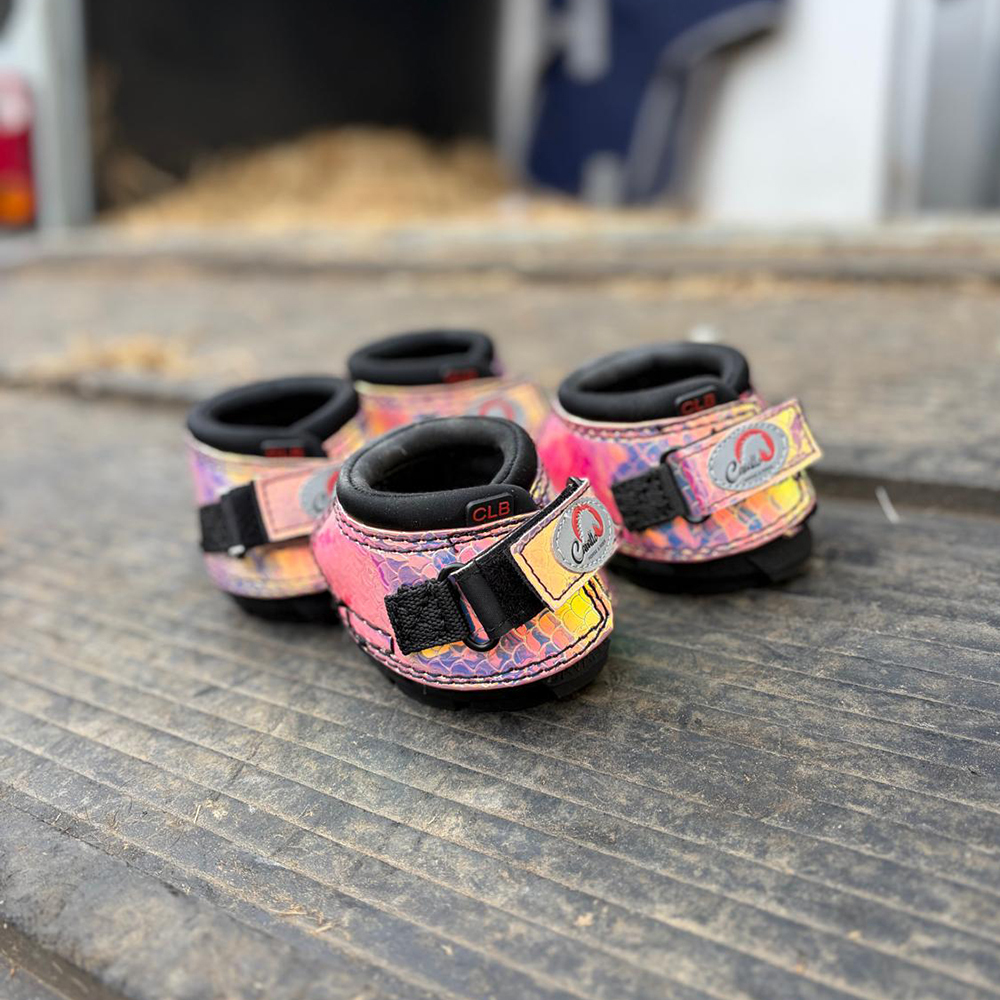
"First of all, the type of horse makes a difference. CLB, Cute Little Boots, are for minis. BFB, Big Foot Boots, are for drafts, and LEB, Long Ear Boots, are for donkeys.
The regular horse styles are a matter of different upper designs, including materials, colour and appearance. It is like a running shoe store. You gravitate towards what you like. The materials used are also reflected in the price.
The Trek is our versatile, premium all-round boot. Like all the styles, it is secure and easy to use, but its ProMesh material is lighter weight and breathable, and suited to many riding, turnout and rehabilitation situations. The Simple is our original, dependable classic with an all-leather upper. The Sport has a more streamlined, side-closure design that some owners prefer. All Cavallo boots are fit for purpose, highly durable and covered by the Best Boot Warranty.
Then there is sole shape. A Regular sole is generally for a rounder or broader hoof. A Slim sole is for a narrower, more oval or tapered hoof. And to every rule there are anomalies. Neither is better. It simply needs to match the hoof. That is why we are so happy to help with photos and measurements. A good fit is everything."
Country & Stable note: Trek, Simple and Sport describe the upper and closure. Regular and Slim describe hoof shape. Slim is narrower across the sole, rather than a smaller overall size. Cavallo's measuring guidance explains that equivalent Regular and Slim soles have the same length. Measure first, then compare the Cavallo range.
What are the signs of a good fit and the mistakes you see most often?
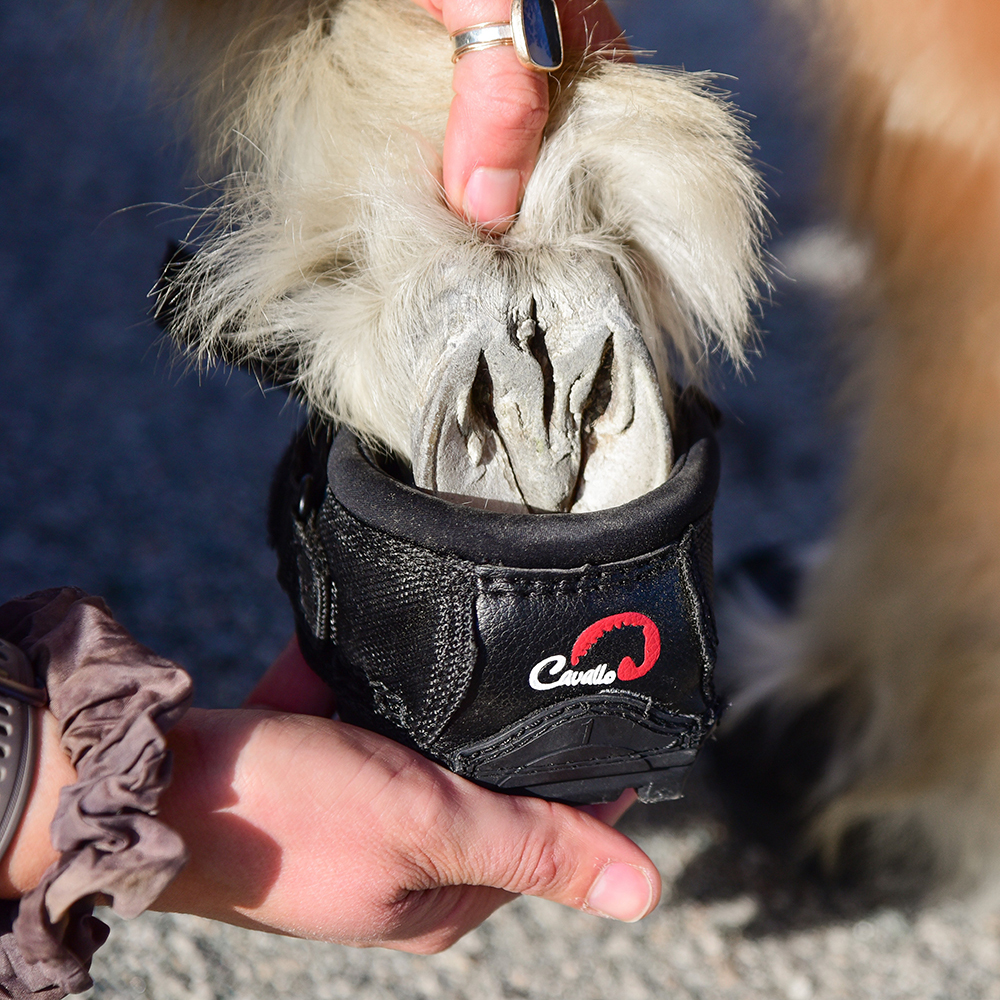
"A correctly fitted boot should sit level and straight on the hoof, fasten securely without being over-tightened and stay in place without twisting, rubbing, being difficult to put on because it is too small or coming off because it is too large. The horse should be well protected and moving freely and comfortably. We always suggest a gradual break-in, with regular checks, particularly for a horse new to boots.
One common mistake is including the heel bulbs in the measurement, or measuring an overdue hoof rather than one that has been freshly trimmed. Errors can occur when the ruler is not properly aligned: straight from heel to toe for length and level across the widest part of the hoof for width.
Other fit issues come from fastening the boot too tightly, failing to recheck the fit once the horse begins moving or trying to force a hoof into a boot simply because it looks as though it should be the right size.
If there is any doubt, please send us photos. Our team would always rather help you get the fit right before your boots head out on a long adventure."
Country & Stable note: Measure after a fresh trim, from the heel buttress line to the toe, without adding the heel bulbs. Measure width at the hoof's widest point. Walk the horse in a boot fitted to a clean hoof and check that it stays straight. Inspect the skin after a short first use and recheck fit as the hoof grows.
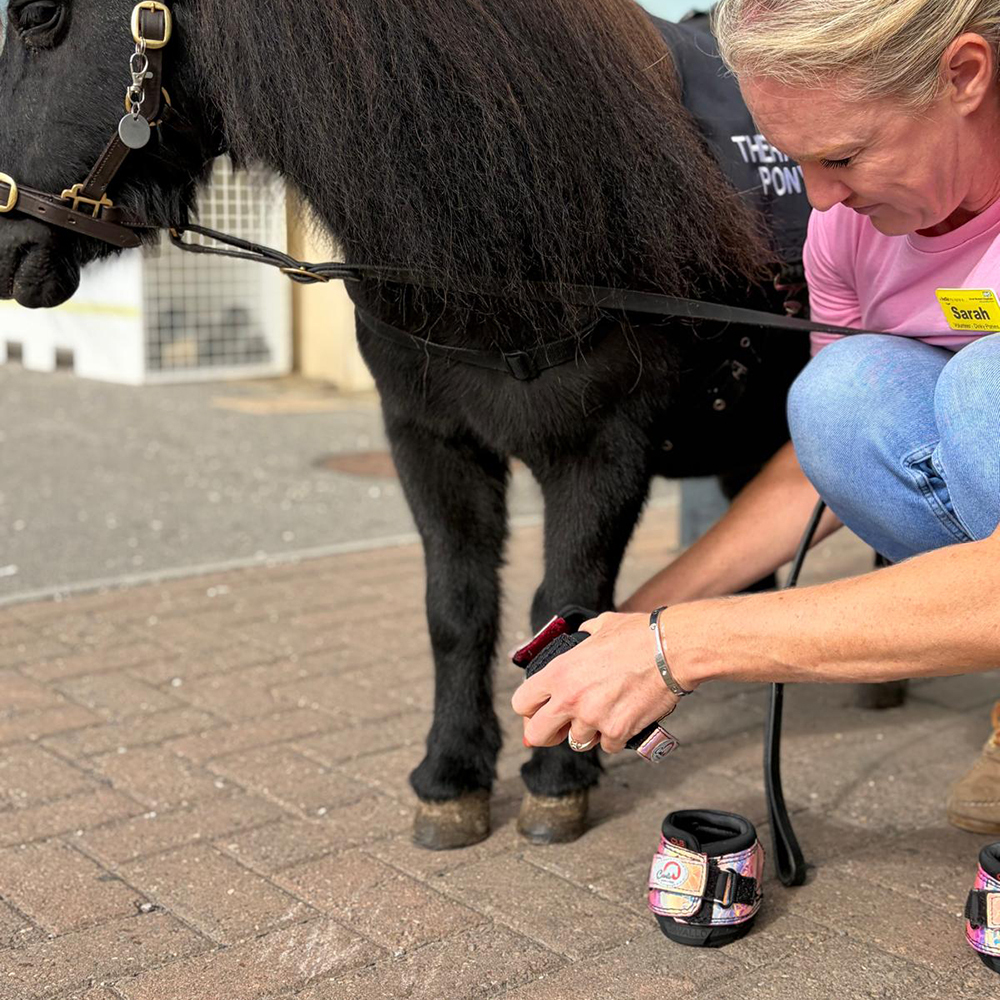
Sarah uses the Dinky Ponies' boots without wraps. When would you add one?
"If the boot fits properly, the pony is comfortable and there is no sign of rubbing, it is absolutely fine to use the boots on their own as Sarah does. Many horses and ponies never need anything additional.
Pastern wraps or comfort sleeves were initially developed for horses with injuries who may need to wear boots immediately and for an extended period, without a break-in period. They are also useful for sensitive skin, fine or sparse hair, easing the break-in, longer rides or if you notice the beginning of a rub. They can add an extra layer of protection and comfort.
Because they take up some room inside the boot, it is important to make sure the fit still allows for them. As always, check the skin and the boot regularly, especially during the first few uses."
Country & Stable note: Wraps are an option, not something every horse needs. If you add Cavallo pastern wraps or comfort sleeves, check the fit again with them in place. If rubbing starts, pause use while you investigate the fit and skin rather than using a wrap to disguise pressure or twisting.
Did you ever imagine the boots would be used on the Dinky Ponies' visits?
"Honestly, not in my wildest dreams. At the beginning, I was thinking about horses being comfortable on trails, gravel, hard ground and all the places domestic horses encounter. I was thinking about the benefits of increased blood circulation, hoof flexion and freedom from nailed-on metal.
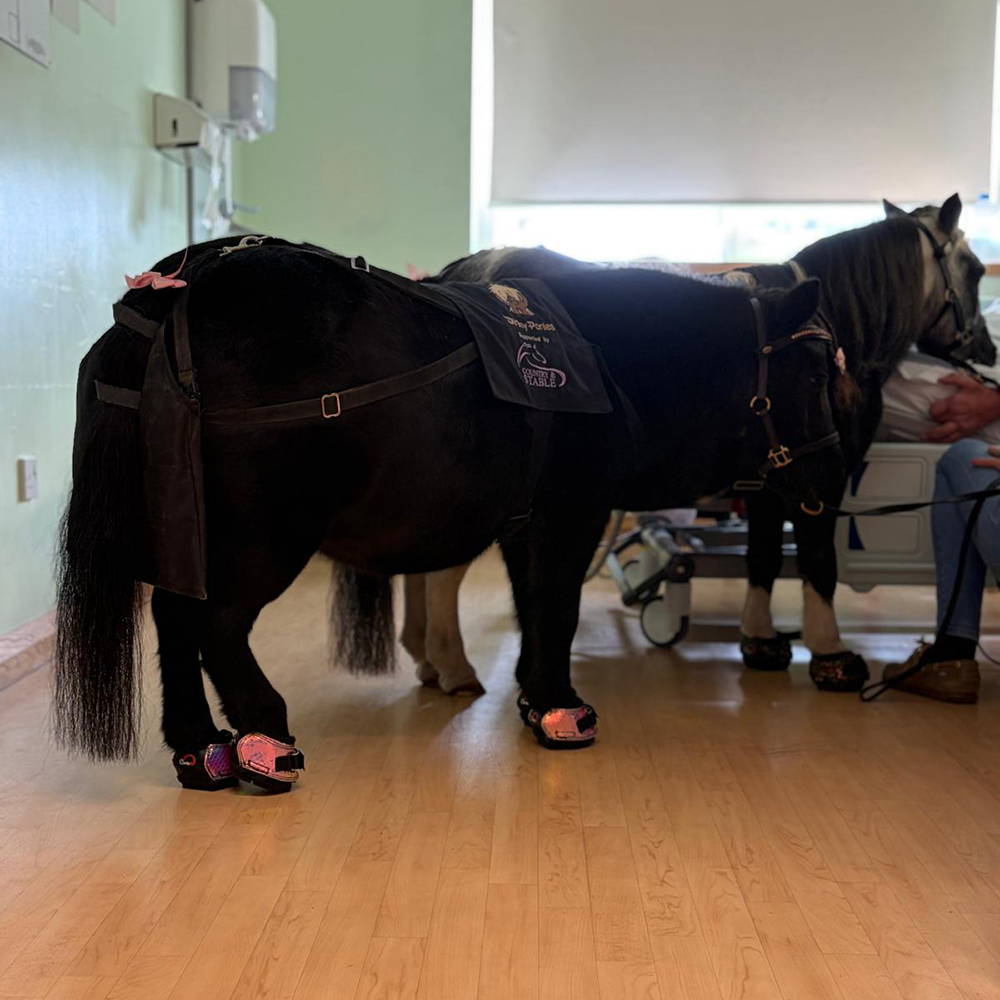
To see hoof boots become part of the Dinky Ponies' work in care homes, hospitals and schools is incredibly touching. Of course, every venue and surface must be assessed carefully, and the pony's safety and comfort always come first. But it is a beautiful example of how giving a pony hoof protection can help make more meaningful places accessible to them and, in turn, help them bring comfort and joy to people."
Country & Stable note: Indoor floors, thresholds and paths can vary, particularly when wet. A boot is not a guarantee of grip on every surface. Sarah's assessment of each visit and how the ponies are moving matters just as much as what they wear.
Why did Cavallo want to support Sarah and the Dinky Ponies?
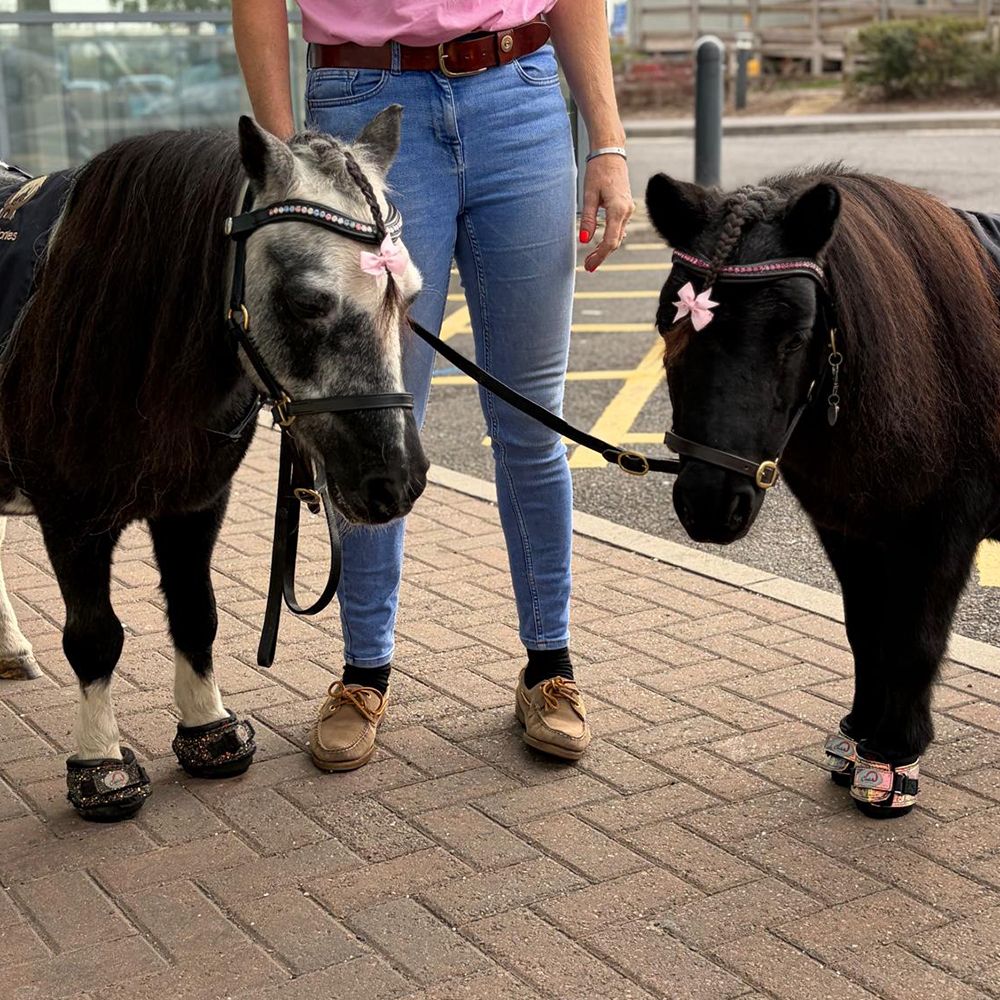
"Sarah and the Dinky Ponies represent the best of what horses can bring to people: comfort, connection, laughter and a kind of uncomplicated joy. Their visits are not just charming. They can mean a great deal to people who may be lonely, unwell, anxious or simply in need of a moment of lightness.
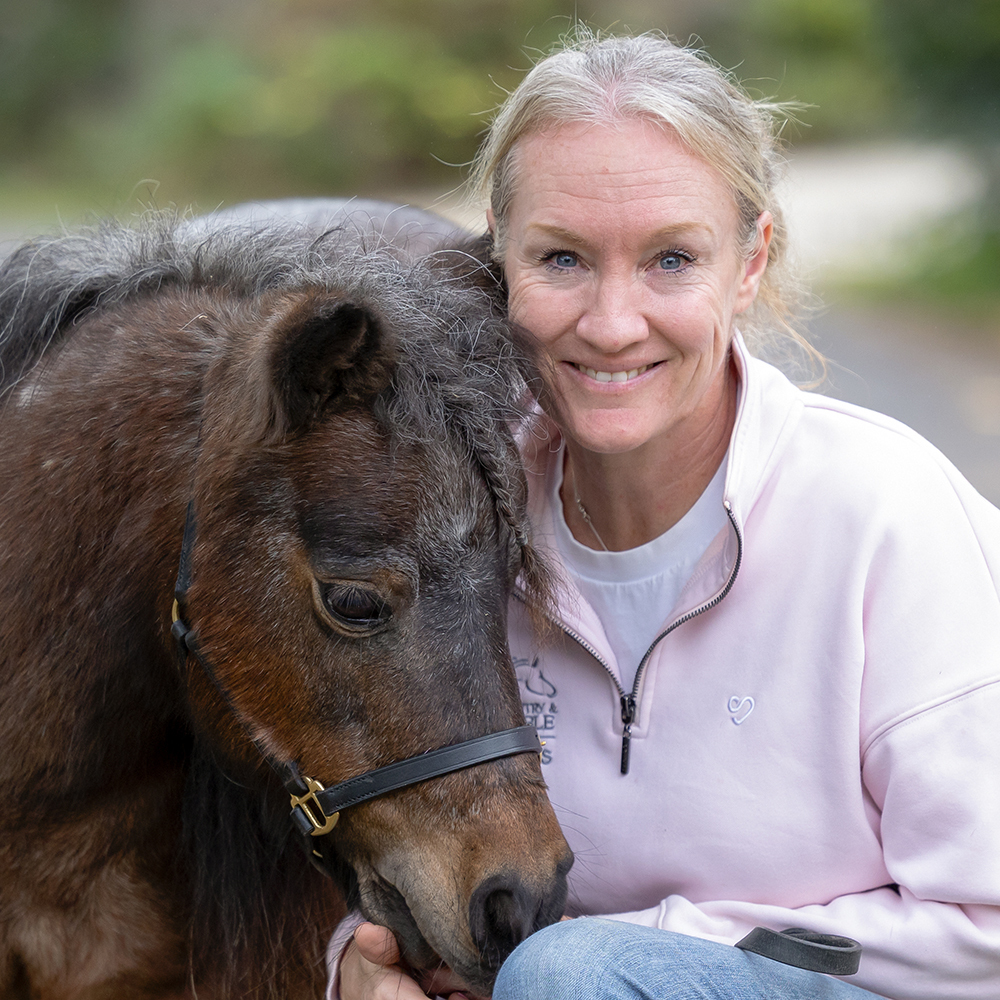
Cavallo has always been about helping horses live more comfortably and helping people care for them with kindness. Supporting Sarah and the Dinky Ponies felt completely natural, because their work carries those same values into the world in such a tangible way. Personally, I feel very proud that Cavallo can play even a small part in helping them continue that work, and I know that sentiment is shared by the entire global Cavallo team."
A big thank you to Carole for sharing both her practical advice and the heartfelt story behind Cavallo. From her love for Rocky to the Dinky Therapy Ponies bringing a little joy to someone’s day, it’s lovely to see how far that first idea has travelled. For your own horse, the starting point is simple: consider what you need the boots for, measure carefully and make comfort and fit your priorities.
Ready to explore the options? Browse our Cavallo hoof boots, or get in touch if you’d like a hand comparing the styles. We’d love to help you find the right boots for the hooves you care for.
