

Does My Horse Need a Fly Mask?
British summers bring longer days, warmer weather and, unfortunately, plenty of flies. If you've spent any time around horses during fly season, you'll have seen the constant head shaking, rubbing and stamping that comes with it.
For many horses, a fly mask quickly becomes an essential part of their daily turnout routine. But does every horse need one?
The short answer is that not every horse will require a fly mask, but many benefit from wearing one during the spring and summer months. Some horses are particularly sensitive to insects, while others need extra protection from sunlight or suffer from conditions that make fly protection essential.
Here's everything you need to know before deciding if a fly mask is right for your horse.
What Does a Fly Mask Do?
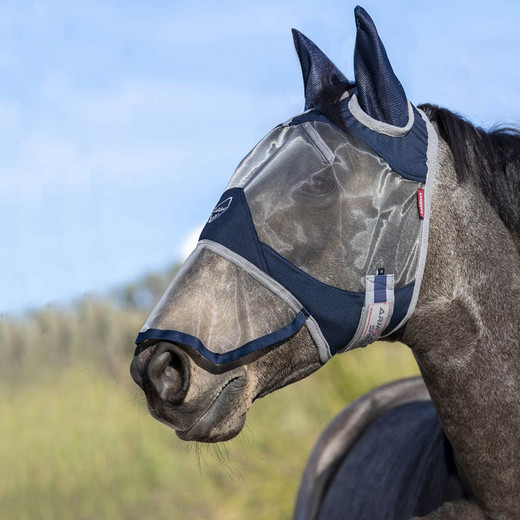
A fly mask is designed to protect your horse's face, eyes and, in some cases, ears from flies and other irritating insects.
The skin around a horse's eyes and muzzle is particularly sensitive. Flies are naturally attracted to moisture around the eyes, nostrils and mouth, making these areas especially vulnerable during turnout.
A good quality fly mask can help to:
- Keep flies and biting insects away from the eyes and face
- Reduce irritation, head shaking and rubbing
- Protect sensitive skin from UV rays
- Help prevent eye infections caused by flies
- Offer additional protection for horses with eye conditions or photosensitivity
Many modern fly masks are also made with UV-blocking fabrics, which can be particularly useful for horses with pink skin, white markings or conditions such as uveitis.
Although fly masks can look a little unusual at first, horses adapt to them very quickly when correctly fitted.
Can Horses See Through Fly Masks?
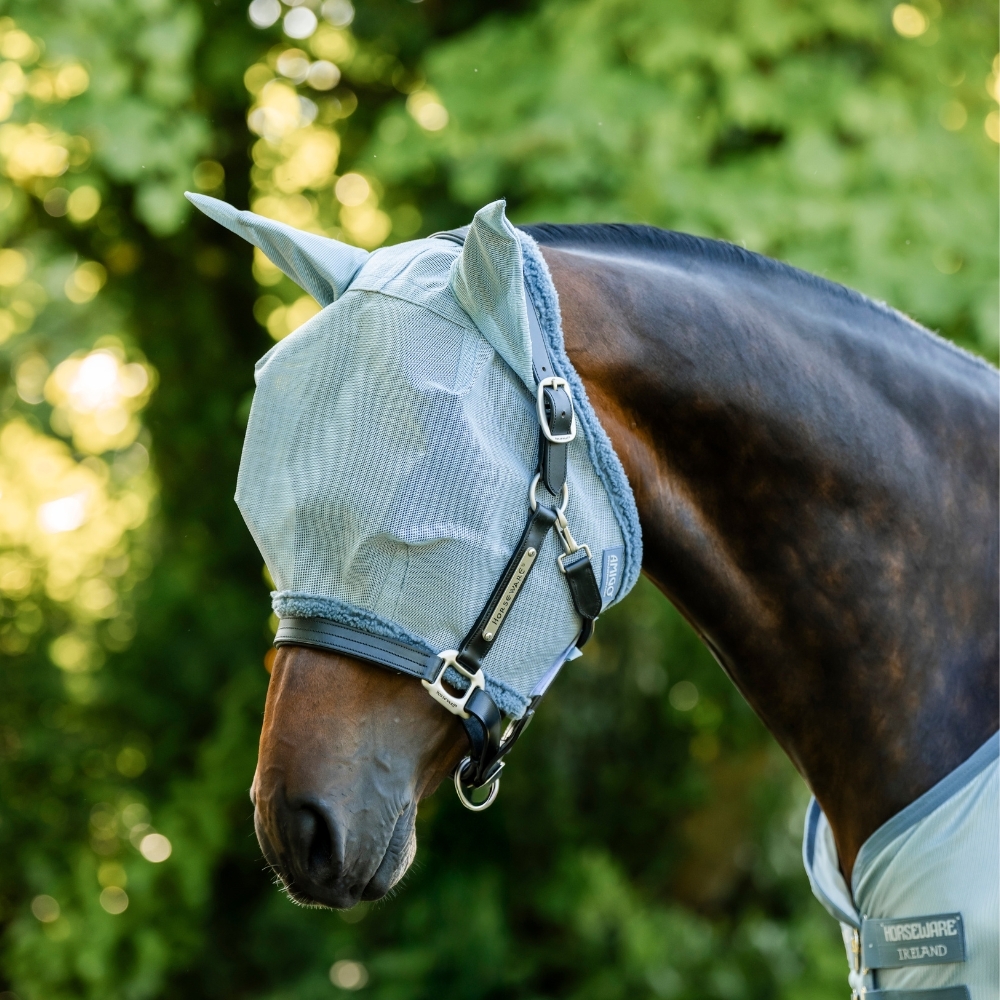
Yes. Horses can see perfectly well through a properly fitted fly mask.
The mesh used in quality fly masks is specifically designed to allow excellent visibility while preventing insects from reaching the horse's face. Most horses adjust almost immediately and carry on grazing, moving and interacting normally.
In fact, many horses seem noticeably more relaxed once protected from persistent flies.
Why Use a Fly Mask?
The biggest reason to use a fly mask is simple: comfort.
Anyone who has had a fly buzzing around their face all afternoon knows how frustrating it can be. Horses cannot swat flies away from their faces as effectively as we can and some become genuinely distressed by persistent insects.
You'll often notice affected horses:
- Constantly shaking their head
- Rubbing their face on fencing, trees or stable doors
- Seeking shelter for long periods
- Becoming unsettled during handling or riding
- Developing sore patches around the eyes and face
Horses living in groups will often stand head-to-tail and use their tails to help protect one another. Horses turned out alone do not have this advantage and often appreciate the extra protection a fly mask provides.
Health Benefits of Fly Masks
Fly masks can also support your horse's overall health.
Face flies feed on secretions around the eyes and can spread bacteria, increasing the risk of eye infections. Horses prone to conjunctivitis often benefit from wearing a fly mask throughout the summer.
Fly masks may also help horses suffering with:
- Aural plaques
- Light sensitivity
- Eye injuries during recovery
- Sweet itch affecting the face and ears
- Seasonal allergies
While fly sprays are useful and effective, many owners prefer not to spray products directly around the eyes and nostrils. A fly mask provides protection in these sensitive areas without the need for repeated application.
Does Every Horse Need a Fly Mask?
Not necessarily.
Some horses seem largely unaffected by flies and happily graze all summer without one. Others become miserable as soon as the insects appear.
Your horse may benefit from a fly mask if they:
- Have sensitive eyes or skin
- Frequently rub or shake their head
- Have white facial markings or pink skin
- Suffer from eye conditions
- Are particularly bothered by flies
- Live in areas with high insect populations
- Are turned out during the day throughout summer
Many owners find that once a horse becomes accustomed to wearing a fly mask, they are noticeably more settled and comfortable during turnout.
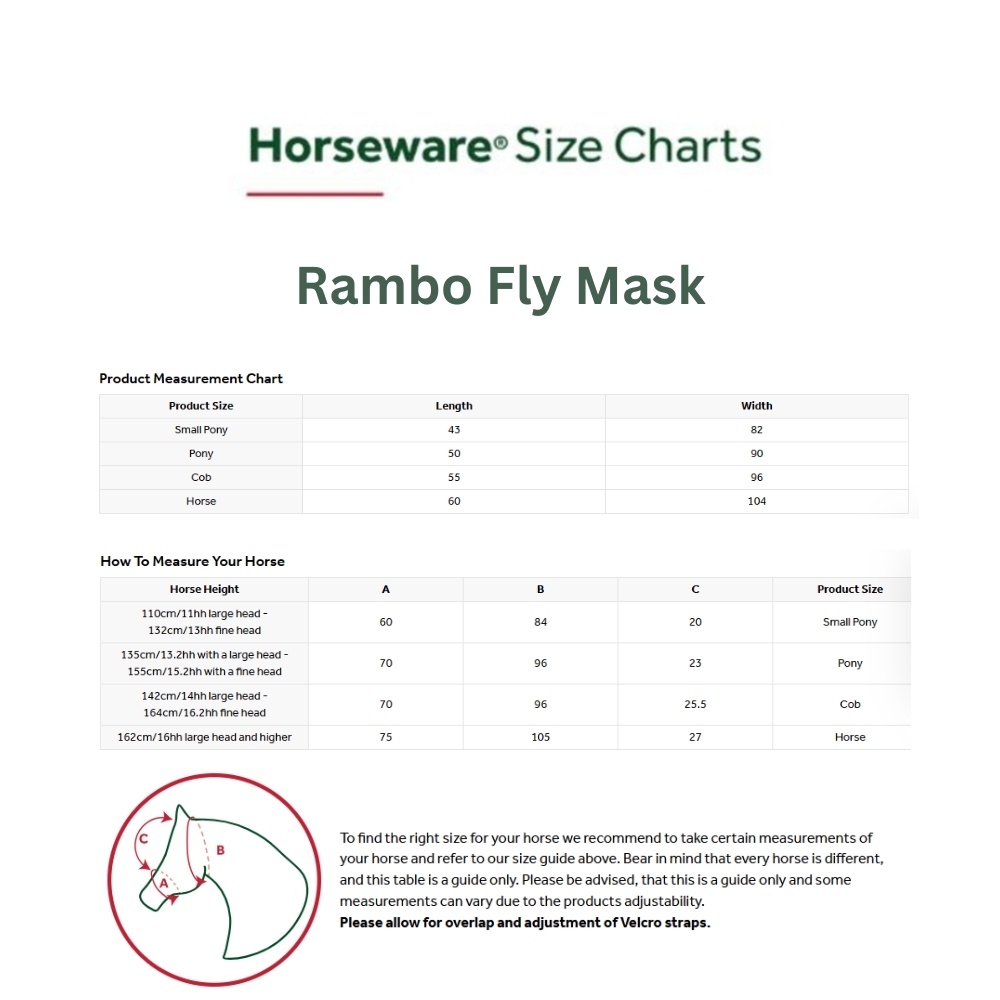
How to Size a Fly Mask
Getting the correct size is essential. A poorly fitting fly mask can cause rubbing, discomfort and, in severe cases, eye injuries.
Although sizing varies slightly between brands, taking a few basic measurements will help you choose the correct fit.
A = Between ears to middle of face
B = Bottom of ear to middle of face
C = Between ears to between nostrils down the centre of the face
D = Around the middle of the face to the middle of the jowl
E = Around the neck approximately 2 inches behind the ears at mid-jowl
F = Side to side across the brow approximately 2 inches behind and below the ears
Always refer to the manufacturer's sizing guide before purchasing, particularly if your horse falls between sizes.
How Should a Fly Mask Fit?
A fly mask should sit securely without being tight.
One of the most common mistakes owners make is choosing a mask that sits too close to the eyes. The mesh should stand clear of the eyelashes and eye area at all times.
When fitting a fly mask, check that:
- The mesh does not touch the eyes or eyelashes
- There are no large gaps where flies can enter
- The throat fastening is secure but not restrictive
- The fleece edging sits comfortably without rubbing
- Your horse can move their ears freely
Check the fit regularly, especially if your horse wears the mask every day. Dirt build-up, weight changes and normal wear can all affect how well the mask fits over time.
If your horse has never worn a fly mask before, introduce it gradually in a safe environment and monitor them closely during the first few uses.
Fly Mask With Ears or Without Ears?
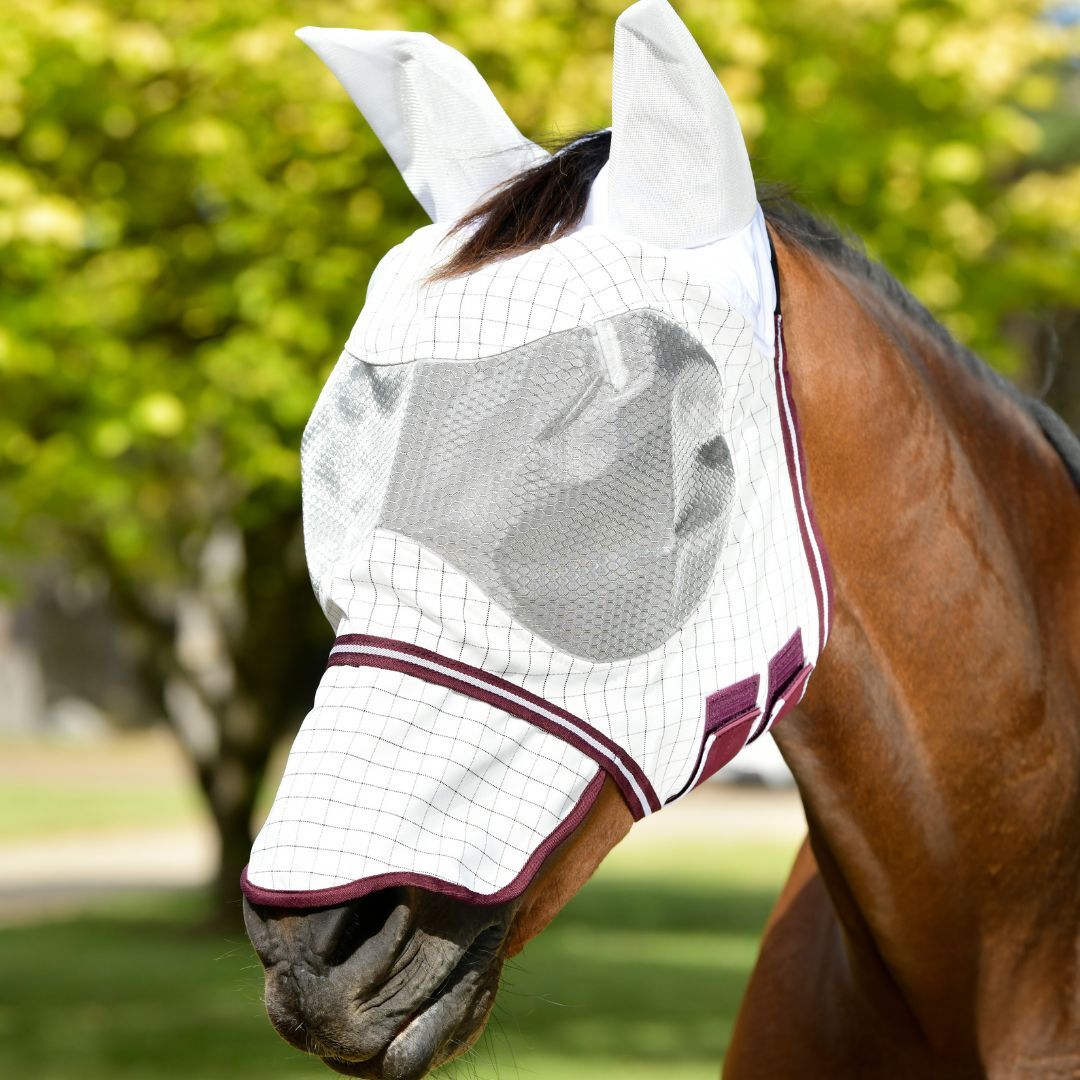
Whether you choose a fly mask with ears often comes down to your individual horse.
Some horses are extremely sensitive to insects around their ears and become much happier in a mask with integrated ear covers. Others strongly dislike having their ears enclosed and prefer an earless style.
A fly mask with ears may be particularly useful if:
- Your horse has clipped ears for showing
- Gnats are a persistent problem
- Your horse regularly shakes its head because of flies
- Your horse suffers from sweet itch around the ears
Whichever style you choose, make sure there is enough room for natural ear movement.
What About Fly Veils and Fly Hoods?
For ridden work, many riders choose to use a fly veil or fly hood.
These are particularly popular for show jumping and eventing, helping to keep flies away from the ears while the horse is working. Some horses also seem more focused when wearing a fly hood, especially in busy competition environments as they can help block out sounds and the wind.
How to Clean a Fly Mask
A dirty fly mask can quickly become uncomfortable.
Dust, sweat, mud and grease build up surprisingly quickly, particularly during hot weather. Left unwashed, this debris can lead to rubbing and skin irritation.
Ideally, clean your horse's fly mask every few days during regular use and more frequently if it becomes heavily soiled.
To clean a fly mask:
- Remove loose dirt and hair.
- Hand wash using warm water and a mild antibacterial detergent.
- Rinse thoroughly to remove all residue.
- Allow the mask to air dry completely before reuse.
Many riders keep a spare fly mask on hand so there is always a clean one available while the other is drying.
Final Thoughts
A fly mask is one of those pieces of summer horse wear that many owners quickly come to rely on. While not every horse needs one, they can make a huge difference to comfort, wellbeing and day-to-day management during fly season.
If your horse spends much of the summer battling flies, rubbing their face or showing signs of irritation, investing in a well-fitting fly mask is often money well spent.
Explore our full range of horse fly masks and fly protection to help keep your horse comfortable throughout the warmer months.
FAQS
Should horses wear fly masks all day?
Many horses comfortably wear fly masks throughout the day while turned out. However, masks should be removed daily to check for rubbing, clean away dirt and inspect the horse's eyes and skin.
Can horses wear fly masks in the rain?
Yes, most fly masks can be worn in wet weather. However, prolonged heavy rain can make some masks sag or sit closer to the eyes, so always check the fit afterwards.
Can a fly mask help with sunburn?
Yes. UV fly masks, like the Woof Wear UV Fly Mask, are particularly useful for horses with pink skin, white facial markings or light sensitivity, helping to reduce the risk of sunburn around the eyes and muzzle.
How often should I replace a fly mask?
Replace a fly mask when the mesh becomes damaged, loses shape or no longer fits correctly. Many owners replace masks annually, especially if used daily throughout summer.
Why does my horse keep taking its fly mask off?
This usually indicates a poor fit, rubbing or discomfort. Check for pressure points, ensure the mask isn't touching the eyes and make sure fastenings are secure.
Ready to make fly season more comfortable for your horse? Explore our range of horse fly protection, including UV-protective and ear-cover styles, and find the perfect fit for your horse's needs.
