



Making the Difficult Choice to Say Goodbye
Having horses takes over everything; in many ways they must come first. Up early on Christmas morning, twice daily visits 365 days of the year, worrying about them while you’re sat by the pool on holiday, we’ve all been there. Having a horse is often much more intense than any other domestic animal; it really is a lifestyle. Where dogs and cats can slot into your life and routine, horses force your whole routine to change around them. They become your whole life. This is one of the reasons why making the choice to say goodbye can be so difficult.
Saying goodbye is never easy. When that goodbye is to a horse - a companion, a partner, a member of the family - the grief can feel overwhelming. Equine euthanasia, a word that feels so clinical for such a deeply personal and painful moment, is a topic that many of us in the horse world will face. It’s a decision born of love, but one that leaves a lasting ache.
This isn't just about a horse; it's about a bond. It's about the countless hours spent in the barn, the shared secrets whispered into a soft muzzle, the triumphs and the setbacks, the quiet comfort of their presence. Euthanasia, in its truest sense, is the ultimate act of compassion. It’s a choice made to prevent suffering when the quality of life has diminished beyond what is fair or manageable. It’s a difficult choice many of us will have to make, and, although not the cheeriest of subjects, we wanted to create an article to provide some facts and help for those who may be facing this devastating decision.
When to Have Your Horse Put to Sleep
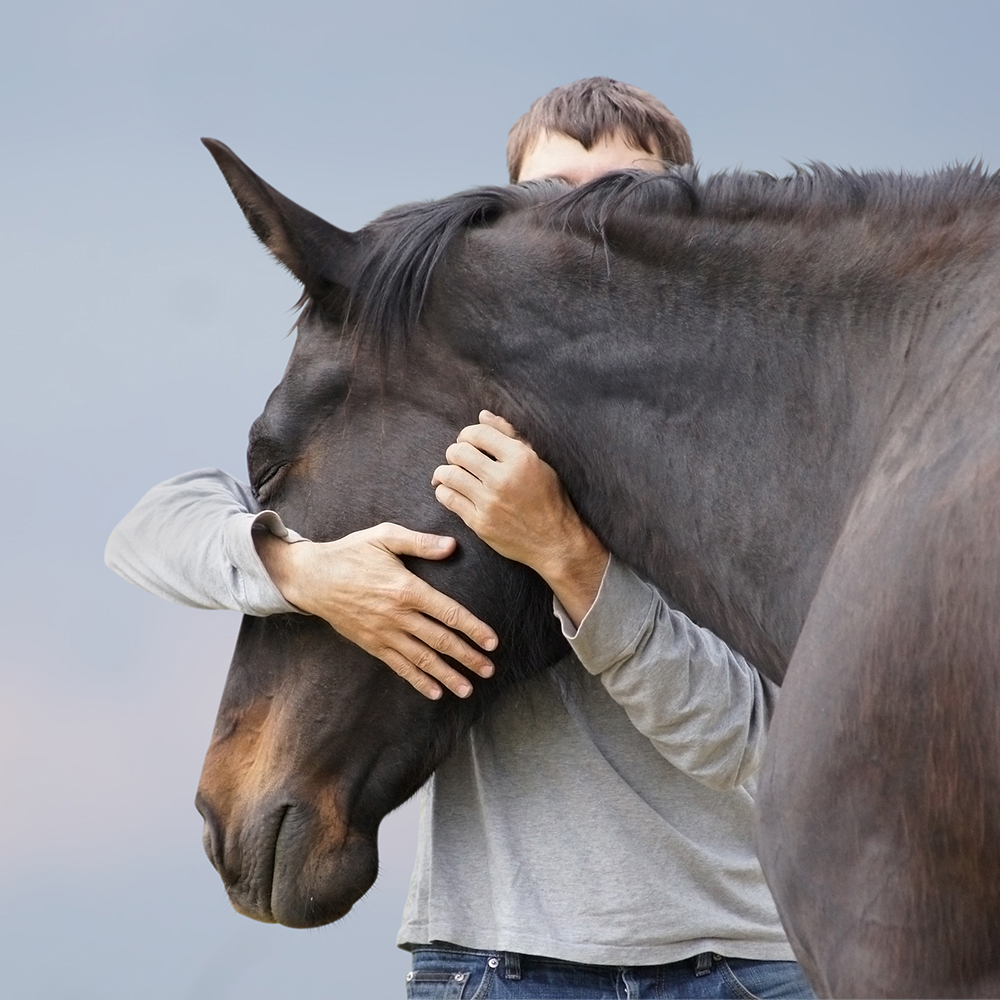
Sometimes, the choice of putting your horse to sleep is taken out of our hands. A tragic field or riding accident, or a sudden illness, can mean there is no other choice. But sometimes, there is a choice to be made. When a veterinary diagnosis isn’t immediately fatal, but won’t improve, quality of life starts to diminish or age just starts to take its toll, sometimes it can be kinder to let your horse go before things go severely downhill.
The decision-making process itself is often a heavy burden. It’s fraught with second-guessing, guilt, and the desperate hope that maybe, just maybe, things will get better. We weigh the advice of veterinarians, the opinions of trusted friends, and most importantly, the quiet wisdom of our own hearts. Is he still enjoying his food? Does she still have a sparkle in her eye? Can I truly provide the care he needs, or am I prolonging his pain for my own comfort? These are not questions with easy answers. They are a testament to the depth of our care.
Different Euthanasia Options for Horses
So, the choice has been made that the kindest thing to do for your beloved equine partner is to let them go. Firstly, we want to say that, if this is the choice you come to, you have in no way failed your horse. In fact, often the case is quite the opposite. You now have to decide on the method of euthanasia that suits you both best. Here, there is no right or wrong choice and the decision can often be a deeply personal one. The final moments are often a blur of emotions. It's an intimate, sacred time. Many of us choose to be there, to offer a final stroke of the neck, a last handful of carrots and the sound of our voice - a voice they've known and trusted for so long. The presence of a compassionate veterinarian is key, someone who understands that this is not just a medical procedure but an emotional rite of passage.
Method 1: The Lethal Injection
A method that some equestrians hold strong views on, the lethal injection is the most common method for non-emergency cases. Its suitability can depend on factors like the horse’s temperament, the location, and your plans for the body after euthanasia. During this process, the horse is given a sedative to keep them calm and minimise any distress for both them and the owner. This keeps the horse standing but drowsy. If you choose not to stay with your horse during the complete process, this will often be when you have your chance to say your final goodbyes before a catheter is placed in the jugular vein ready for the final injection. When all parties are ready and your vet is happy with the level of sedation, the lethal dose will then be administered, causing lack of consciousness and cardiac arrest. The vet will then listen for a heartbeat and will pronounce death.
What to expect:
-
You should be prepared for your horse to fall over. A good vet will take the lead rope and gently guide your horse down. Often, it isn’t a dramatic collapse, and vets have become very skilled in ensuring horses fall as gently as possible.
-
The horse may take some deep, gulping breaths. This is a normal response the body has to the heart stopping and the respiratory system shutting down. These breaths do not indicate that the horse is struggling in any way.
-
The horse’s body will relax completely, although there may be some muscle twitches while the body settles.
The lethal injection often comes with some old horror stories. You don’t have to look far into social media or a standard livery yard setting to hear that someone knows someone who knows someone who has seen a lethal injection go badly. When hearing these tales, we must remember that the lethal injection is a relatively new method of euthanasia in horses, and it is still within living memory that vets were perfecting the dosages and techniques. Today, the lethal injection has been perfected into a popular, often flawless, and painless method performed by trained professionals. It is not scary or gory and can be the preferred method for owners who decide to stay with their horse throughout the process.
Method 2: Gunshot
Many consider this method to be the quickest and most effective way to cause an instantaneous and humane death. It is often used in emergency situations or in locations where a vet is not immediately available, although it is also a valid choice for many owners when euthanasia is planned.
Unlike the lethal injection, a vet does not usually perform this method. While some vets are licensed to carry out this method, it is more commonly performed by a licensed fallen stock professional. Although not a vet, these people are highly experienced, kind, gentle, and will often be established horsemen who are able to help both you and your horse feel at ease.
At the start of the process, a sedative may be administered if the horse is in a state where it cannot be handled safely and if a vet is available. This helps to ensure the horse remains calm and still. During this time, again, you will have the chance to say a final goodbye if you have chosen not to stay for the full process. Given the nature of the process, some fallen stock professionals will recommend that the owner not be present, but it is largely your choice. If you do choose to stay, the person performing the shot will take the horse from you and hold them to ensure they fall safely.
The process is very quick and simple; the firearm is aimed at a specific, precise location on the horse's forehead, with the point of impact carefully chosen to ensure that it causes immediate death. When performed correctly by a skilled individual, the gunshot causes immediate loss of consciousness and death, and the horse feels no pain and will quickly fall. As with the lethal injection, a professional will confirm death by checking for a heartbeat and reflexes.
What to expect:
-
The process is very quick. Death takes milliseconds once the shot has been taken, so quick that the horse feels no pain.
-
The shot is loud. Whether you choose to stay with your horse or wait out of view, you will unfortunately hear the shot, which can be unsettling. Make sure the surrounding area is clear of people, children, and animals if possible.
-
Like the injection method, there may be some involuntary muscle contractions or a brief period of convulsive movements as a result of the nervous system shutting down.
-
There may also be some bleeding with this method, although not extensive.
What Happens After Your Horse Is Put to Sleep
Afterward, the silence is deafening. The empty stall, the unused headcollar, the familiar whinny that no longer echoes in the barn. Grief for a horse is a unique kind of sorrow, sometimes misunderstood by those who don’t share our passion. It’s okay to feel this profound loss. It’s okay to cry, to remember, to tell stories of the silly quirks and the grand achievements.
After your horse has been euthanised, you can choose to stay with them for a while or not; again, it is entirely your choice. If you feel that it is too upsetting, that’s valid, but if you would like to say a final goodbye, that’s fine too.
What Happens to the Horse's Body After Euthanasia
The next choice is what to do with the body of your beloved companion. In the UK, it is illegal to bury a horse in many locations due to the effects the toxins in their bodies, especially if they have been euthanised with a lethal injection.
If you would like to keep your horse close to you, cremation may be the way to go. The body is taken and cremated, which is a popular option in the UK. Services can be offered by your local fallen stock professional or dedicated pet crematoriums. You can choose to keep the ashes, all or part, or none.
If you choose not to keep your horse's remains, the fallen stock agent will remove the body for rendering or to the local hunt kennel. No matter what you choose, your horse will be treated with dignity and respect.
Coping with Grief After Losing Your Horse
Healing is not a linear process. It takes time, patience and a lot of self-compassion. Some find comfort in a memorial—a tree planted in their honour, a framed photograph or a donation to a rescue in their name. Others find solace in spending time with other horses, remembering the joy they brought into their lives.
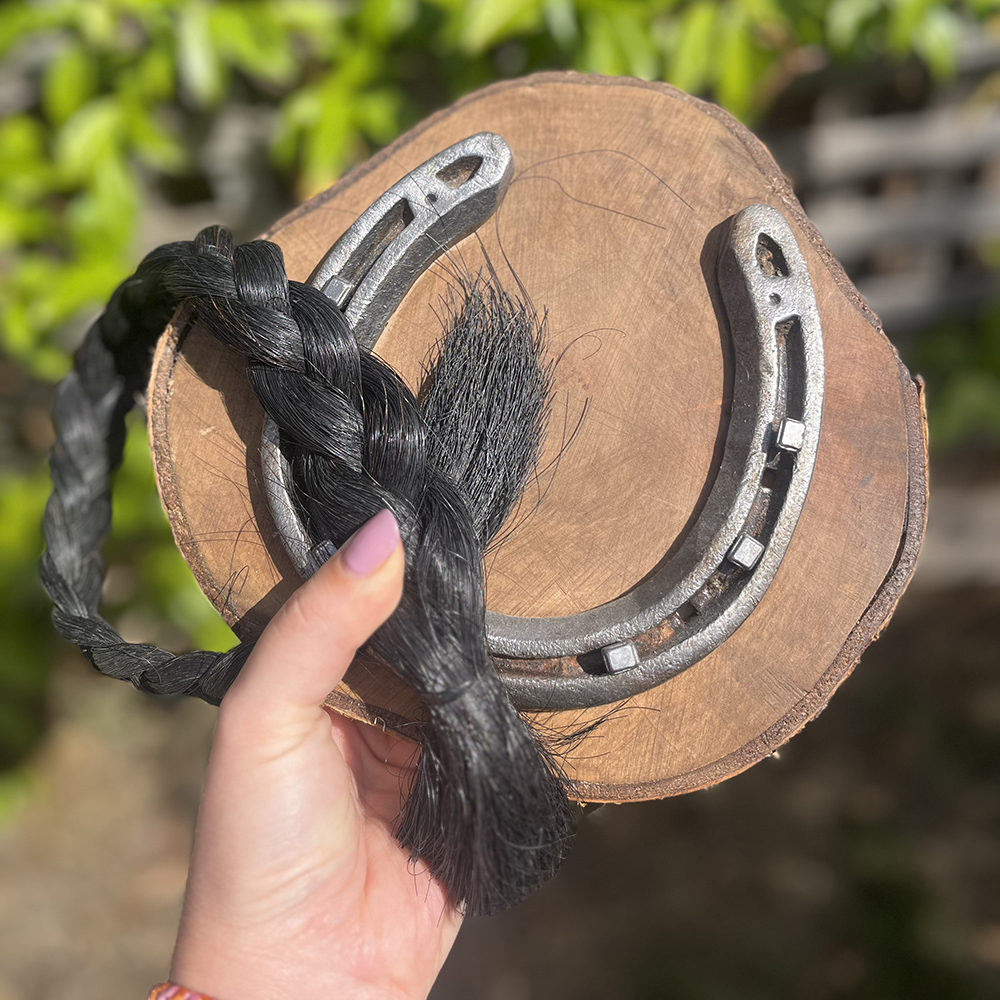
Keepsakes: Memorials for Your Horse
-
Horse Shoes: Can be polished, displayed, or repurposed.
-
Horse Hair: Can be encased in jewellery or mementos.
-
Tack: Saddles, rugs, and blankets can be repurposed.
-
Ashes: Can be kept, scattered, or encased in jewellery.
Horse Memorial Jewellery and Custom Keepsakes for Grieving Owners
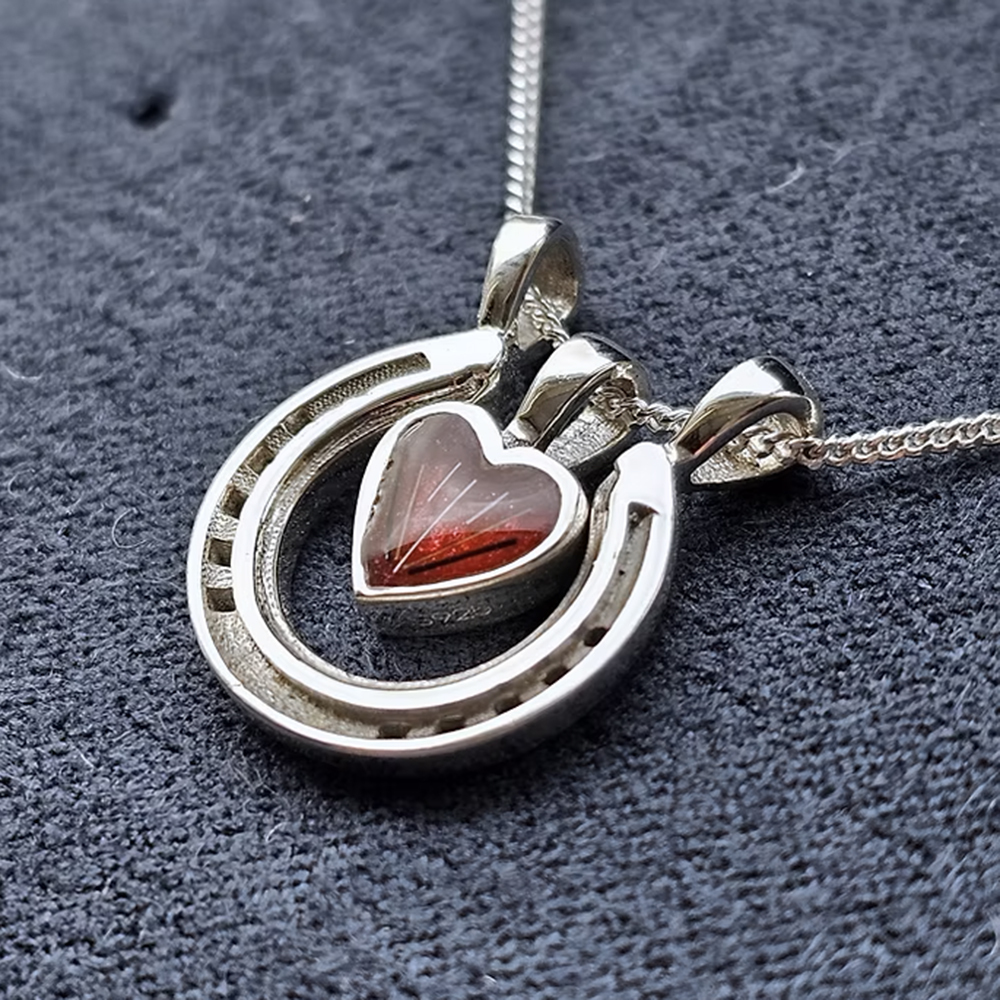
Heart Horse Equestrian Jewellery is a company offering bespoke, custom jewellery and keepsakes encased with your horse’s hair and ashes. They work closely with you to ensure you have the perfect piece that you will treasure forever. Their talented smiths work with a range of gold and silver to ensure the keepsake you receive is of the highest quality, and with items ranging from stunning rings and necklaces to stock pins and keyrings, their design team is sure to have what you are looking for.
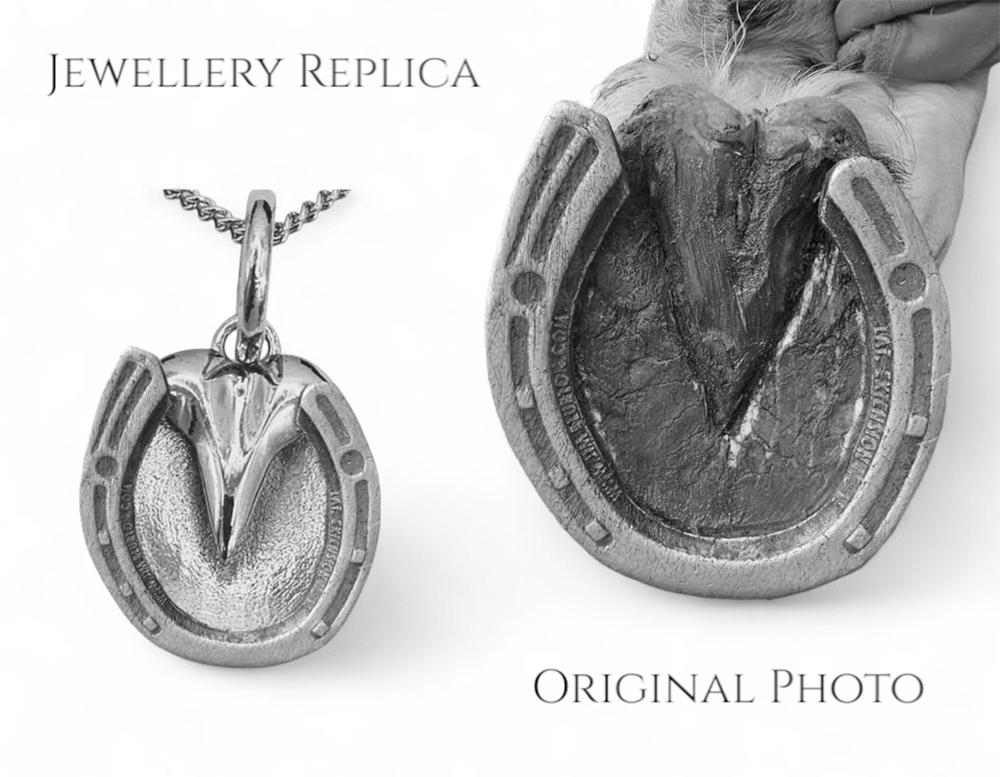
Their horse face markings necklace and Apple Bottom keyrings can even be designed to look like your lost friend. If you decide not to encase ashes or hair, Heart Horse still has you covered as a large majority of their range doesn’t need to have an encasement to be commissioned; they offer bit necklaces that can be made to look exactly like your horse’s bit and their Horse’s Shod Hoof pendant can be made to look exactly like your horse’s hoof, down to the shape and even the location of any nail and stud holes, making them just as unique as your friend’s real hoof.
No matter what vision you have in mind, the team works hard to create custom pieces that allow you to remember your fallen horse in the best way possible, while still keeping it affordable.
A Note from Someone Who Understands What You Are Going Through
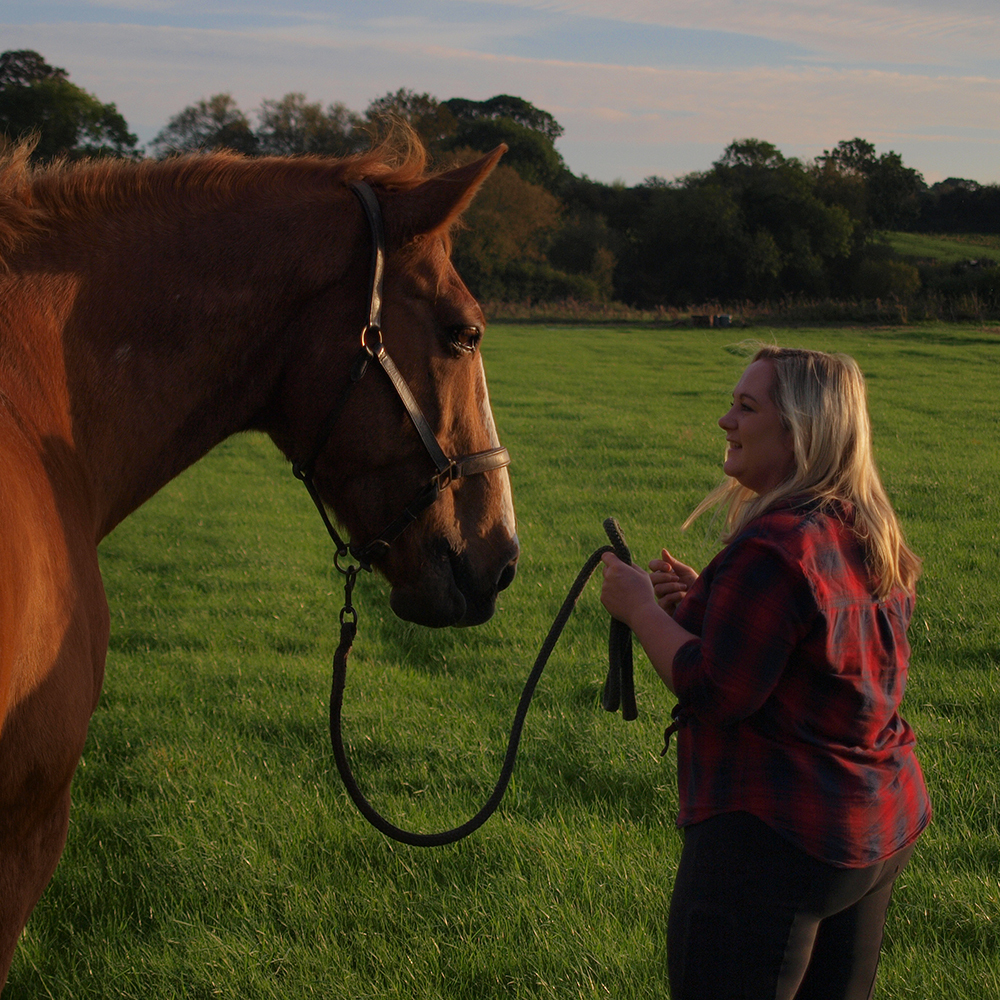
Our customer service advisor, Lucy, sadly had to make the choice to say goodbye to her beloved Irish Sports Horse, Jay, in 2023. Here’s what she shared:
"Jay was my big ginger giant. He was a 23-year-old ex-hunter that I had the pleasure of being gifted by a friend, and I had six amazing years with him before having to say goodbye. At a routine vet visit, it was found that he had a degenerative heart condition, and I sadly made the choice to allow him a final year and let him go while he was still as happy and healthy as possible. I didn’t want to come to the yard one day and find this big, proud boy fallen in the field, so I called the vet and booked him in about 6 months in advance.
I’m a big believer in the saying ‘better a week too soon than a day too late’ and I didn’t want him to get worse because of a condition that wasn’t going to get better. I can’t lie, most days after that were painful knowing his date was set, but it also made me make the most of every visit. He was retired, so I spent weekends walking him around his favourite routes, taking loads of photos, or just sitting in the field with him listening to him munch grass and giving him armpit scratches.
The morning of, I went up early and took him on one final walk, letting him eat all his favourite snacks. I chose the injection for Jay because I knew I wanted to be there for the whole process. Having been a groom for a number of years, I have been present for both methods and felt that this was the right option for both of us. I can honestly say it was very quick and peaceful. Jay went very quickly, and the vet who performed the procedure had known him for years. He was calm and stress-free.
Afterwards, I sat with him for an hour before our local fallen stock professional came to collect him for cremation. It was hard because it felt like he was truly gone, but to be honest, it was obvious that what made Jay, Jay, had already left. I waited about two weeks, then collected his ashes, which are in a beautiful leather chest that I adore, and I have his tail plated up inside it. His headcollar hangs on my bedroom door, and his saddle is on a hook, taking pride of place in my living room. There isn’t really anywhere in my home that doesn’t have some touch of Jay in it now.
I think it’s important to remember that the whole process is your choice. You know your horse better than anyone, and your feelings are valid. Don’t let anyone give their opinion at this time because everyone has one, and they aren’t always helpful. Talk to your friends afterwards, let yourself feel sad, and don’t feel guilty about your choice. There is no timeframe for grieving, and sometimes, it still hits me that he’s not around anymore. Horses don’t understand what’s coming, and they won’t hold it against you."
Support After Losing Your Horse
If you are currently facing this impossible decision or are grieving the loss of a beloved horse, please know that your feelings are valid. You are not alone; there are those who can help - here are some great Resources for support:
The BHS run a scheme called ‘Friends to the End’ that provides free advice and materials to help with all aspects of euthanasia as well as counselling for owners and a dedicated section of their website where you can find all the information you need to not only make the right choice for your horse but also guides on how to ensure the whole process runs smoothly.
World Horse Welfare provides materials through their ‘just in case’ program, helping owners to put in place a clear plan for when the end comes. It Is especially useful if the horse is being looked after by a friend or is on part livery, and a decision may need to be made when the owner isn’t able to be there.
The Blue Cross runs a pet bereavement service, understanding that pets are part of the family and that grieving can often feel the same as losing a human loved one. They run a support service helpline and email service that provides free and confidential advice for anyone going through or facing the loss of a pet, big or small.
Honouring Your Horse and Healing After Loss
Saying goodbye to a horse is never easy. It is painful, yet it is an act of love. Allow yourself time to grieve, honour your companion in ways that feel right and seek support when needed. The bond you shared is everlasting. Even in absence, your horse’s presence remains in your heart, your memories and the lives they touched.
