



What Are the Different Horse Colours?
Everyone has a favourite horse colour. For many, it comes from core childhood memories like the classic palomino Barbie horse or the legendary Black Beauty. But have you ever wondered how many horse colours there really are or what different face markings are called?
In this guide, we’ll explore the different horse colours, markings and patterns so you can get clued up and pick your favourite.
How Many Horse Colours Are There?
You might know the basics like bay, chestnut, black and grey but there’s a much wider range of colours out there. When you add in dilution genes, modifiers and patterns, the list of coat colours expands quickly.
Horse colour is all about genetics. There are just a few base colours but different genes modify them in surprising ways, creating a wide variety of appearances.
Common Horse Colours
Chestnut
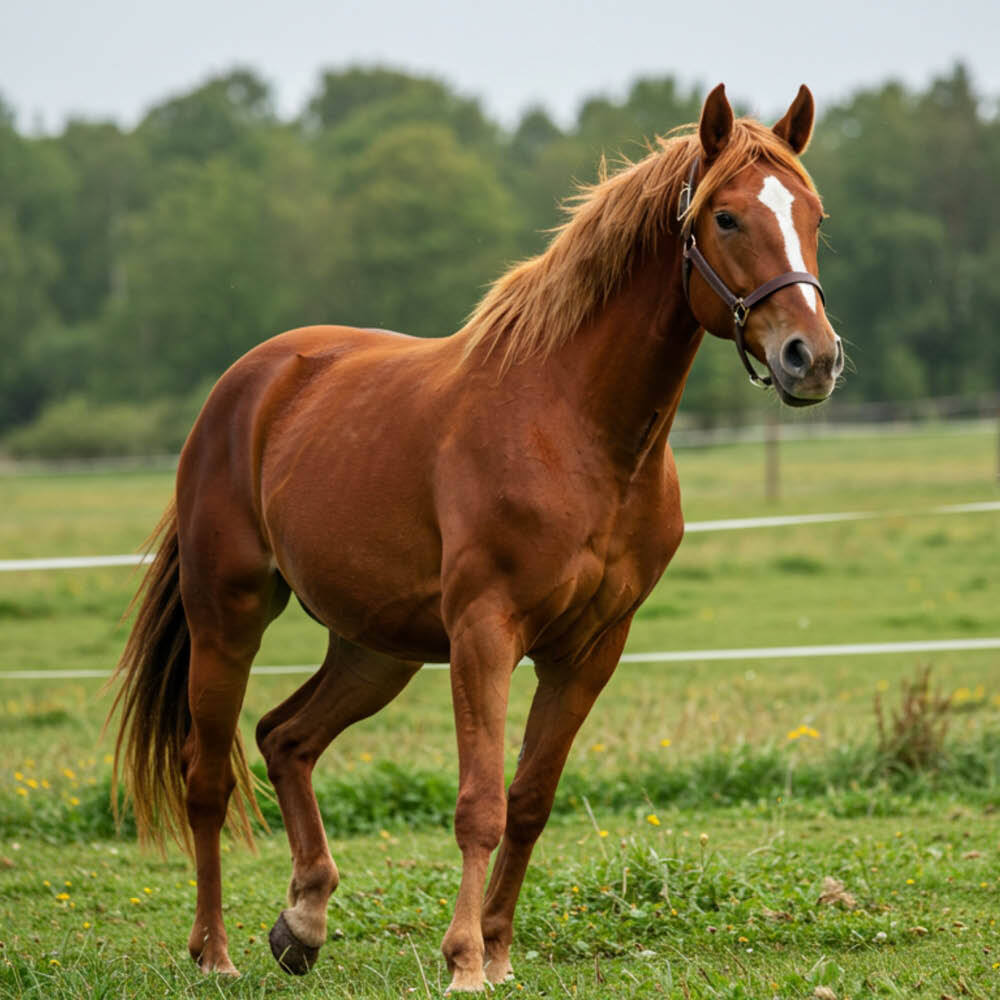
A reddish-brown coat with a mane and tail that match. Chestnuts don’t have any black hairs. Shades can range from light sorrel to dark liver chestnut.
Black
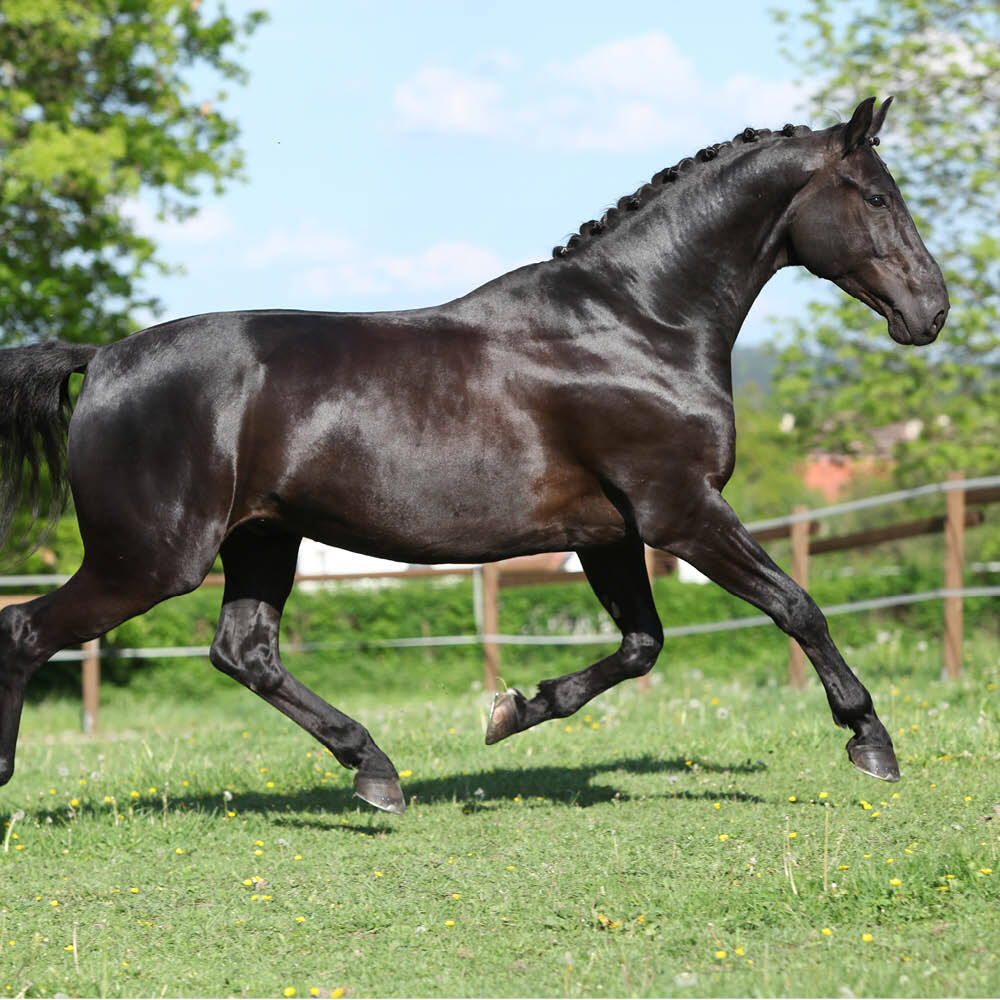
A true black horse has a fully black body, mane and tail. Some may fade in the sun, but their genetic base remains black.
Bay
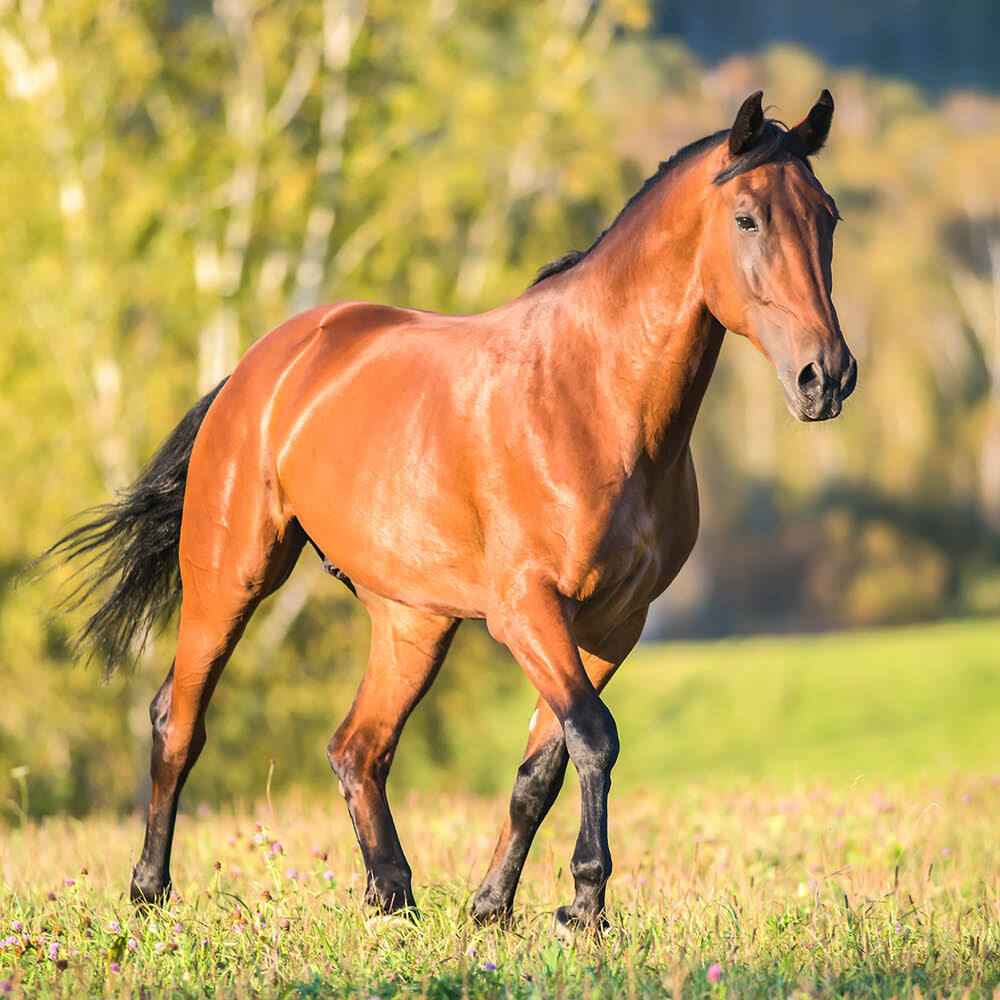
Bay horses have reddish-brown coats with black points on the mane, tail and lower legs. Bays come in many shades from light brown to being so dark they resemble black.
Grey
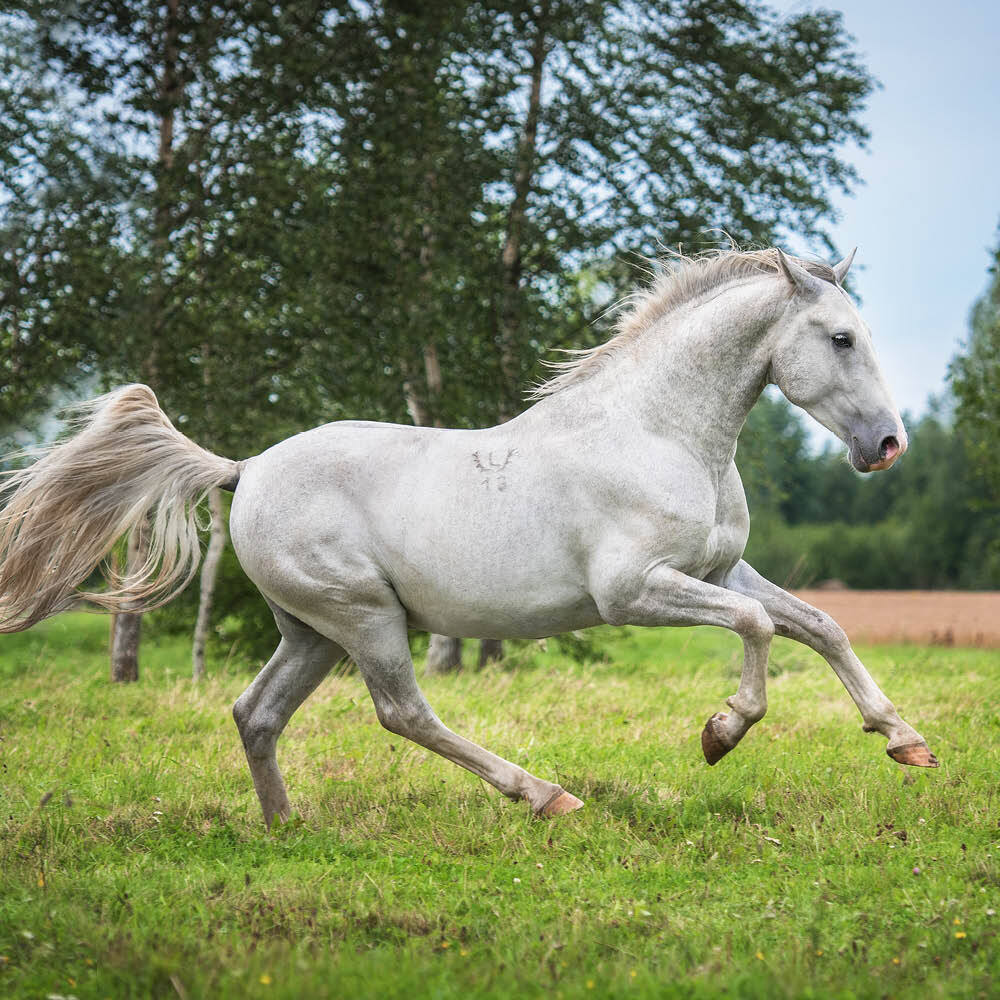
Grey horses are born dark and lighten over time. They may develop dapples or turn nearly white. Most horses that look white are actually greys. There are also different types of grey:
- Dapple Grey
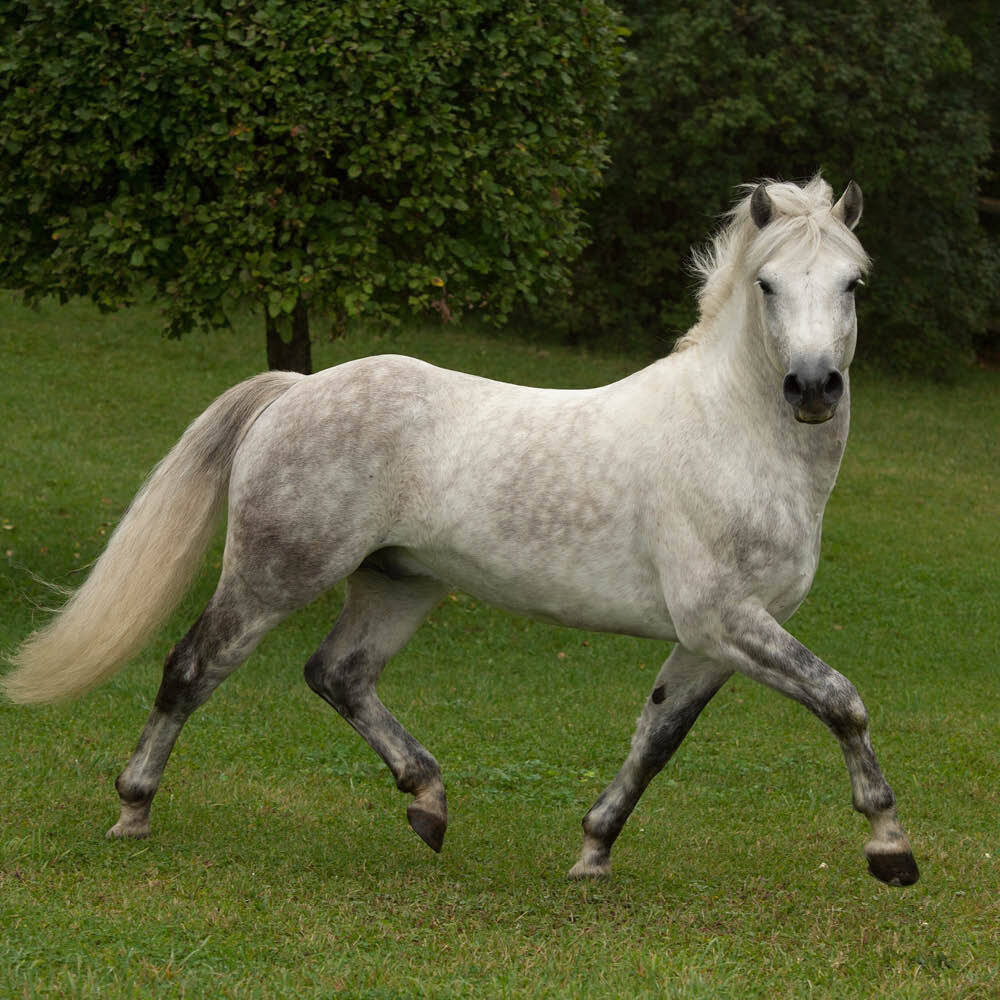
A grey horse with lighter or darker circular dapples across the coat. These are most visible at certain stages of the greying process.
- Fleabitten Grey
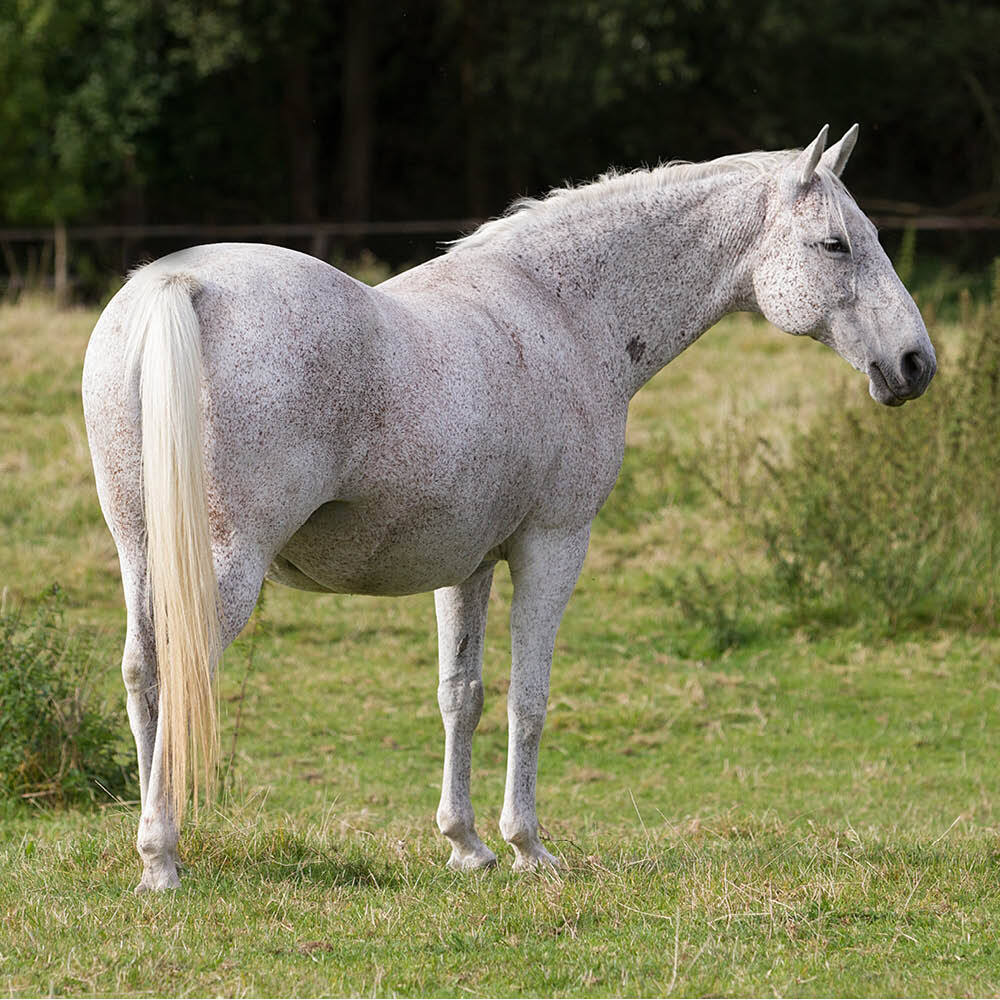
A grey horse with darker fletches of grey in their ‘white’ coat.
Palomino
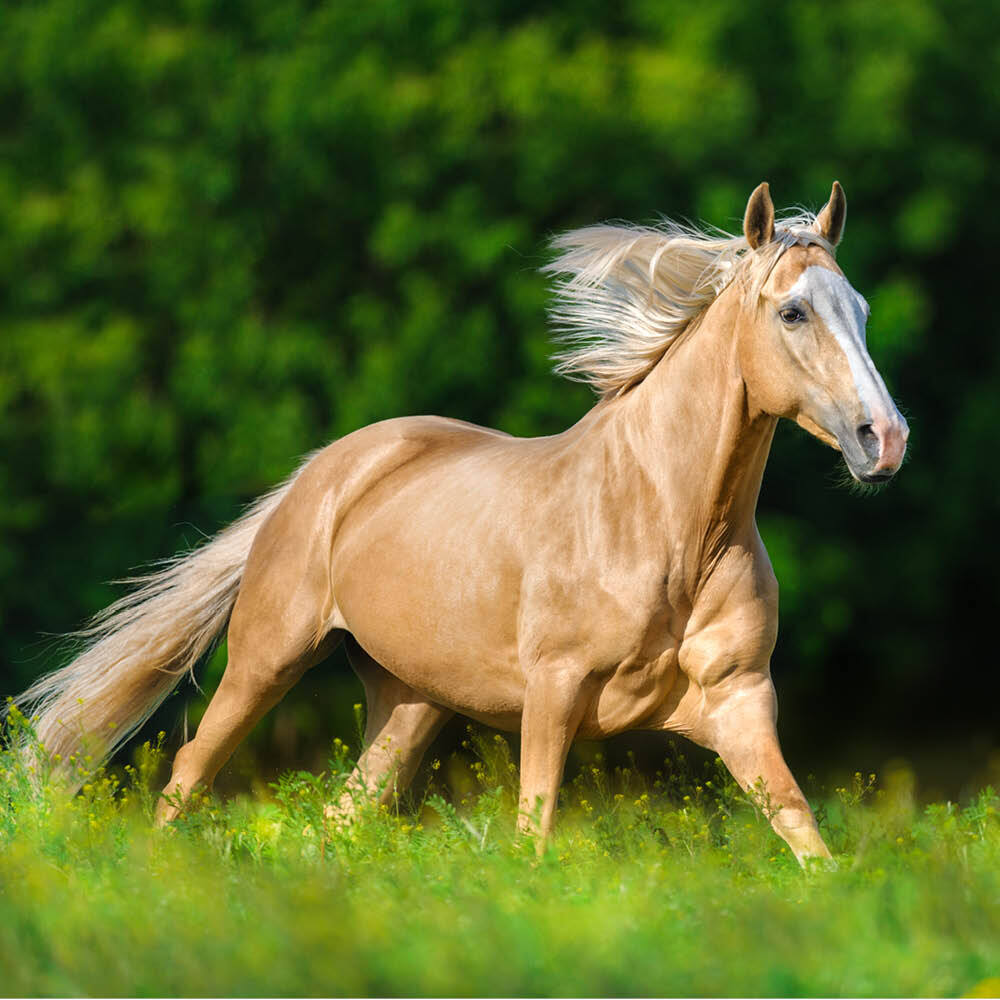
A chestnut base coat diluted by one cream gene. Palominos have golden coats with white or flaxen manes and tails.
Dun
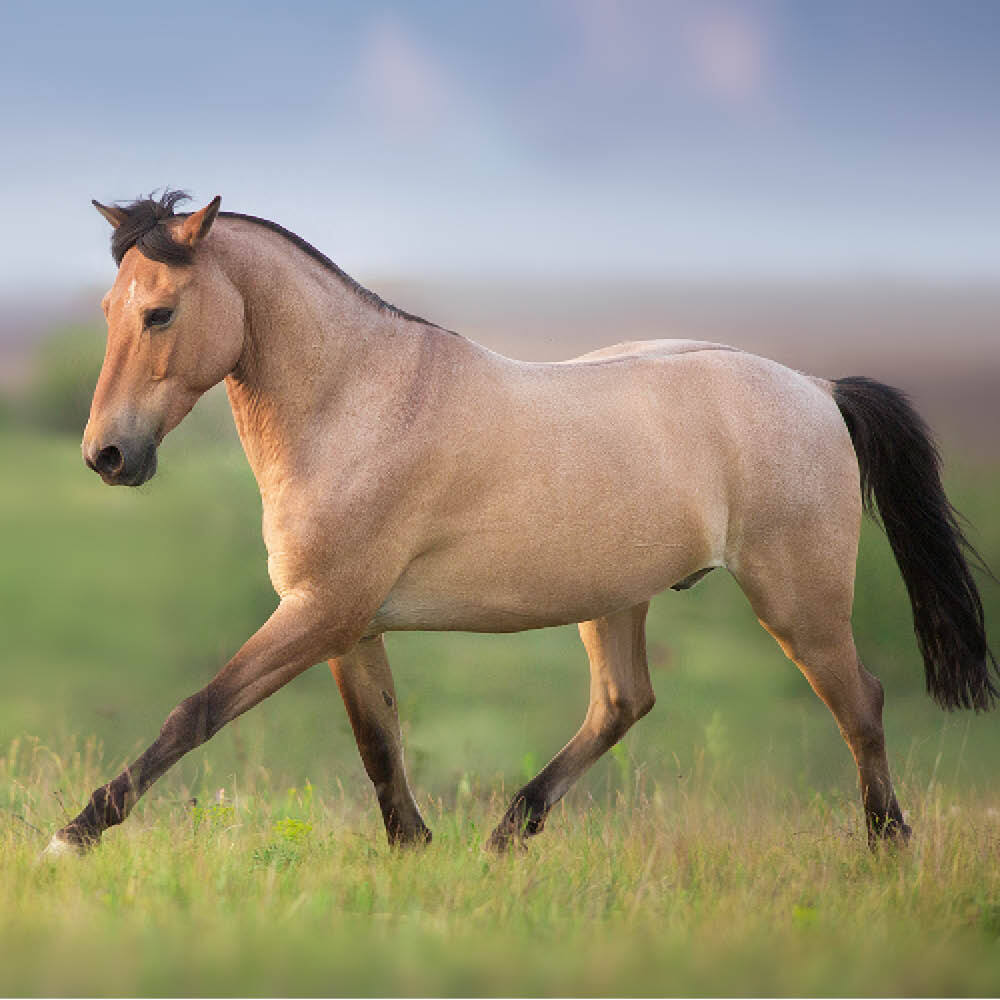
Duns have sandy or creamy coats with darker manes, tails and lower legs. True duns also have a dark dorsal stripe along the back and sometimes zebra-like stripes on the legs.
Common Horse Face Markings
Markings are white areas on a horse’s face or legs that help tell individuals apart.
Face Markings
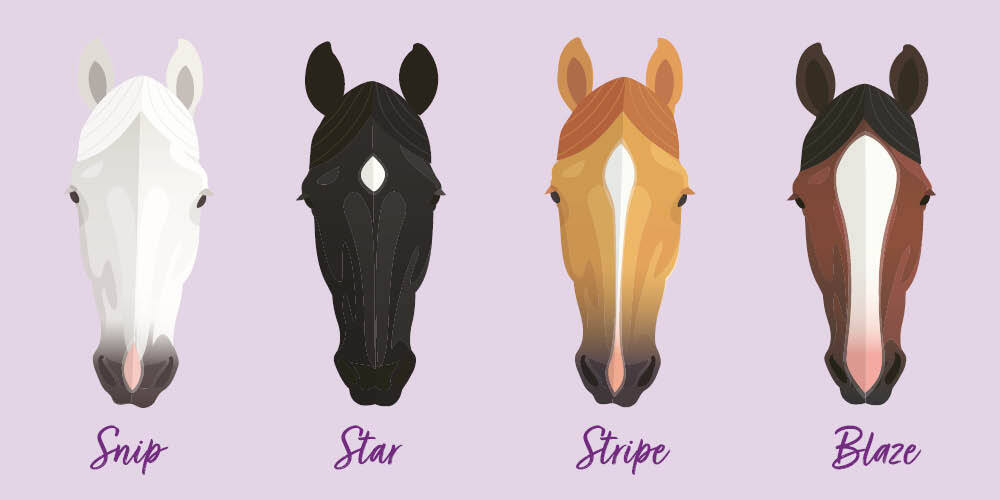
- Snip – White patch between the nostrils
- Star – White spot on the forehead
- Stripe – Thin vertical line down the face
- Blaze – A broader white stripe down the face
Leg Markings
- Coronet – A thin white band just above the hoof
- Sock – White that reaches partway up the leg
- Stocking – White that extends up to the knee or hock
Horse Patterns
Some horses have distinctive patterns created by specific genes.
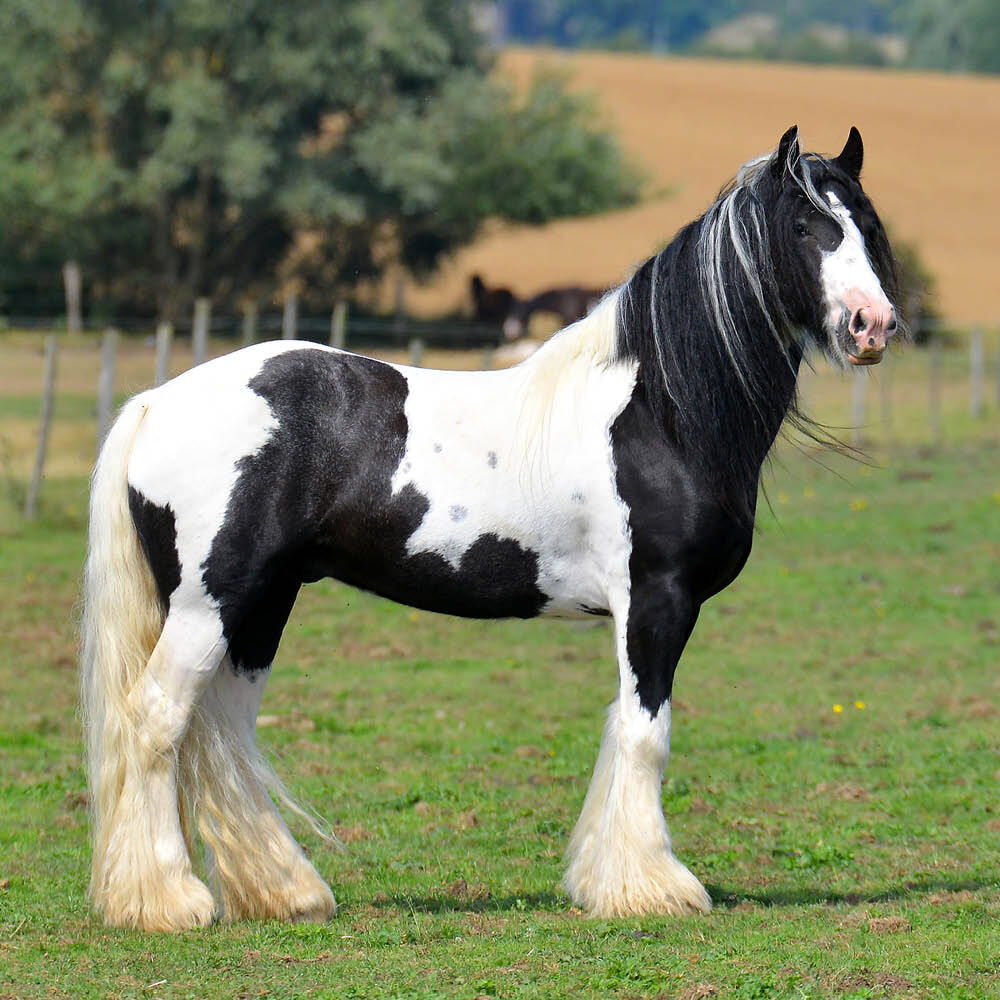
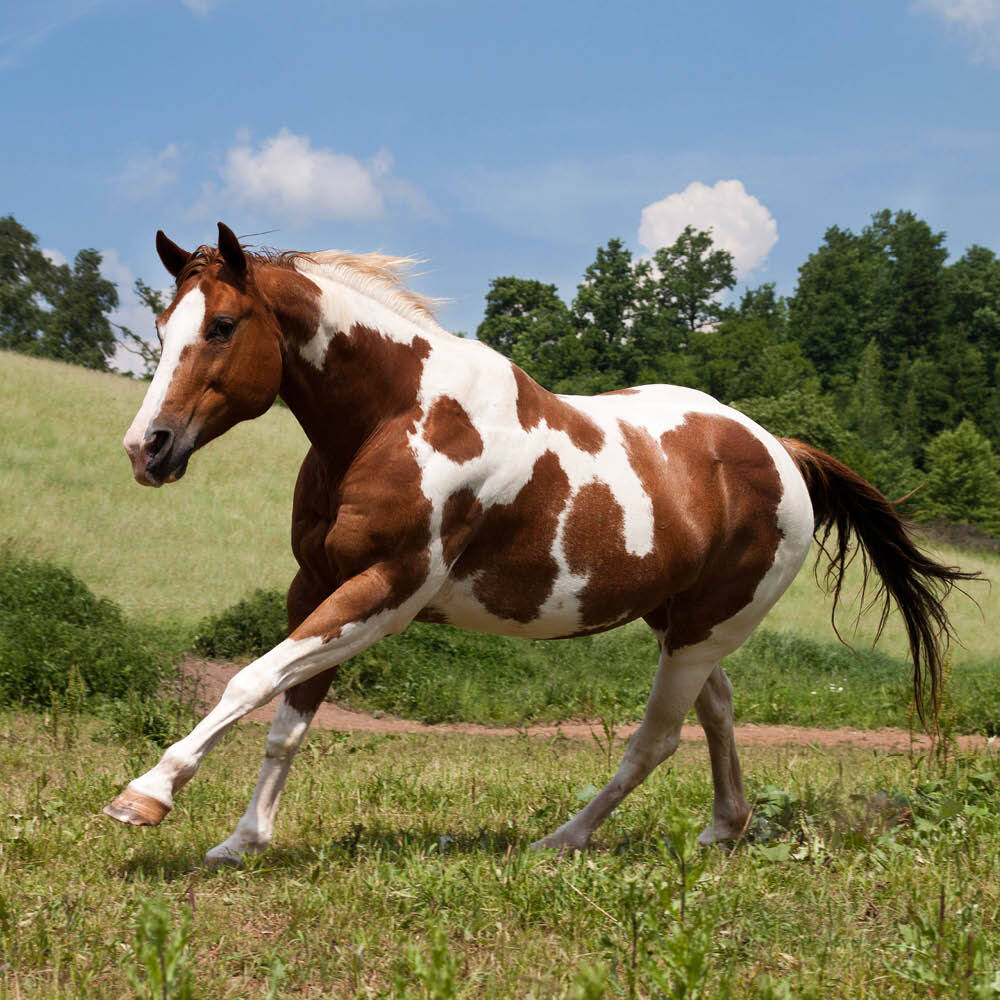
Piebald and Skewbald
These terms are commonly used in the UK to describe horses with large patches of white and another colour.
- Piebald – Black and white
- Skewbald – White with any other colour like bay or chestnut
You can also find tri-coloured horses with patches of white, black and brown or red. These are commonly seen in native breeds such as cobs.
Appaloosa
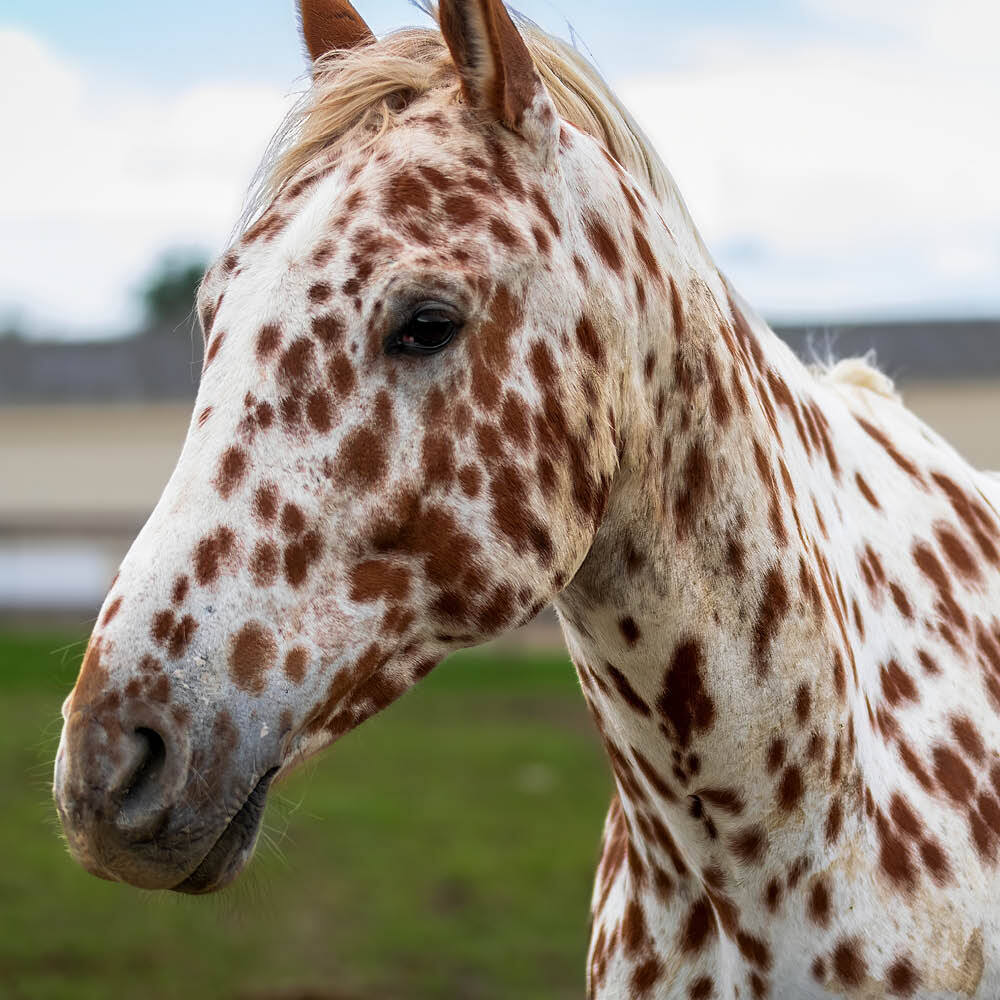
Appaloosas are known for their eye-catching spots and are influenced by the LP gene. Patterns include:
- Leopard – White body with darker spots
- Blanket – White patch on the hindquarters, sometimes with spots
- Varnish Roan – A mix of white and base colour, often with mottled skin and darker bony areas
Is Appaloosa a Breed or a Colour?
The answer is both.
The Appaloosa is a recognised breed with its own registry, the Appaloosa Horse Club. Registered Appaloosas usually have spotted coats, mottled skin around the muzzle and eyes, visible white around the iris and striped hooves.
You might see Appaloosa colouring in other breeds too. However, to be a true Appaloosa, a horse must meet specific genetic and physical standards set by the breed registry.
What Colour is a Roan Horse?
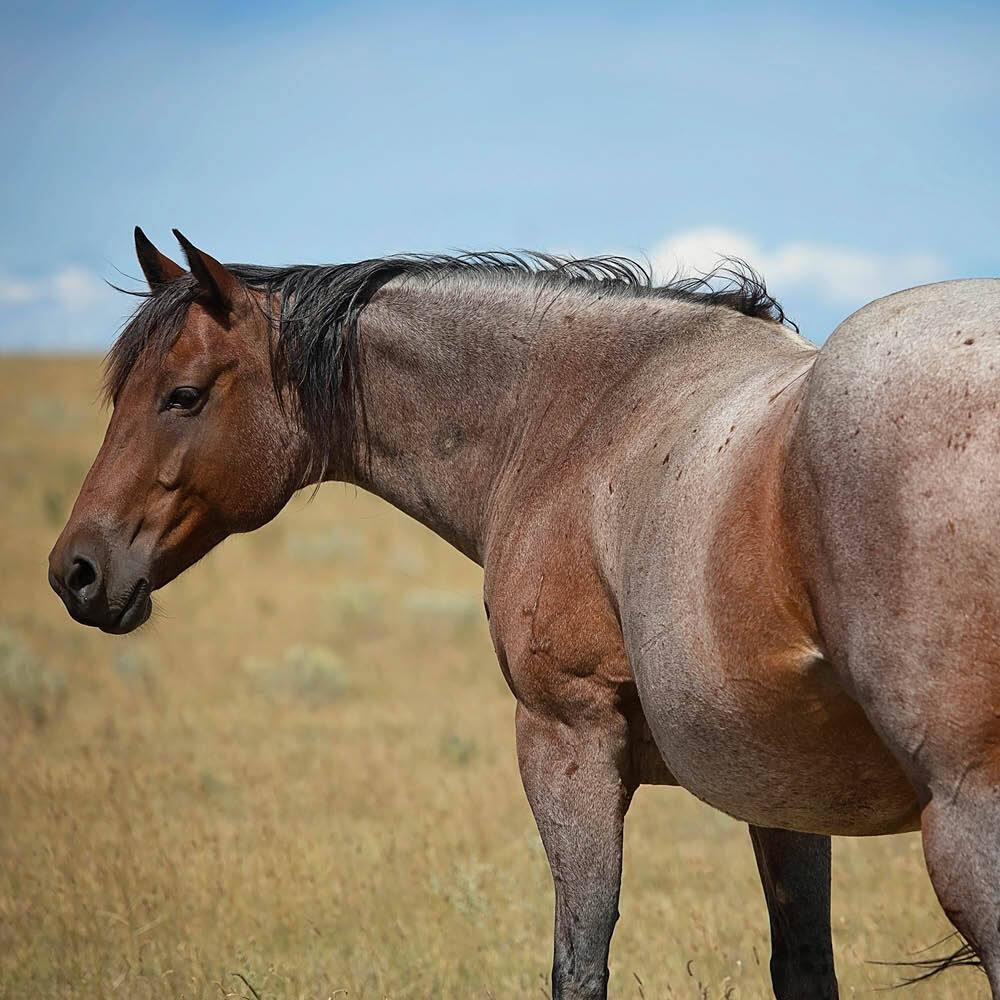
Roan is actualluy a pattern, not a colour. Roan horses have a mix of white and coloured hairs across their bodies but their heads, legs, manes and tails stay dark.
Types of roan include:
- Blue Roan – Black base with white hairs gives a blueish look
- Red Roan – Chestnut base with white hairs creates a pinkish tone
- Bay Roan – Bay base with a roaned body and dark points
Roaning doesn’t tend to change with age like greying does, though the coat colour can appear different between seasons as a horse sheds its winter coat for a summer one.
What Determines Horse Colour?
Horse coat colour is controlled by genetics. Two main genes determine a horse’s base colour:
- The Extension gene (E or e) controls whether black pigment can be produced. E allows black, e results in chestnut.
- The Agouti gene (A or a) controls where black appears. A restricts black to points (bay), a allows black all over (true black).
Other genes like Cream, Dun, Grey and Roan modify the base colours to create new shades or patterns.
For example:
- A chestnut horse with one cream gene becomes a palomino
- A black horse with a dun gene becomes a grullo
- A bay horse with the grey gene will turn lighter over time
When breeding horses, a coat colour calculator can help you predict the likely colour of the foal.
What Is the Rarest Horse Colour?
One of the rarest horse colours is Cremello. This colour happens when a chestnut horse inherits two copies of the cream gene.
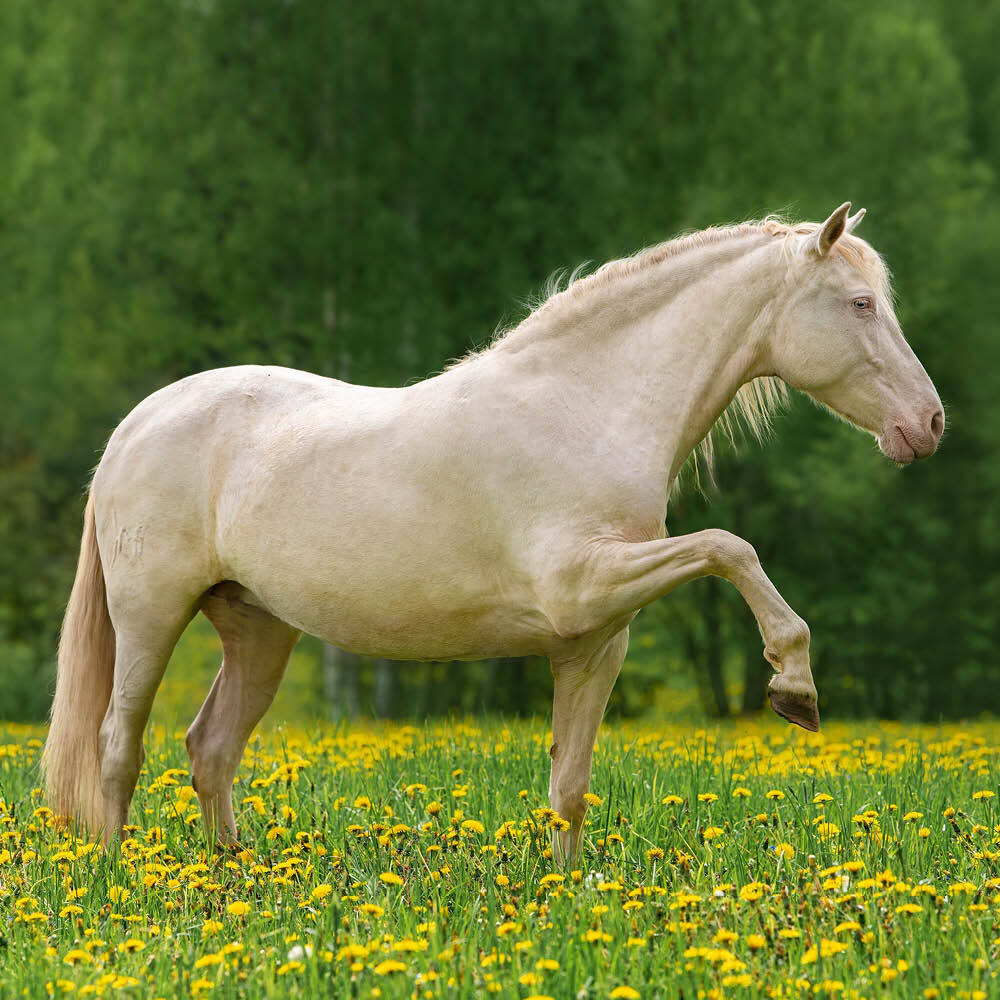
Cremellos have:
- Pale cream coats
- Pink skin
- Bright blue eyes
They stand out due to their unique appearance and the genetic rarity of both parents passing on the cream gene. Other rare colours include Perlino, Champagne and Silver Dapple, depending on the breed.
Final Thoughts
Whether it’s the richness of a chocolate bay, the striking spots of an Appaloosa or a snowy, white grey - each horse colour has its own charm. Behind every coat is a fascinating genetic story that makes every horse unique.
So next time you admire a horse, take a closer look at the colour and markings. They’re more than just pretty, they’re the result of centuries of natural and selective breeding, all written into the beauty of the horse’s coat.
Want to know which colour will look great on your horse? Check out our Equestrian Colour Guide to see which shades will complement them best.
